














Theatrical Cartoons: Cartoons Magazine Centennial 1913


As shown in these cartoons, 1913 was a year in which puritanical America looked at all forms of theater — Vaudeville and silent cinema — as sources of sin, moral decay, and danger.
Above, from when America had a patchwork of local censor boards, controlling movies, books, publications, and shows could be shown or sold within their towns and cities, cartoon by Ole May, depicting the kind of movies (on the billboards behind the cop), that the local censor boards would like to see in theaters. From the February 1913 issue of Cartoons Magazine.
Click on the above & below pictures, to view the cartoons in detail, and read their captions.

Above, by Boardman Robinson, from February 1913, a stage actress collecting her paycheck, in The wages of sin is — among other things — cash.
Beneath, James H. Donahey depicting a worried mother, waiting for daughter’s safe return from the dens of sin, known as theater… From the March 1913 edition.


From April 1913, above, cartoonist Charles MaCauley labels theaters “fire traps”.
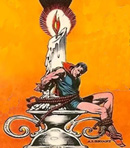
Beneath, Robert Minor, Jr. (from March 1913).

Click here to find previous postings involving Theatrical Cartoons.
TheatricalCartoons

— Doug




A very interesting collection of cartoons. The
Boardman Robinson cartoon puzzles me. Could the uniformed guy be a ticket-seller and the woman is in the box office line? That way caption would suggest that by presenting indecent shows the theater’s “wages of sin” is ticket sales. It’s confusing because it’s hard to tell just what the uniformed guy is giving (or taking).
I interpreted it as her receiving cash for her performance, given that it was amongst theater cartoons, and across from some of the “white slavery” cartoons related to women and poor wages. That, and the guys behind her, as if the kind that hang out waiting for the female actors, while the man handing her something, seems uniformed. But, your interpretation could be right.
Doug