




Cartoons Magazine Centennial, January 1912, Part 1

Cartoons Magazine began its monthly run one hundred years ago. Review of Reviews, which began publication in January 1890, had for more than two decades presented a few pages every month collecting recent editorial cartoons from around the world (along with, mostly, recent text articles). Cartoons Magazine expanded upon those few pages, devoting the entire issue to collecting editorial cartoons from newspapers throughout the U.S., at a time when nearly every newspaper, large and small, had its own staff cartoonist(s). It also devoted a few pages each issue to cartoons from foreign publications, and eventually would feature articles by and about cartoonists, and advertisements for cartooning schools as well as for the latest Hearst-Era (i.e., “Platinum Age”) comic strip reprint books.
The quality of Cartoons Magazine‘s content would reach its highest pinnacle during World War I, fading to a shadow of itself afterward, during the self-interested and less dramatic flapper era. It was unfortunately gone by the First Great Depression and the approach of World War Two, when traumatic world events would again unleash powerful cartooning.
For now, we start our celebration of Cartoons Magazine‘s centennial, with the January 1912 first issue. Appropriately, 1912 was a Presidential Election year, during which the Republican Party literally tore itself apart into two parties — the progressive Bull Moose Party of former President Teddy Roosevelt, attempting to return for a third term, while old guard party insiders decided to stick with current Republican President, Howard Taft. Republican Old Guard supported/were the servants of monopolies and corporate interests, and were all about another four years of attempting to tear down Teddy Roosevelt’s reforms. T.R. regarded Taft as betraying those hard-won reforms. Despite having the popular vote behind him, Republican Convention delegates rejected T.R., for Taft and their corporate masters, prompting T.R. to walk out. The result was, that in the 1912 election, the Republican Party and Taft came in third place. One hundred years later, we again have Republicans waging war against each other, fighting between the Far Right, and the even further Extreme Right, over just how fast and how far, they wish to throw away a century worth of reforms, and return the U.S. to pre-Teddy Roosevelt days. (Forgetting or ignoring, that there was a reason those reforms were enacted into law, in the first place.)
All of that, however, is ahead of us. For now, in January 1912, many were nostalgic for T.R., and hoping he would return to rescue and continue his work for the people, that the moneyed-interests controlling the G.O.P., wanted destroyed. Teddy Roosevelt, at this point, is still in the process of being convinced to make another run.
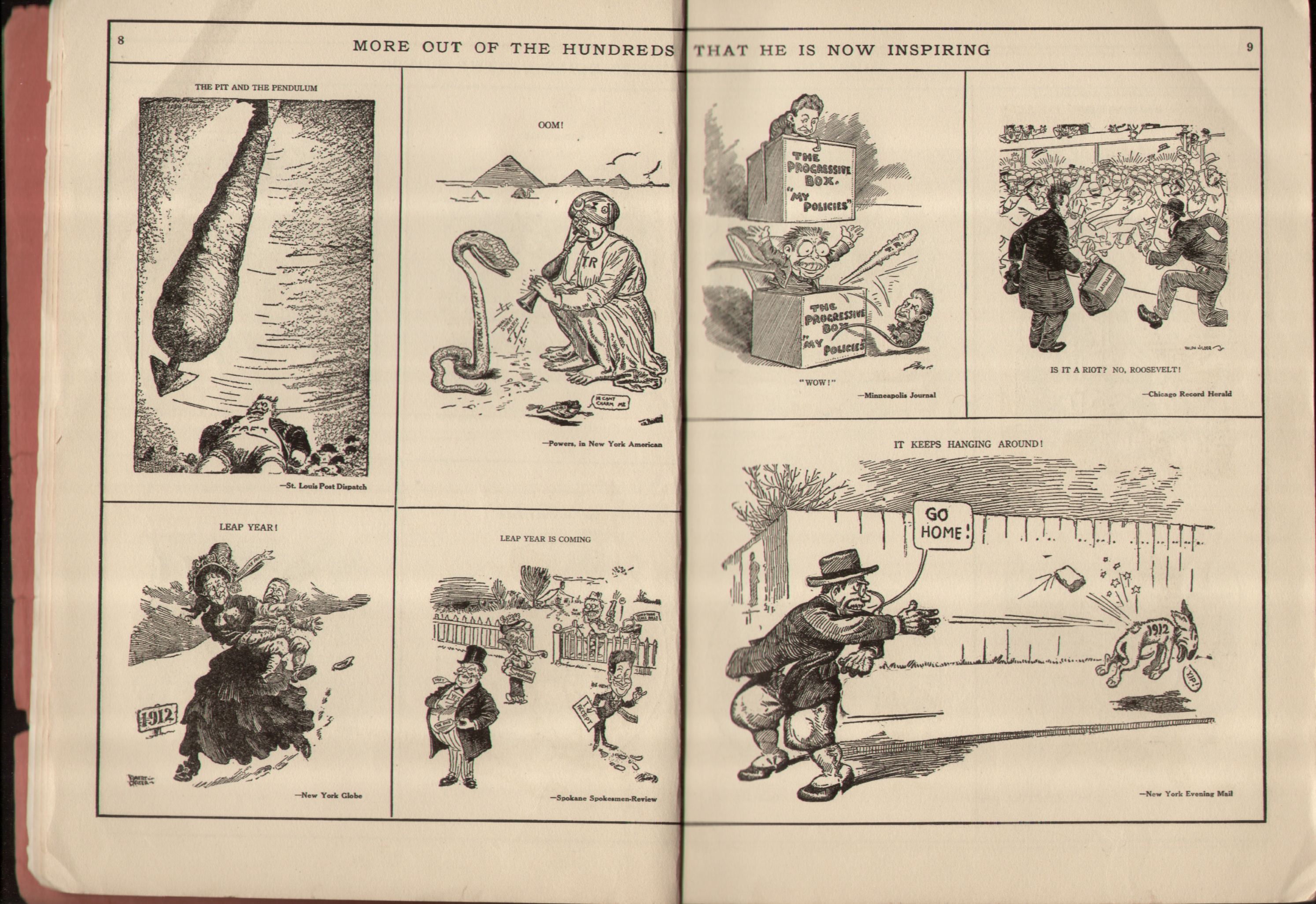
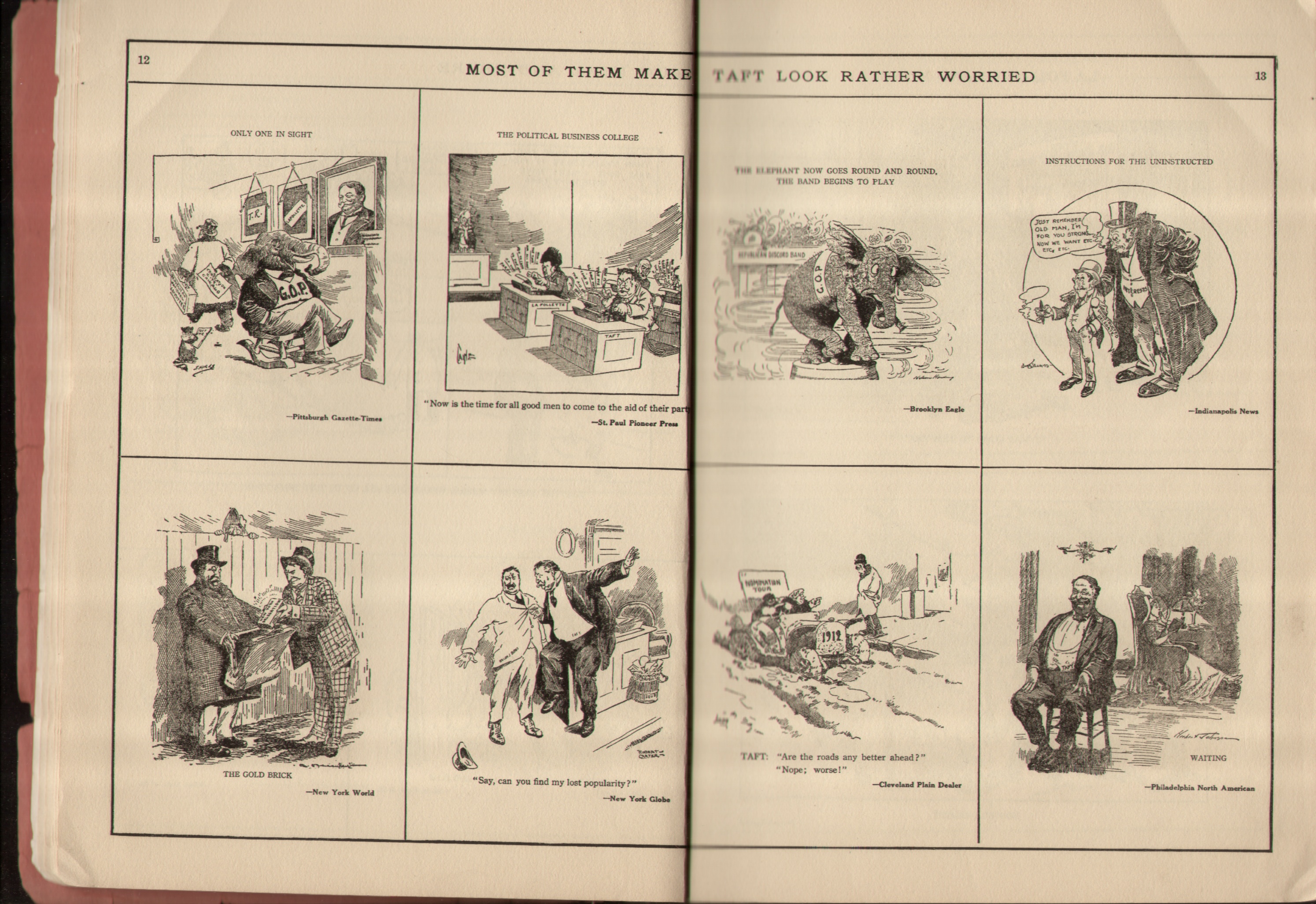
Click on the above & below pictures, to view them in detail, and read the accompanying text.
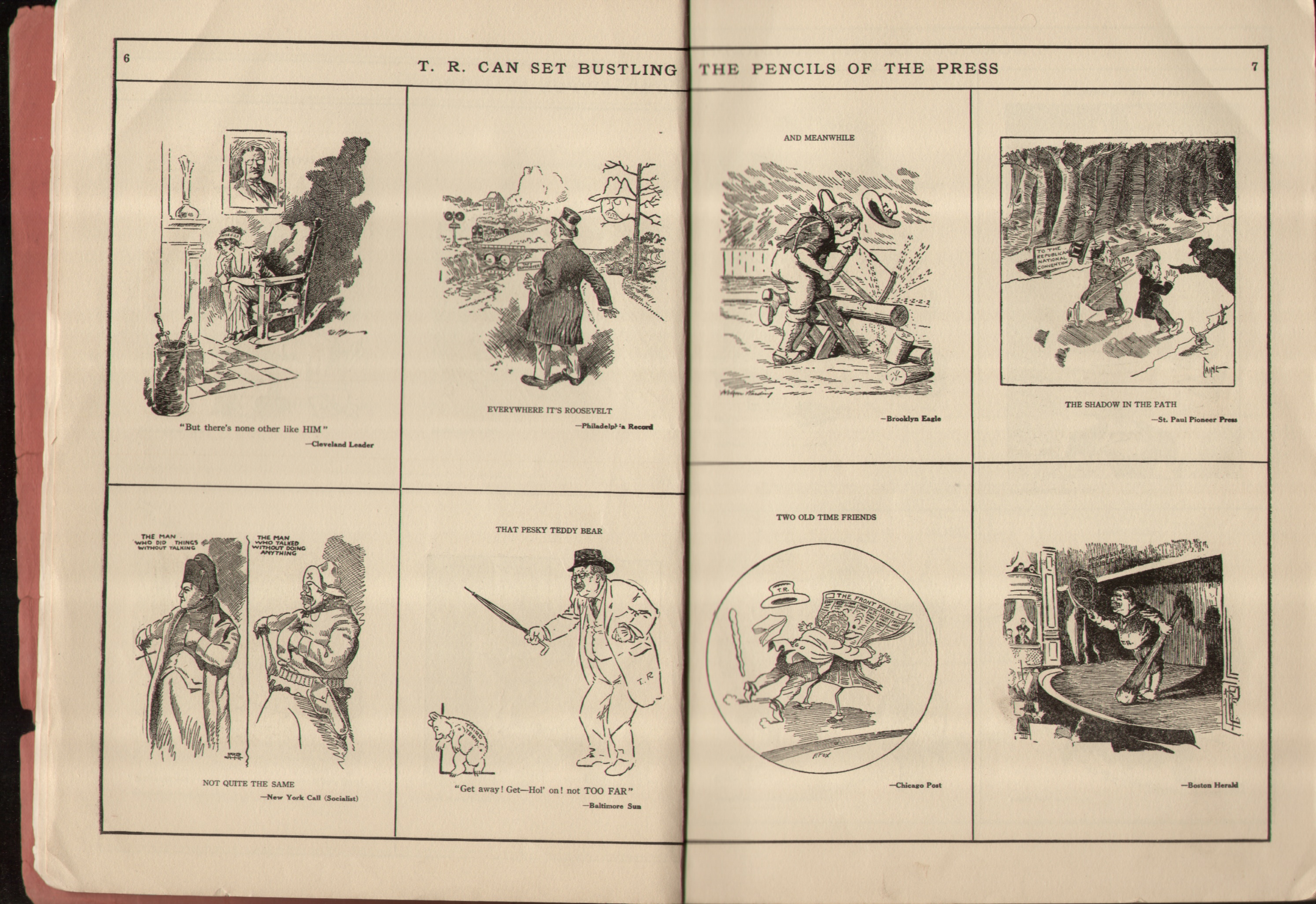
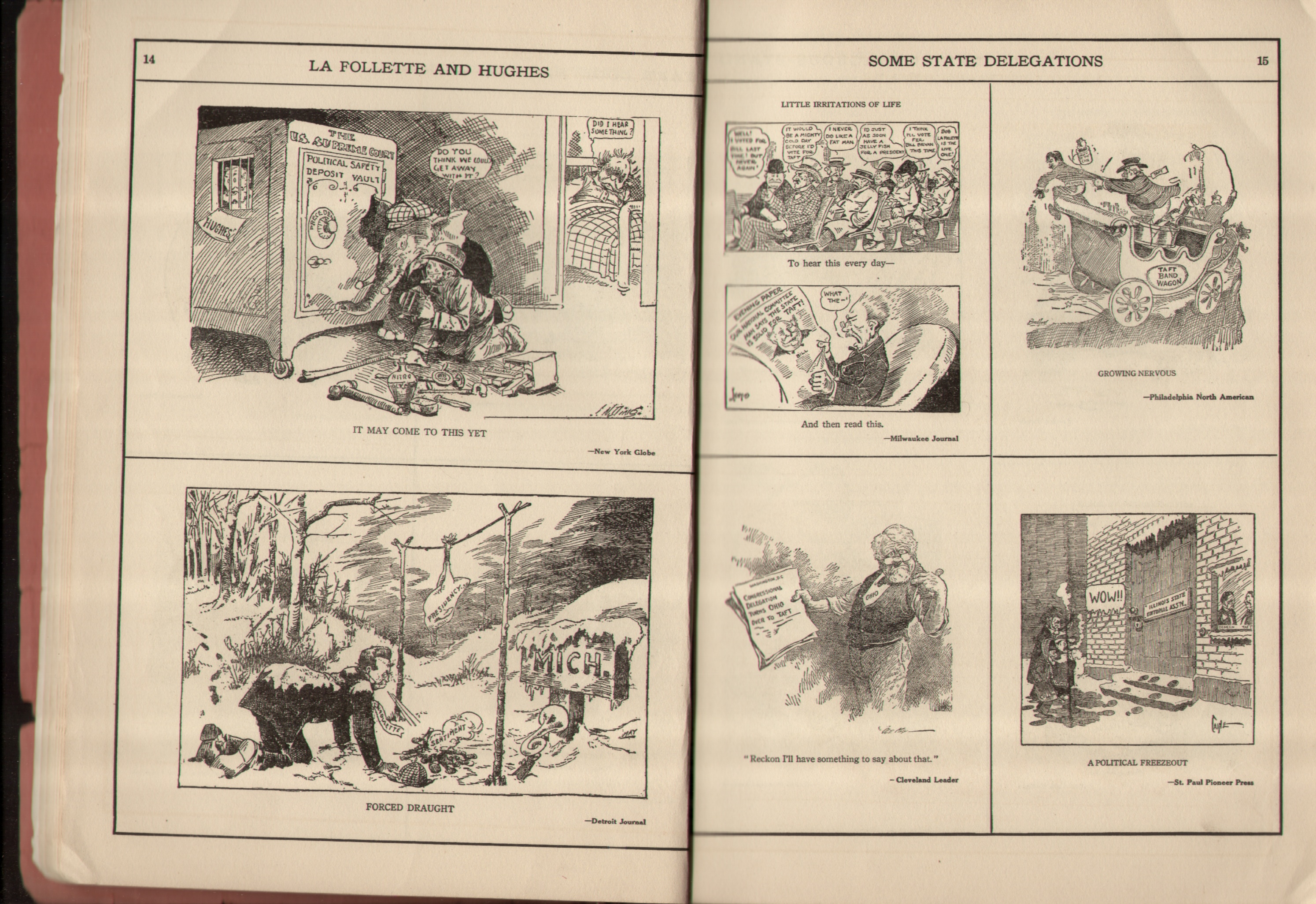
Above and below, cartoons about the then-publicly still reluctant Teddy Roosevelt, on the prospect of his making a run for a third term. Amongst the artists of the above cartoons, are Nelson Harding, Fontaine Fox, and Ole May. Amongst the artists below, is “Bart” (Charles Lewis Bartholomew).
Below, the nervousness of President Taft, at the possibility of a challenge by his far more popular predecessor.
Below left (by Jay Norwood “Ding” Darling), the G.O.P. depicted as trying to violate the independence of the Supreme Court — quite appropriate to today, with one G.O.P. candidate — Newt Gingrich — having recently stated that if he were President, judges who rule in ways he doesn’t like, would be arrested and dragged before Congress (a complete violation of the Constitution). While right, cartoons indicating that even at this early stage, before T.R. has even decided to run, the Party Machine is preparing to ignore the popular vote, in favor of what the established order wishes to do.
ElectionCartoons Nelson Harding Ole May

— Doug




[...] cartoons about the Democratic side of the 1912 Presidential race. Compared to the pages worth devoted to T.R. — and to President Taft’s worries about T.R. possibly running — the Democratic [...]