Get these books by
Craig Yoe: |
|
|
|
|
|
|
|
|
|
|
|
|
|
|
|
|
|
|
|
|
|
|
|
|
|
|
|
|
|
|
|
|
|
|
|
|
|
|
|
|
|
|
|
|
|
|
|
|
|
|
|
|
|
|
|
|
|
|
Get these books by
Craig Yoe: |
|
|
|
|
|
|
|
|
|
|
|
|
|
|
|
|
|
|
|
|
|
|
|
|
|
|
|
|
|
|
|
|
|
|
|
|
|
|
|
|
|
|
|
|
|
|
|
|
|
|
|
|
|
|
|
|
|
|
|
Archive for the ‘Interviews’ Category
Thursday, April 29, 2026

Professor and author Lucy Shelton Caswell has the distinct privilege of curating the Billy Ireland Cartoon Library and Museum. The legend of the museum is well-known: in 1977 the Milton Caniff collection was donated to Ohio State University, and Caswell accepted responsibility for the treasure. One donation led to another, and the collection of Ohio State University snowballed into one of the most significant research collections of cartoon art in the United States.
With the tenth triennial Festival of Cartoon Art scheduled for this October, and a forthcoming book series, these are happy and heady times for the flourishing Museum. It is an unusual story of growth in a nation suffering drastic academic budget cuts, job loss, and anxiety. We have to regard it as a beacon of hope.
Caswell took a moment from her busy labors to share a couple of favorite images with ITCH.
ITCH: When I think of your work as curator since 1977, the word that comes to mind is “discovery.” Each box, each file, each portfolio, must come with the same kind of excitement for you: what will I find? Do you have items in the collection that are special prizes because of the work involved in finding or preserving them?
Caswell: The best “Antiques Road Show moment” was the Tales of the Jungle Imps experience.
http://cartoons.osu.edu/?q=press/tale-jungle-imps

A Tale of the Jungle Imps by Winsor McCay. 2025-06-28 original cartoon
What are some of the oldest political cartoons in the collection, and what can we learn from them?
The oldest political cartoons in the collection are British prints, which teach us how fortunate we are as American citizens that our tradition of making pictures to criticize politicians is based on the British model [where this was tolerated] instead of the Continental [where censorship was enforced].

James Gillray
Title: A Great Stream from a Petty Fountain; - or - John Bull Swamped in the Flood of New-Taxes: - Cormorants Fishing in the Stream
Date: 2025-05-09 [We do have work that is older than this, but digital images are not available at this time.] Hand-colored engraving.
Do you have a favorite “old-time” cartoonist?
Billy Ireland
http://cartoons.osu.edu/?q=content/faq#billyireland
Note to readers: follow this link, and watch a video of Lucy Shelton Caswell discussing her book about Billy Ireland!

— beth
Posted at 10:04 AM
Posted in Classic Comics, Interviews, Political Cartoons, Sunday Funnies | permalink | No Comments »
Thursday, March 25, 2026
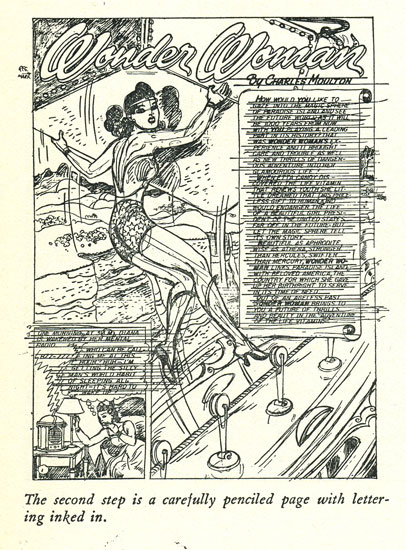
In her just-published study of the mythic female icons of American culture — Ink-Stained Amazons and Cinematic Warriors, I.B. Tauris 2010 - Jennifer K. Stuller explores the power of pop culture superwomen from Barbarella to Nancy Drew and beyond. But for Stuller, and for contemporary American culture, it all began with Wonder Woman. Stuller recently chatted with ITCH about the Amazon Princess, the icon of feminine icons. Stuller blows a breath of fresh air into recent Wonder Woman conversations, scattering the bondage obsessions and reminding us of the appeal of feminine power and the power of example that we find in this great American hero.
You mention in your book’s introduction that you watched the Wonder Woman television show as a little girl. When did you begin reading Wonder Woman comic books, and what did you think of the woman in the comics?
Though I grew up with the Wonder Woman television series, played “Wonder Woman” with my sister as a child, and always considered the Amazon Princess a champion, I never really knew that she had originated in the comics nearly 40 years before I was exposed to her until I was an adult.
I’d read some comics as a kid – mostly the Archies at eye level at the drugstore. But it just didn’t click that Wonder Woman was a character in a comic book – even though I’d watched her alongside Superman and Batman in the animated series, Super Friends, and knew they’d been in comics.
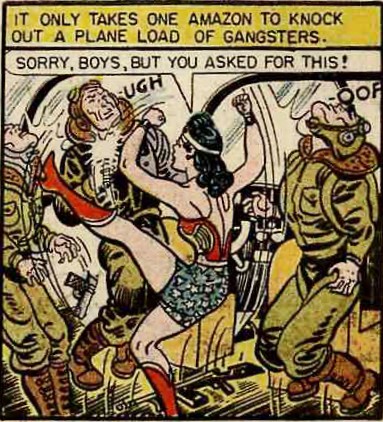
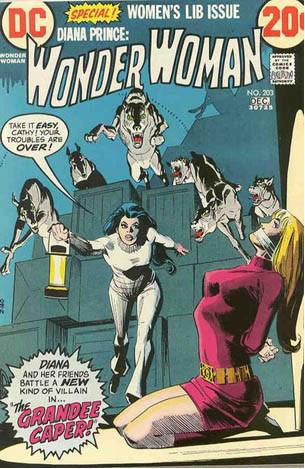
The first copy of a Wonder Woman comic I can remember buying was purchased well into my adulthood. One of the initial ones I picked up was the infamous “Women’s Lib Issue” (don’t get me started on THAT . . .). Since then I’ve read specific arcs or issues in order to look at particular cultural themes and so what I think of the woman in the comics depends on which incarnation of Diana I’m reading. For example, I love the independence, self-confidence, and rallying abilities of William Moulton Marston’s Wonder Woman, but I also adore that Gail Simone has infused the character with a wonderful combination of warmth, compassion and ass-kickery.
What is Wonder Woman’s unique skill or power?
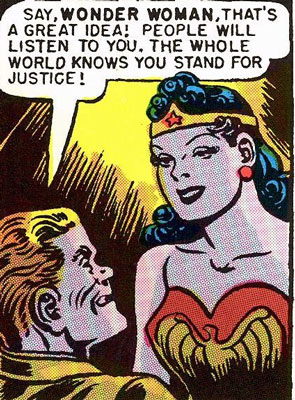
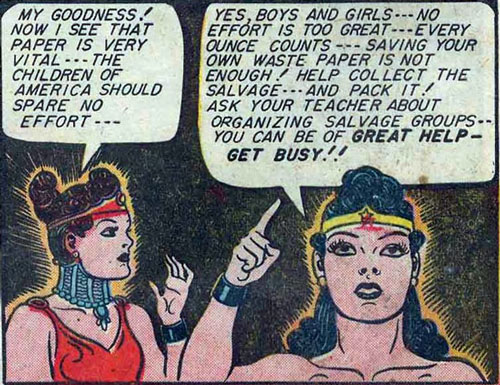
Her unique powers – beyond her physical Amazonian strength – are the abilities to inspire and to encourage people to believe in themselves. She teaches courage, compassion, and sometimes even practical physical skills, to girls, boys, women, and men. She shows the way to redemption, agency, and collaboration. Her power is that she is truly an example of how to make a difference that is beneficial to both the individual as well as the greater good.
What was the impact of Marston’s Wonder Woman on young girls of the 1940s and 1950s?
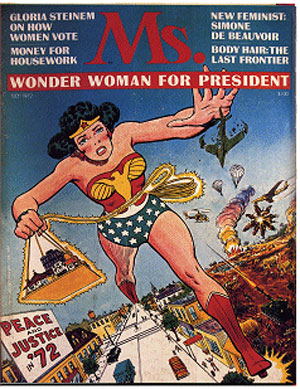
Well, she quite notably impacted a generation of girls who grew up to become second wave feminists in the 1960s and 1970s. As writer and activist, Gloria Steinem, has said, many of the founding editors of the feminist publication Ms. magazine were empowered by Wonder Woman in their childhoods. When they placed Wonder Woman on the inaugural cover of their magazine – and adopted her as a representative of feminist values – they forever sealed her status as a symbol of female empowerment.
How has Wonder Woman influenced your sense of femininity?
Ooooo. Interesting question! I’m usually asked how Wonder Woman has influenced my sense of feminism. I’ve never really considered how she’d influenced my femininity.
I’d say that in re-watching series episodes and reading the comics, that Wonder Woman has helped me embrace my femininity, both my grrrlness and my girliness. When I was a child she taught me that girls can be powerful – a lesson I carry with me to this day and hope to impart to women younger than me. As an adult, I’ve learned from her that femininity itself can be powerful, not as a weapon, but as a source.
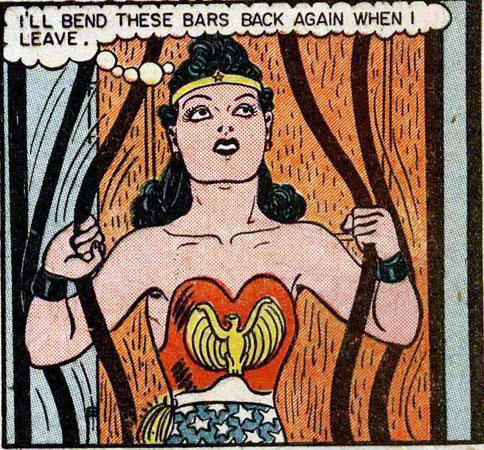
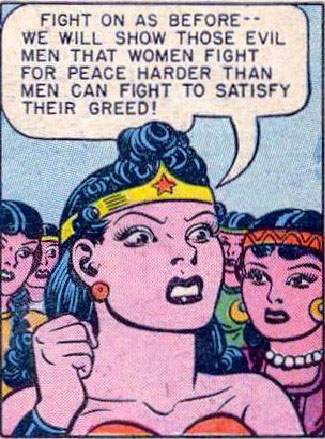
Over 1,000 WASPs (Woman Air Force Service Pilots) were just awarded the Congressional Medal of Honor – 66 years after their courageous service in WWII. How do you think the Wonder Woman of the 1940s would have felt about that?
I think that as a sister pilot she’d be thrilled. Though I know she’d be disappointed it took so damn long for these brave women adventurers to be recognized!
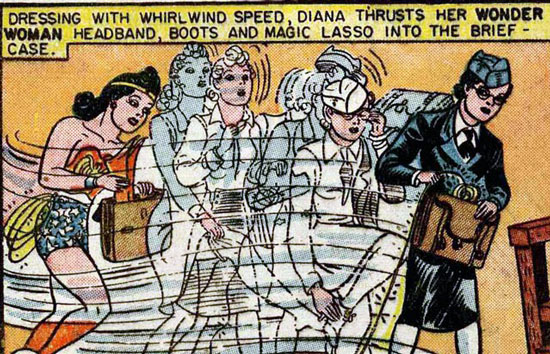
How can Wonder Woman inspire us today?
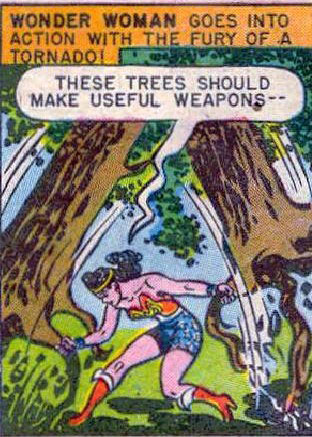
Wonder Woman is a recognizable symbol of strength all around the world. People see her, read her stories, or watch her in action, and are inspired to believe “I can be a wonder.” Her core vales will always be of import to humanity and we can learn these ways of being from her.
— beth
Posted at 02:03 PM
Posted in General, Interviews | permalink | No Comments »
Thursday, March 11, 2026

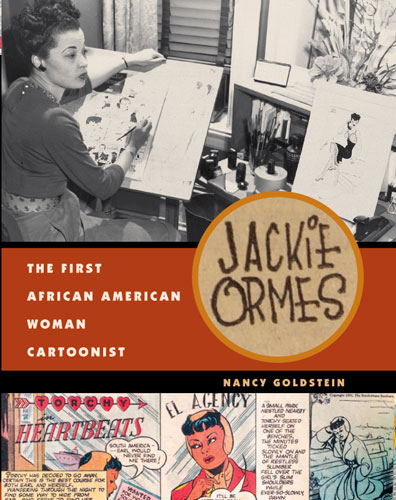
February 2008 was a momentous occasion in comics history. The University of Michigan Press published Nancy Goldstein’s Jackie Ormes: The First African-American Woman Cartoonist.
Goldstein restored a part of our past to us, and not just any part, but a really important part. She gave us the story of a woman cartoonist, an African-American woman cartoonist, an outspoken African-American woman cartoonist, a political outspoken African-American woman cartoonist, who achieved success and acclaim during segregation. O.M.G.
I’ve heard too many comics historians dismiss the racist caricatures drawn by some of the stars of our beloved canon (e.g. McCay, Hergé) with the simple-minded claim that “that was how everyone thought back then.” Ahem. Goldstein not only rescued Jackie Ormes from those who would forget her, she reminded us that the work is not done. The desegregation of comics history has only just begun. Thoughtful, gracious, intelligent, and kind, Nancy Goldstein threw the gauntlet.
Recently we talked a bit about Ormes’ life and significance.
When did you first encounter Jackie Ormes?
Her Patty-Jo doll first drew me to Ormes, but it didn’t take long for her cartoons to become more interesting to me. I’m a doll collector and I’ve written on dolls. My collection primarily consists of Terri Lee dolls, and Terri collectors knew a little about Patty-Jo, the black doll manufactured by the Terri Lee company from 1947-49, and about Jackie Ormes, who created the character in a cartoon. The cartoon was her single panel Patty-Jo ‘n’ Ginger that ran from 1945-56 in the Pittsburgh Courier, the highest circulation black press paper in the later 1940s. I wondered, who is this person that made a fine, upscale black doll in the days when most all black dolls were mammies and Topsy-types?
So I looked through microfilm of old Pittsburgh Courier newspapers for evidence of the doll in her cartoons. It was amazing to see how she pitched her doll in a cartoon! There is one where Ormes has the little girl Patty-Jo asking for a doll for her birthday, and she is carrying a coupon to buy the doll with Jackie Ormes’s name and home address on it, “764 Oakwood, Chicago.” How audacious! We would now call this product placement!
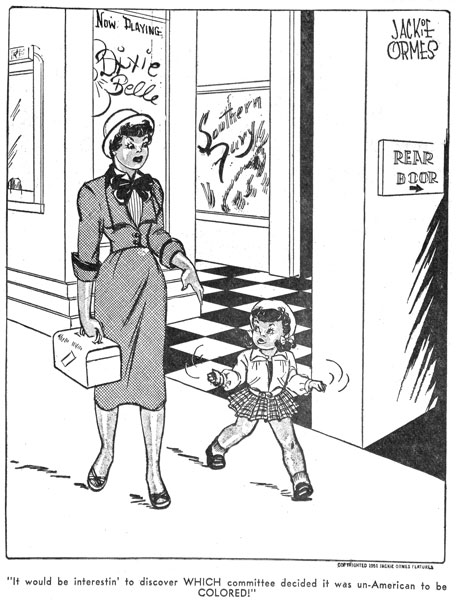
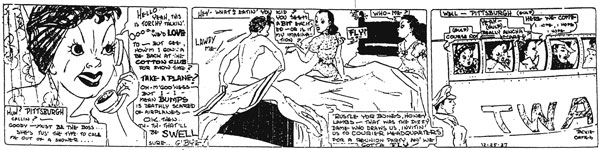
But pretty soon Jackie Ormes’s Patty-Jo cartoons became more interesting than looking for the doll. These were the pre-civil rights days and here was an especially interesting take on that time through the eyes and words of the black press. The Courier was—and still is-a newspaper of advocacy, depicting lives of struggle and achievement. Right in the middle of the news pages was Patty-Jo ‘n’ Ginger with Patty-Jo commenting on topics beyond her years-the arms race, the HUAC, racism, housing, jobs, education, fashions. As I went on to look at her other work, like her two different Torchy series, it was clear this was an extraordinary person, and not much had been written about her. I felt it just had to be done, and quickly because people who might have known her would soon be gone. So I made the book project a top priority, and six years later, in February 2008, the University of Michigan Press published the book, Jackie Ormes: The First African American Woman Cartoonist.
What kind of a person was she?
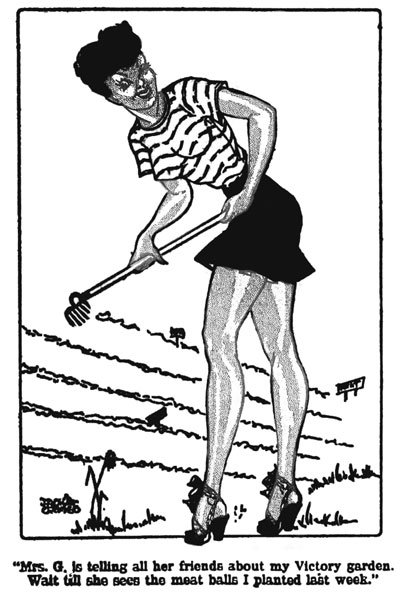
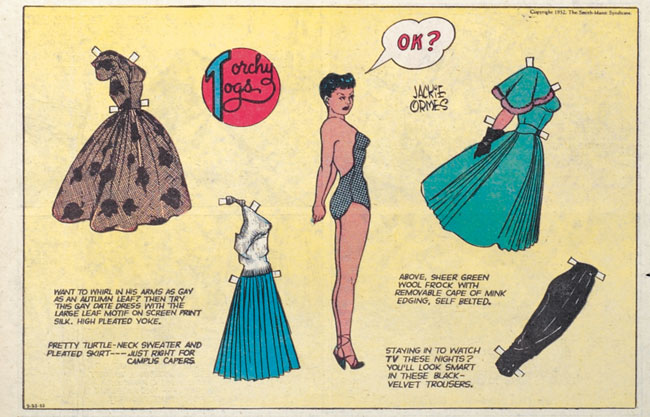
She was independent and courageous in an era when the rule of the day was conformity. Here’s a woman working in the newspaper business, a man’s world at the time. In her cartoons she steps out of the mold, publicly taking on issues like U.S. foreign policy, the HUAC, racism, and more, even while under FBI surveillance because of her left-leaning acquaintances and activities. Her drawings are bold as well. Jackie Ormes’s starring characters are females, unusual for the time. She created smart, beautiful, full-figured women and good-looking children, all dressed in highly detailed, gorgeous fashions. How she employs her fashion sense in cartoons and comics is quite surprising.
Can you tell us a little about her working conditions?
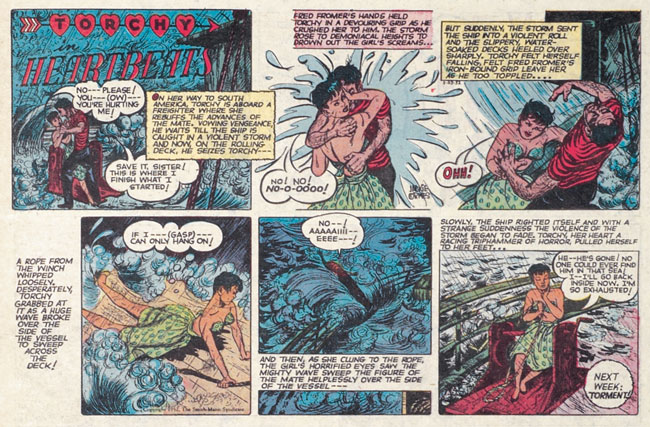
Jackie Ormes worked through independent contracts with the newspapers; she was not on a newspaper staff, nor in a syndicate such as we think of those today. She created everything herself, from story or gag to all the sketching, erasing, balloons, coloring, everything. She used herself as a model and people who knew her say she looked a lot like her beautiful, curvaceous women characters. Most of her work appeared in the Pittsburgh Courier, a weekly black-owned newspaper that had fourteen big city editions and a circulation from coast to coast at this time. Ormes’s first effort was a year-long comic strip, Torchy Brown in “Dixie to Harlem” in 1937 when she lived in Pittsburgh and then Ohio. She took a break for about seven years, we don’t know why. Now residing in Chicago, in 1945 she drew Candy for four months for the Chicago Defender; then the Patty-Jo ‘n’ Ginger single panel ran from 1945-56 in the Courier; and simultaneously from 1950-54 she revamped the Torchy idea to draw the full color Torchy in Heartbeats. Fashion and beautiful people inspired her drawing. She produced fashion shows and mingled with celebrities, becoming something of a celebrity herself. At the same time she donated much of her time and talent to political issues and to programs promoting racial uplift. Ormes and her husband lived in upscale mixed-race hotels that he managed, and she had a small studio-niche in these apartments. Here she made her cartoons and comic strips and mailed them to the newspaper in Pittsburgh in time for publication. Her lead time was quite short. Sometimes her Patty-Jo ‘n’ Ginger cartoon comments on a topical event that occurred only a week earlier!
How was her work received in her lifetime?
She must have had a following because her work was kept on in the Pittsburgh Courier for so many years. Readers asked her to make a doll after her adorable Patty-Jo character and in 1947 she connected with Terri Lee, a major doll company, to do just that. Letters from fans attest to her popularity. One letter from a black GI thanks her for her drawings of “wholesome American womanhood” since there were so few pin-up pictures of attractive black women at this time. But in 1954 her Torchy came to an end when others continued. I can only conclude that a woman’s romance-adventure strip was just not what the editors wanted at that time.
If you wanted readers to know one thing about Jackie Ormes, what would it be?
Jackie Ormes was a trailblazer, especially for women and African Americans. And yet her story was overlooked for such a long time. Surely there are other inspiring stories and fascinating work like Jackie Ormes’s out there waiting to be rediscovered. If you look through indexes of books on 20th century cartoonists you will not see reference to Jackie Ormes, nor, indeed, to most other black cartoonists, nor are many women cartoonists included. Perhaps racism and sexism have something to do with this neglect; undoubtedly, in the case of black cartoonists, it’s also because the black press was relatively small and the cartoonists remain mostly unknown. Thank goodness this is changing. I hope my book on Jackie Ormes will encourage other researchers to dig into the work of these cartoonists so that we can all now enjoy their talent, insights, and humor.
-Portions of this interview are reproduced with kind permission from Hogan’s Alley: http://cagle.msnbc.com/hogan/
— beth
Posted at 12:03 PM
Posted in Book Reviews, Classic Cartoonists, Interviews, Sexy Stuff | permalink | 1 Comment »
Thursday, March 4, 2026

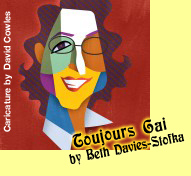
The people, places, and things of David Cowles’ world are lively, funny, and sometimes grotesque, animated with synergy so powerful you’d like to harness it to heat your home. Witness Exhibit A, the caricature of yours truly that accompanies this post.
Cowles’ illustrations and caricatures have been featured in such esteemed publications as Entertainment Weekly, Rolling Stone, Vibe, Time, Newsweek, Playboy, People, The Village Voice, Money, Worth, Fortune, Fast Company, Los Angeles Magazine, New York Magazine, The Boston Globe, The Chicago Tribune, The New York Times, The New Republic and Vanity Fair, among others.
He’s an animator too, and among his many projects he produced four videos for They Might Be Giants’ Here Come the 123s DVD (2008) and four more videos for They Might Be Giants’ Here Comes Science (2009).
Cowles graciously answered a bunch of questions from ITCH.
Let’s talk about your roots. Was there a particular caricaturist who produced a life-long love and appreciation of caricaturing in you, and when did you first see his or her work?
I would have to say that my first exposure to caricature would have to have been Mort Drucker’s work in MAD magazine. I feel like I’ve always been aware of his stuff, so I must have been pretty young when I first saw it. So, let’s say “from birth.”

Who do you think is the greatest caricaturist of all time? Why?
Tough question, but my all time favorite, and the one who had the biggest influence on what I do now, is Miguel Covarrubias. The argument could be made for plenty of others, like David Levine and Al Hirschfeld, but for me this guy is it. When I first saw his stuff in the 80s, in an article about a show they had of his at the Smithsonian, it was such a revelation to me. In his work, beginning in the 20′s, you could both see the influence of Mayan art from the past, and the direction caricature would go for the next thirty or so years.

How about cartooning? Suppose you wanted to teach a roomful of skeptics to appreciate the fine art of cartooning. Who would you use as an example?
Not sure I’d want to be in a room full of cartooning skeptics. Okay, let’s say somebody had a gun to my head and I had to engage them. There’s another one that would be tough to whittle down… As a kid I was obsessed equally with the art of Peanuts, Pogo, and Dennis the Menace. So I’d probably start there. And if their hearts aren’t melted by wise-crackin’ kids and animals, then screw ‘em.

Is there a particular animator who inspires you? Can we see his or her influences in your own work?
There have been a ton of animators that I’ve been inspired by, and the style of the old UPA cartoons have cast a big shadow on my work. But my all time favorite animator is probably Tex Avery. His sense of humor was so extreme and his timing was so perfect that he makes me laugh consistently more than any other animator. I want his influence to show more in my work.

Was it a total blast to work with They Might Be Giants?
They are hands down the best experience I’ve had so far in the animation business. I mostly deal with John Flansburgh, who is a director himself and also worked as a graphic artist before the band took off. So, he actually taught me a lot as we’ve worked together. It was also an amazing experience where the executive in charge of the project (Flansburgh, who commissions all of the videos) has given notes that actually make the project better. There doesn’t seem to be any ego involved, just everybody trying to make the best end product. So, yeah, a total blast basically sums it up.

Explore Cowles’ multiple awesome portfolios here.
— beth
Posted at 11:03 AM
Posted in Classic Cartoonists, Contemporary Cartoonists, General, Interviews | permalink | No Comments »
Thursday, February 25, 2026

Fantagraphics’ The Brinkley Girls: The Best of Nell Brinkley’s Cartoons From 1913-1940 is seductive and spell-binding, a siren call of exploding color and really, really pretty girls. I know, because my copy was stolen before I paid for it. A woman stalked me in the bookstore and took it as soon as I set it down to hide in the bathroom. Comics artist and ground-breaking herstorian Trina Robbins, editor of this phenomenal collection, took a few moments to explain to I.T.C.H. how these gorgeous women of style came to life on Hearst’s pages for almost 30 years. I.T.C.H.: When did you first encounter Nell Brinkley?
Trina Robbins: The first Brinkley pages I ever saw were very kindly given to me by Bill Blackbeard, and though they obviously were very beautiful, I saw them out of context, so I didn’t “get it.” If you see Nell out of context, all you see is beautiful art, but the writing that goes with it is necessary in order to really understand what she was doing. Then, when cat yronwode and I co-wrote the first book on women in comics, Women and the Comics, I still had very little to go on about Nell. The biggest piece of information I had came from a Los Angeles group of illustration fans, and that information later turned out to be absolutely faulty!

I.T.C.H.: What kind of a woman was she?
TR: The research I’ve done uncovers a woman whose outlook was as romantic as her writings. She seems to have been sheltered quite a bit from harsh reality by her mother, who managed everything for her. At the same time, she handled her extreme deadlines very well, and seems to have been politically aware. For instance, she was passionately angry about the mistreatment of the WWI vets during the Depression, and she also often expressed her admiration of Eleanor Roosevelt in her daily panels.

I.T.C.H.: Can you tell us a little about her working conditions?
TR: Nell had a carriage house behind her New Rochelle, NY, house, which she turned into a studio. From there she turned out her daily panels and Sunday pages, and often also her movie or stage reviews-a LOT of work! In order to meet her deadlines, she had worked out a system: as soon as she finished a page, she would roll it up and give it to her chauffeur, who would drive it to the train station in time to meet the train to NY. He would pass the art to the conductor through the train window, and when the train arrived at Grand Central station, there’d be a man from the Hearst syndicate waiting for it, to take it to the Hearst offices by deadline.

I.T.C.H.: How was her work received in her lifetime?
TR: Nell was a superstar! She had at least 3 popular songs written about her and her “Brinkley Girls,” when she traveled, newspaper reporters would be at the train station or later at her hotel room to interview her about how she liked their city, although usually the questions were simple stuff like “How do you like San Francisco girls,” to which she would of course answer, “They’re very pretty.” People, especially young women, collected and cut out her art and pasted it into scrapbooks, and little girls would cut out and color her black and white daily pages. Her fans, mostly female, also copied her art, and an obituary about her said that she had more copyists than any other artist except Charles Dana Gibson.

I.T.C.H.: If you wanted readers to know one thing about Nell Brinkley, what would it be?
T-R: Nell drew “like a girl.” My experience and research has shown me that for the most part contemporary male comics historians, scholars, and “experts” interpret pretty art as code for unimportant, trivial, “female.” The world of comics criticism needs to open up to a non male-centric way of looking at comic art, and I think that will only happen when more women enter into that world.
— beth
Posted at 02:02 AM
Posted in Book Reviews, Interviews, Sexy Stuff | permalink | 2 Comments »
Monday, February 25, 2026
Arf Lover Paul Bach kindly put me in touch with Golden Age Doll Man artist Fran Matera a while back. I’ve been saving this interview I did with him to celebrate our last days of Doll Man on the Arf Lovers blog. Fran Matera has worked during his career on The Hulk to Tarzan, Steve Roper to Dickie Dare but I wanted to ask Matera most about his days on Doll Man and at Quality Comics, Doll Man’s publisher. Mr. Matera graciously answered my questions. and I’ve peppered them with some of his Doll Man sketches.
1. What was your early experience with comics?
The best part of my grammar and high school years was swapping comic books! I discovered newspapers from many parts of the country containing double page comic sections were available in the public library reading room, a daily stop-over before heading for home while in my senior year.
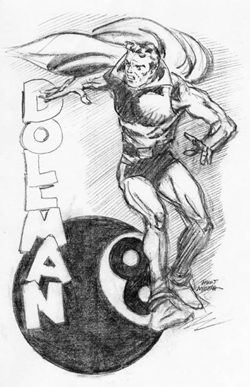
(click for a closer look)
2. How did you get professionally involved in the field?
FDR’s “greetings” draft notices were sent to all available men (including draft-age cartoonists at Quality Comics). Al Andriola, viewing my work, encouraged me to carry some pieces to the editors at Quality Comics. The conditions of the bullpens was obviously thinning out.I was hired that day. Editor Busy Arnold assiged me an empty board, Gill Fox handed me sample proof pages of his “Poison Ivy” with a script. In those few weeks, Geo. Brennan assigned me to pencil and ink “The Clock”, followed by penciling and inking Will Eisner’s Doll Man.
3. What particular approach was taken to illustrate the Doll Man scripts?
There didn’t seem to be any particular challenges except the ever awareness of keeping surrouding objects such as phones, pencils, door knobs,tables, lamps etc in proper adjustments to the eight -inch hero. Playing up the uniqueness of Doll Man’s size offered the artist quaranteed “special affects” with Doll Man staged in an appropriate viewpoint whether in closup or background.
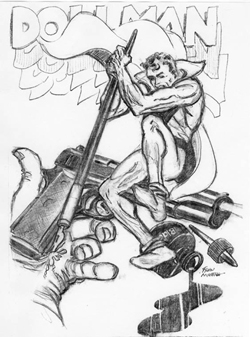
(click for a closer look)
4. Any other remembrances of the those times?
Commuting to the Quality offices at Lexington Ave in NYC I recall Al Stahl, Harry Chessler, Gustafson, John Belfi (doing backgrounds on the delivered Reed Crandall and Jack Cole pages). There was a lettering person, whose name I can’t remember, I watched him letter page after page in quick fashion without guide lines to accumulate enough pages, 25 plus at one- buck per page.
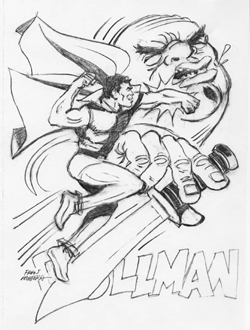
(click for a closer look)
5. Any more thoughts?The highlight of my short term spent there before moving to the Stamford Connecticut studio at Busy Arnold’s suggestion was the experience of meeting Jack Kirby and Simon in their studio a few blocks south in Tudor City to assist completion of a late six page pencil-and ink layout of “Boy Commandos”!
Now here’s the best part! I asked Fran Matera if he would provide us with a photo of himself and maybe a drawing of Doll Man and look at this beauty he created of contemporary Fran Matera and Doll Man looking on a 1940s Fran Matera slaving away at the drawing board creating Doll Man’s adventures!
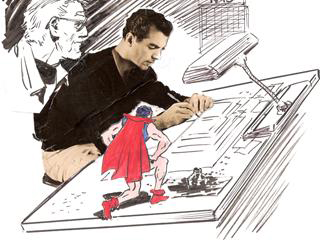
Fran Matera has a terrific website and accepts commissions here.
Next week, to conclude our long and fun run of our little hero Doll Man I am going to present “The Top Ten Wonkiest Doll Man Covers”. #1 will be one I’ve not yet shown you and is the craziest, kookiest, weirdest, silliest, sexiest Doll Man cover of all. Don’t miss the exciting Doll Man conclusion!

— C. Yoe (in the funny papers)
Posted at 03:02 PM
Posted in Doll Man, Interviews | permalink | 1 Comment »
Thursday, November 8, 2025
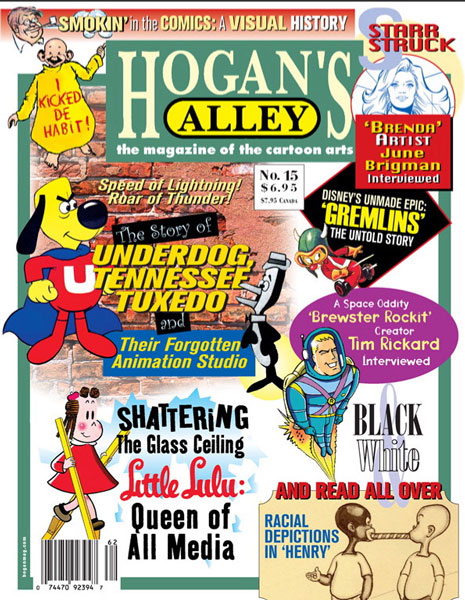
Tom Heintjes is the editor of the absolutely wonderful comics magazine, Hogan’s Alley. HA covers both old skool and contemporary cartooning and always does so with an terrific entertaining and lively flair. Both the writing and design in Hogan’s is top notch. I always wanted to find out a little more about the talent behind HA so I talked the usually shy and modest Heintjes into a little self-revelation via an Arf Lover’s Blog Gimme Five!
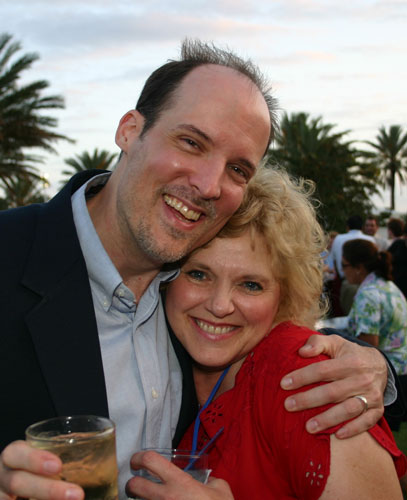 Above: Tom isn’t so shy when he has a
few drinks under his belt. Here Tom drunkenly hits on
cartoonist Greg Evans’ wife.1. Tell us about you first vivid comics reading experience, Tom.
I remember my grandmother bringing me and my brother Walt Disney comics books, and they just wrapped themselves around my brain immediately and never let go. There was one story where Uncle Scrooge had polluted a river so badly that the water became thick and sludgy, and one of the nephews described as being like “meringue.” I had no idea was meringue was, but at least I was reading and trying to figure it all out. I just fell in love with comics…nothing else compared. I started getting Peanuts paperback collections, comics adapted to View Masters, anything I could get my hands on. In that way, I haven’t really changed much, I guess!
2. How did Hogan’s Alley get started, Tom?
Rick Marschall and I conceived the idea of Hogan’s Alley in early 1994. We often talked about the type of comics magazine we would like to see on the stands, just blue-skying about our ideal comics magazine. Of course, Rick was the mastermind behind the legendary NEMO magazine, so he is a great partner to have. Anyway, the magazine we ended up describing sounded so good that-like a couple of idiots-we decided to put it out ourselves, figuring no one in their right minds would put such a magazine out. In the course of that first issue, published in the fall of 1994, we brought David Folkman on board as art director, and he’s been an indispensable part of things from the first issue.
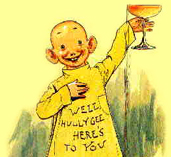
One thing we felt was important was to connect cartooning’s present to its earliest days, so we came up with the title Hogan’s Alley, which is of course connected to the Yellow Kid. In hindsight, from a marketing point of view, it probably isn’t a good title. Most comics fans have no idea what the title represents-the Yellow Kid’s neighborhood-so they don’t know that they might be interested in the magazine. But we try to show both the interconnectedness of cartooning’s various disciplines as well as the role of cartooning in the larger realm of popular culture.
I think it’s important to note, also, that although we treat cartooning seriously, we also try to make it fun and accessible. I quite dislike turgid, overly scholarly writing about comics because it doesn’t further the understanding of the medium; in fact, often it detracts from it. In some ways, this dual-track editorial approach probably works against us, as some readers don’t know if we’re a serious comics magazine or a quirky gadfly. The truth is, we’re both. I try not to lose that sense of fun and excitement that got us all interested in comics in the first place!
3. The fun and excitement is def something I deeply appreciate about Hogan’s Alley-those qualiies come through strong. You have such a wonderful smorgasboard of contents -how do you choose what’s going to go in a new issue?
I wish I could say with a straight face that I approach each issue with a road map, but the truth is that it’s a much more organic process than that. And by “organic,” I mean chaotic! I’m lucky to have writers bring me great ideas that we shape into features, and I also seek out writers who I think would be good for a particular idea. A perfect example of the latter process is the article we published on martial arts ads in the comics. I became acquainted online with a writer named Dan Kelly who had deep interests in both martial arts and comics, so I approached him about writing an article tying the areas together. And I have to say that his article is one of my favorite pieces we’ve published!
4. The design is as terrific as the editorial content in HA, who does that and what’s the designer’s philosophical approach?
I mentioned David Folkman earlier, and he’s completely responsible for the look of the magazine. I give him articles and have no idea how he’s going to make them work, but he works miracles every time. I never fail to be amazed at what he puts together each issue. David is also a lifelong comics fan and has both amazing archives, full of obscurities, and know tons of people who help us out in countless ways.
5. What kind of treats are in the brand new Hogan’s Alley #15?
Well, it’s our usual smorgasbord…some in-depth looks at animation, comic strips, comic books and more. We really cast a wide net this issue and hopefully have something for everyone. I’m not trying to be vague or coy, but the articles range from Underdog to Brenda Starr to Henry to the amazing career of Hy Eisman, plus a lot more. If anyone reading this interview has never read Hogan’s Alley, this is a good issue to start with as we offer a great breadth of material in issue #15. Craig, thanks so much for the opportunity to talk about Hogan’s Alley as well as my love of comics. It’s a real treat to be on Arf Lovers, one of my favorite blogs!
“One of”, Tom? Anyway, the pleasure’s all yours!
The latest HA. Do yourself a big favor and snag a copy.
This link has the #15 and ALL the GR8 back issues of
Hogan’s Alley that are available for sale.
— C. Yoe (in the funny papers)
Posted at 05:11 PM
Posted in Interviews | permalink | 8 Comments »
Wednesday, October 31, 2025
I was real glad to see Dean Mullaney at SPX. Weird But True, Dean almost published the Arf books 15 or so years ago at his Eclipse comics company. He and DC and Marvel and Dark Horse and Fantagraphics all said they wanted to publish Arf at the time. I decided to hold off . Anyway, Dean has recently plunged into doing awesome classic comic strip reprints for IDW. I interviewed him to find out all the great details.

1. Dean, where have you been hiding all these years?
In Key West, where I own two businesses — one graphic design, the other signmaking, and the 1889 building that houses them. All built up after the demise of Eclipse Comics left me flat broke.
2. I didn’t know you had such a boner for old comic strips.
Oh, yeah. In fact, when I started Eclipse in 1977 to publish the “Sabre” graphic novel, I looked through my collection to find a format I liked, since no one had published a graphic novel for the direct market before that. I found the inspiration in Ed Aprill’s great strip books — Ed used that fantastic, heavy uncoated paper. And, of course, I devoured anything from Woody Gelman and Hyperion Press. As a kid n the 60s, Dick Tracy was my fave, running as a full tab on the front of the NY Sunday News.
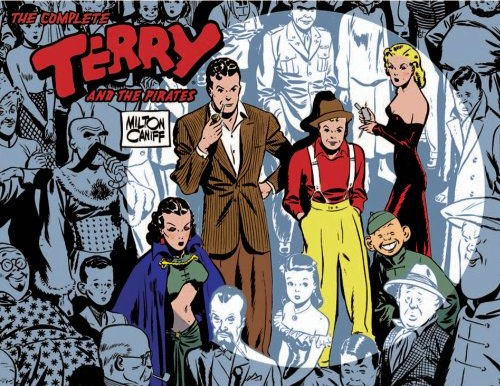
(click to order your copy)
3. Why did you start with Dick Tracy and Terry and the Pirates?
I wish I could take credit for Tracy, but I have nothing to do with it; the guys at IDW get all the kudos. I approached them with my imprint, The Library of American Comics, because I liked what they did with Tracy (and I’ve known Ted Adams since he was my circulation manager at Eclipse way back when). I started with Terry because . . . it’s the one strip I’d take with me to the proverbial desert island. Love the art, love the characters (ooh, Burma), but most of all, am mesmerized by the storytelling. The stories are what bring me back time and time again.
4. What one strip reprint that would probably be a complete financial disaster would you like to do if money weren’t any kind of issue?
I don’t think there’s anything you couldn’t get at least close to break even on, if you presented it well. In terms of “non-commercial” strips, probably the biggest bug up my ass is to do “White Boy” by Garrett Price. I’m only missing a handful to have a complete collection. Don’t be surprised if you see it announced in the next few months.
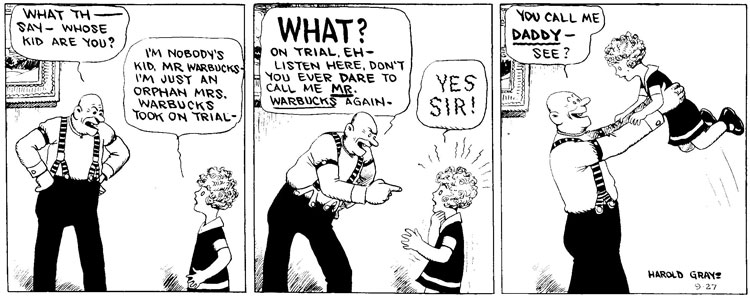
Annie meets Daddy
5.These Tracy and Terry reprints are so great. What’s next?
Terry 2′s at the printer, and Terry 3 and LOA 1 are in production. Next June we’ve got “Scorchy Smith and the Art of Noel Sickles,” a whopping 11″ x 11″ 352-page hardcover with the complete Sickles Scorchy for the first time, some John Terry and Bert Christman examples and a whopping 60-plus pages of Sickles’ magazine and book illustration work, wrapped around a bio by Bruce Canwell, who’s doing such a great job on the Terry essays. A tip of the old hat to Andrew Pepoy for supplying most of the strips. I’ve got a couple of other books in the contract stage. I’m in it for the long haul, Craig!
— C. Yoe (in the funny papers)
Posted at 10:10 AM
Posted in Interviews | permalink | 2 Comments »
Tuesday, October 16, 2025
The greatest news in cartoon books this fall is hands-down the publication of The Completely MAD Don Martin. As every Arf Lover knows, Don Martin was a fucking genius. “Brilliant” doesn’t even begin to describe the hilarious and unique work he produced over a thirty year period for Mad Magazine. Now, every last piece he produced for MAD has been compiled in a gift set of staggering proportions by Running Press. And today I’m proud to present an Arf Lovers exclusive as we chat with Jon Anderson, publisher of Running Press.
Craig: Jon, I’m absolutely thrilled that this set is being published.
Jon: I’m thrilled, too. Like anyone who grew up in the sixties and seventies, Mad Magazine was a huge influence on me. All the contributors were brilliant, but Don Martin was the one that seemed to inhabit an entirely different creative plane. The most wonderful thing about this project has been the opportunity to reacquaint myself with material I hadn’t seen in over thirty years. It instantly took me back, and I was astounded at how incredibly fresh and funny Don Martin (photo below) still is.
How did the project come about?
I had been talking with the folks at Mad for years about wanting to collect the works of their best and most prolific artists. The result is going to be a series of deluxe boxed sets concentrating on one artist at a time. We’ve begun with Don Martin, but future years will bring Jack Davis, Al Jaffe, Sergio Aragones, Mort Drucker, etc.
And I hope my very fave Wally Wood! Anyhoo, this Don Martin set is the perfect beginning for things to come. It doesn’t look like you spared anything.
That was the idea. We were so determined to produce a true collector’s item that we went and hired the same folks who had produced The Complete Far Side and The Complete Calvin & Hobbes collections of a few years ago. The set is two volumes, 1,000 pages, slip-cased, and is printed on such high-quality paper that it weighs in at over twenty pounds. The retail price is $150 (Cheap!). And we were able to get appreciation pieces from almost all of Martin’s Mad colleagues as well as a wonderful introduction from Gary Larson.
Larson! Trez cool! And, BTW only $94.50 (Real Cheap) on Amazon. Is there anything the set doesn’t have?
The only thing we don’t have that I would have loved to include is the Captain Klutz material. However, that was all done for the Warner Books paperback line and never appeared in the magazine itself. Since this is specifically Martin’s complete work from the magazine, we ultimately decided not to stray from that mandate. The end result is a celebration of Don Martin’s Mad Magazine career, and it does include every single illustration he produced over a span of thirty years as a contributor, including the stickers, posters and other ephemera.
(Hurry and click to order to secure your set)
How is it selling in?
We’re sold out. Every last copy we printed has been spoken for. They’re all on their way to stores now, and the printing process is too time-consuming for us to have any more for this holiday season. Any place that sells books should have them, but when they sell what they ordered, that will be it for this year. I would encourage anyone who wants a copy this year, one of the first editions, to get it right after it goes on sale at the end of October or better yet pre-order it to, as they way, avoid disappointment.
Me glad I’ve scored my copy already.
Selling it was a fascinating exercise, Craig. What we found was that if we mentioned Don Martin’s name to a buyer over the age of forty, the sale was made on the spot. They were instantly familiar with him and fully understood the potential. Buyers who were under forty were a different story. Other than those who knew comics, they mostly scratched their heads and asked: Who is Don Martin? When we proceeded to show them his work, they recognized it, but it wasn’t until they mentioned the project to older co-workers that they began to realize how many copies they would be able to sell.
They didn’t know who Don Martin was?!? I suffer the fools! He’s merely Mad’s Maddest artist! I’ll definitely look forward to future additions to the Mad’s Greatest Artists series. Think Wood, Jon! Speaking for myself, that’s how how I start every morning.
— C. Yoe (in the funny papers)
Posted at 05:10 PM
Posted in Classic Cartoonists, Interviews | permalink | 12 Comments »
Tuesday, July 10, 2025
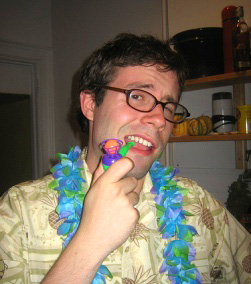
John Martz is, with his buddies, behind every illustrator and art director’s favorite website, drawn.ca. And that makes John one of the most powerful dudes in the Known Universe. Thankfully he’s a also heck of a nice guy. And-who knew-himself every bit as talented as the artists he daily showcases. Arf interviewed him from his Canadian studio…
1. You highlight so many artists each day on drawn.ca but tell us about yourself including something people would be surprised about.
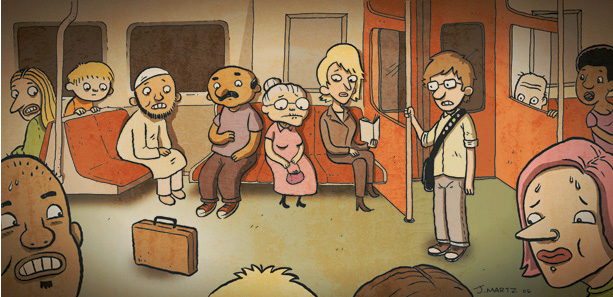
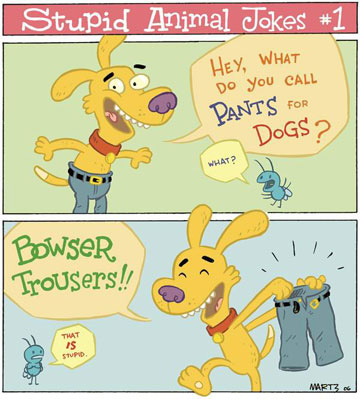
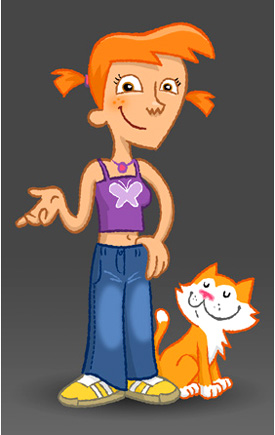
I think a lot of people would be surprised to know that as the editor of a blog devoted to illustration and cartooning, I’ve only been working full-time as an illustrator for about 7 months. I had been moonlighting for years, with a design and motion graphics day job, but only recently took the plunge into full-time cartooning. Turns out the best thing to come out of the website was my own renewed passion to draw funny pictures for a living. (Some of John’s funny pics illustrate this interview but do yourself a favor and see more here).
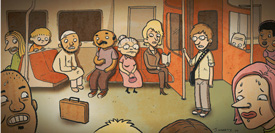
(click for a closer look)
2. What dead artists inspire you and why?
I find dead artists don’t draw as well as they did when they were alive. That being said, a few of my biggest influences that are no longer with us are Charles Schulz, Jim Henson, and Chuck Jones. All three had this uncanny ability to find the perfect balance between extreme silliness and real, honest emotion and warmth. Case studies: a) Schulz: Charlie Brown aside, any Peanuts strip with Rerun. b) Jones: “Feed the Kitty” c) Henson: umm… everything?
3. Oh, boy, I get to name drop. I got to work on projects with Schulz and Jones and worked for Jim Henson. I certainly agree they were geniuses! Favorite Frazetta painting and why?
You know the one with the shirtless warrior standing beside the big-breasted woman and the wild tigers? That one.
4. Something most people don’t know about me: I modeled for that Frazetta painting! The shirtless warrior that is. John, what should we look for our your new personal illustration site and your blog?
Well, on my illustration site, you’ll find a growing portfolio of my work, and on my personal blog you can find sketches, comics, and other fun things like Cinema Toast, a feature in which I review every movie I watch in rhyming verse. Example:
“V for Vendetta
Coulda been betta”
Genius, I know!
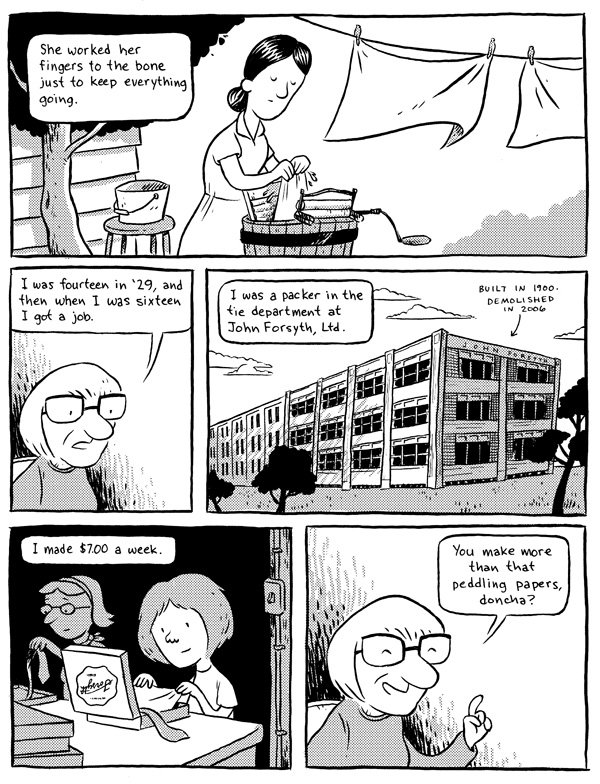
5. Really dig your new comic for the “Syncopated” book about your Grandmother’s life back in 1929. What was the process like and what was it like emotionally to produce that?
I’m glad you like it. I’m currently reworking the script and the format to make it into something longer. All of the content stems from an audio recording of an interview I conducted with her while I was about fifteen. Listening to it, and researching old family photos and newspaper articles has helped me realize what an important role my grandmother played in my life, especially how she fostered creativity and encouraged me to be an artist. There’s also a lot of emotional guilt and pressure involved to not do a half-assed job!
Sounds like a great graphic novel in the making! Good luck with that, John!
— C. Yoe (in the funny papers)
Posted at 04:07 PM
Posted in Contemporary Cartoonists, Interviews | permalink | 3 Comments »
|
SUBSCRIBE

A-List: The I.T.C.H. Blog Contributors
BLOGS
COMIC NEWS
MY FAVORITE SOURCES FOR COOL BOOKS
THE PUBLISHER OF YOE BOOKS
THE PUBLISHERS OF OTHER BOOKS BY CRAIG YOE
CATEGORIES
ARCHIVES
META
Every Wednesday is
WACKY WONDER WOMAN WEDNESDAY
archive
DOLL MAN WEIRDNESS
archive
|