












Local Vanity Cartoon Books — As We See ‘Em, Part 1
In the early part of the 20th century, most American towns had at least one newspaper, and many of those newspapers employed their own cartoonist(s). Some newspapers took to publishing caricatures and short biographies of local figures. Other local persons of import (or, who at least felt they were important, most notably local manufacturers and businessmen), wanted in too, feeling such caricatures to be recognition in their community that they were part of the elite - in addition to simply being good advertising.
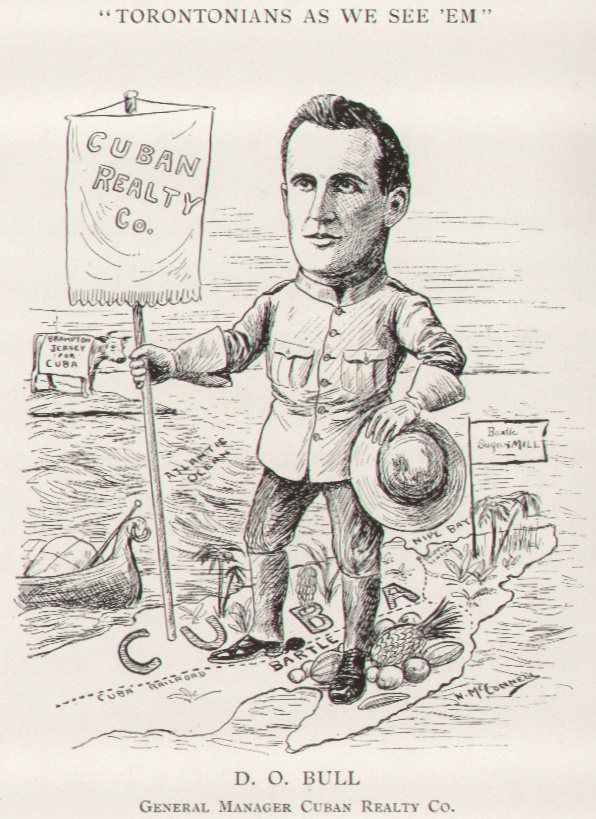
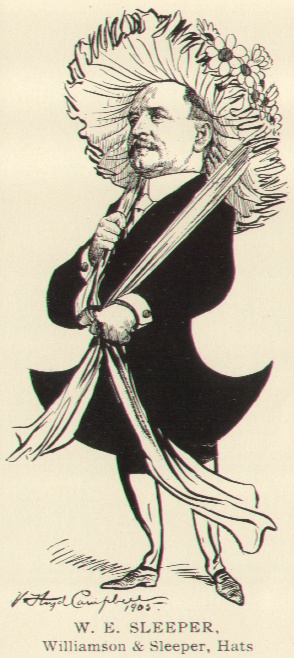
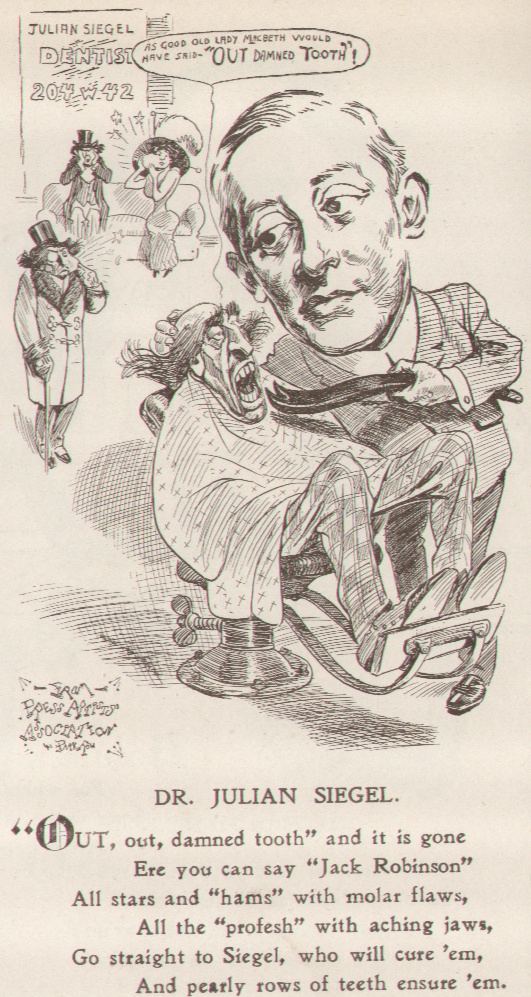
Below, left-to-right: D.O. Bull, General Manager of the Cuban Realty Company, from Torontonians As We See ‘Em, art by Newton McConnell; W.E. Sleeper, seller of hats, 1905, from Bostonians As We See Them; and Dentist Julian Siegel, 1911, from Them As Is Because (New York City).
Click on any picture, to see an enlarged version.
 |
 |
|
The desire to be caricatured evolved into book collections of caricatures of local (mostly business) figures, who subscribed to that book collection, wherein everyone in the book bought at least one copy of the book, thereby paying for its creation, and advertising to everyone else receiving the book, who was “in” in their community. I have found or seen listed examples from cities across the U.S., Canada, Australia, New Zealand, and South Africa. They began in earnest around 1904, under the title As We See ‘Em, with the bulk published between then and the start of WW I (though I’ve seen a few such titles published as late as the 1930s).
Cover art, per shown below left, by Hugh Doyle, for the 1905 Bostonians As We See Them, was unusual. Most collections instead have covers similar to that shown below right, for the circa 1905 Men of Affairs - The (New York) Evening Mail. Men of Affairs pulled the additional trick of engraving each subscribers name on his copy (see bottom right of the cover), and placing that subscriber on the first page of his copy.
 |
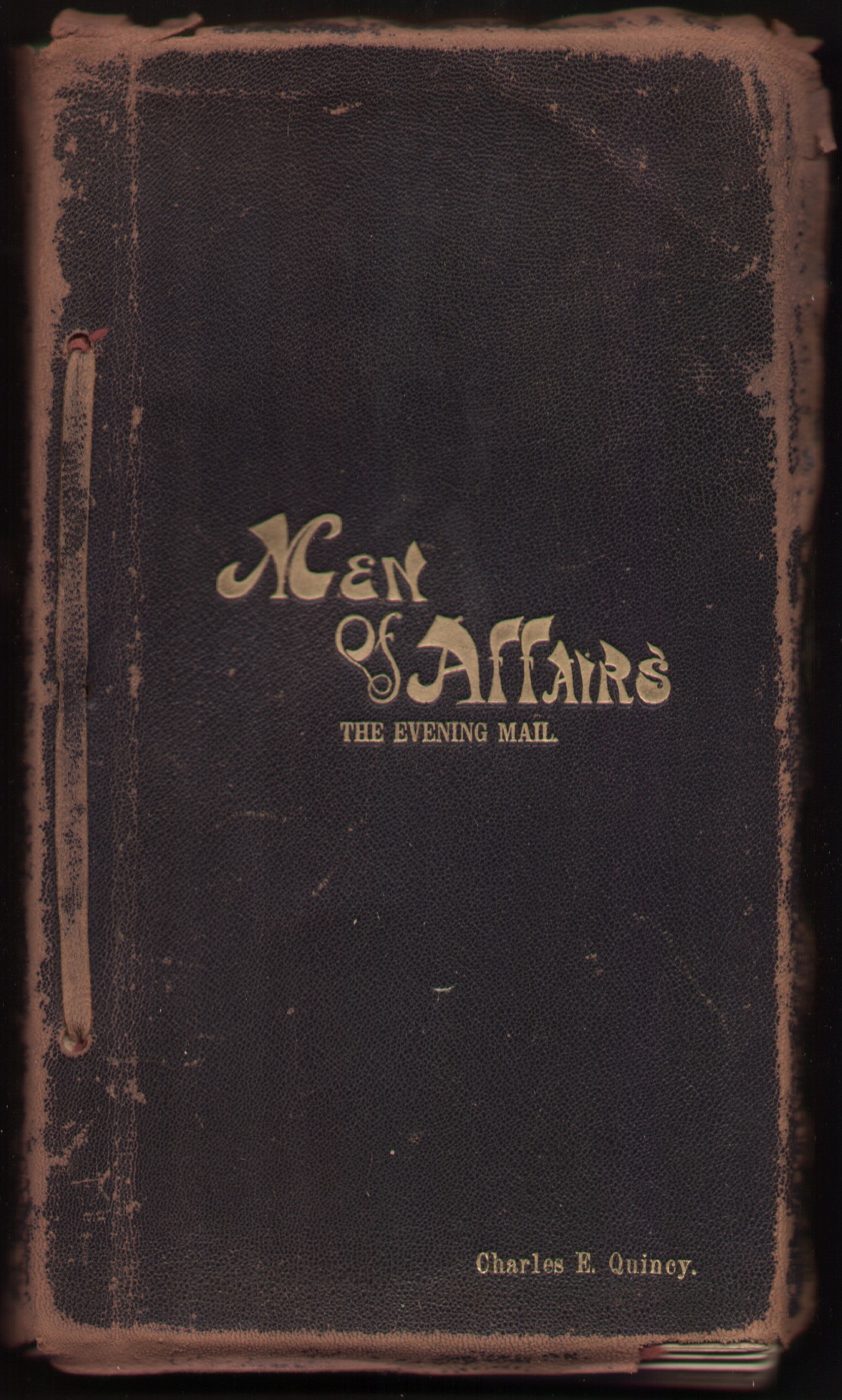
|
The As We See ‘Em books were all organized by the same group, and many from 1904 and 1905 contain slight variations of the introduction shown below left (from Kansas Cityans As We See ‘Em version). Below right, a page from the 1909 Manitobans As We See ‘Em, shows the staff that put together the book, verifying much of the process of its creation, merely hinted at in most of the other books. Basically, canvassers were sent out to local businesses, to find subscribers to the book. The subscriber signed an agreement, photographs were taken (or, provided by the subject). Local newspapers’ cartoonist(s) were hired — always the cheaper, smaller names, hungry for work, though as will be seen further on, some involved artists who later became famous. In some cases, a poet or other writer, was hired to pen some brief copy accompanying each picture.
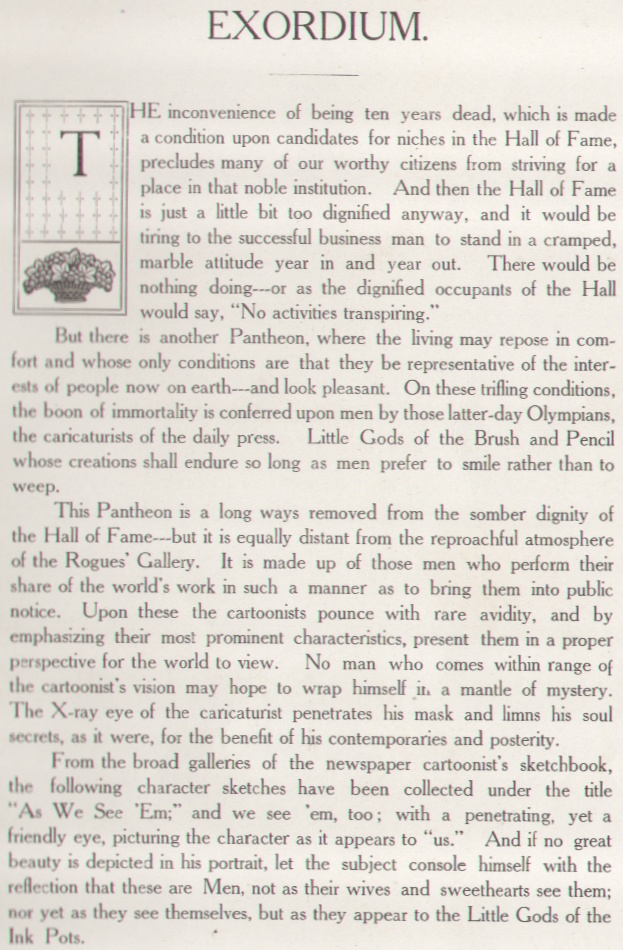 |
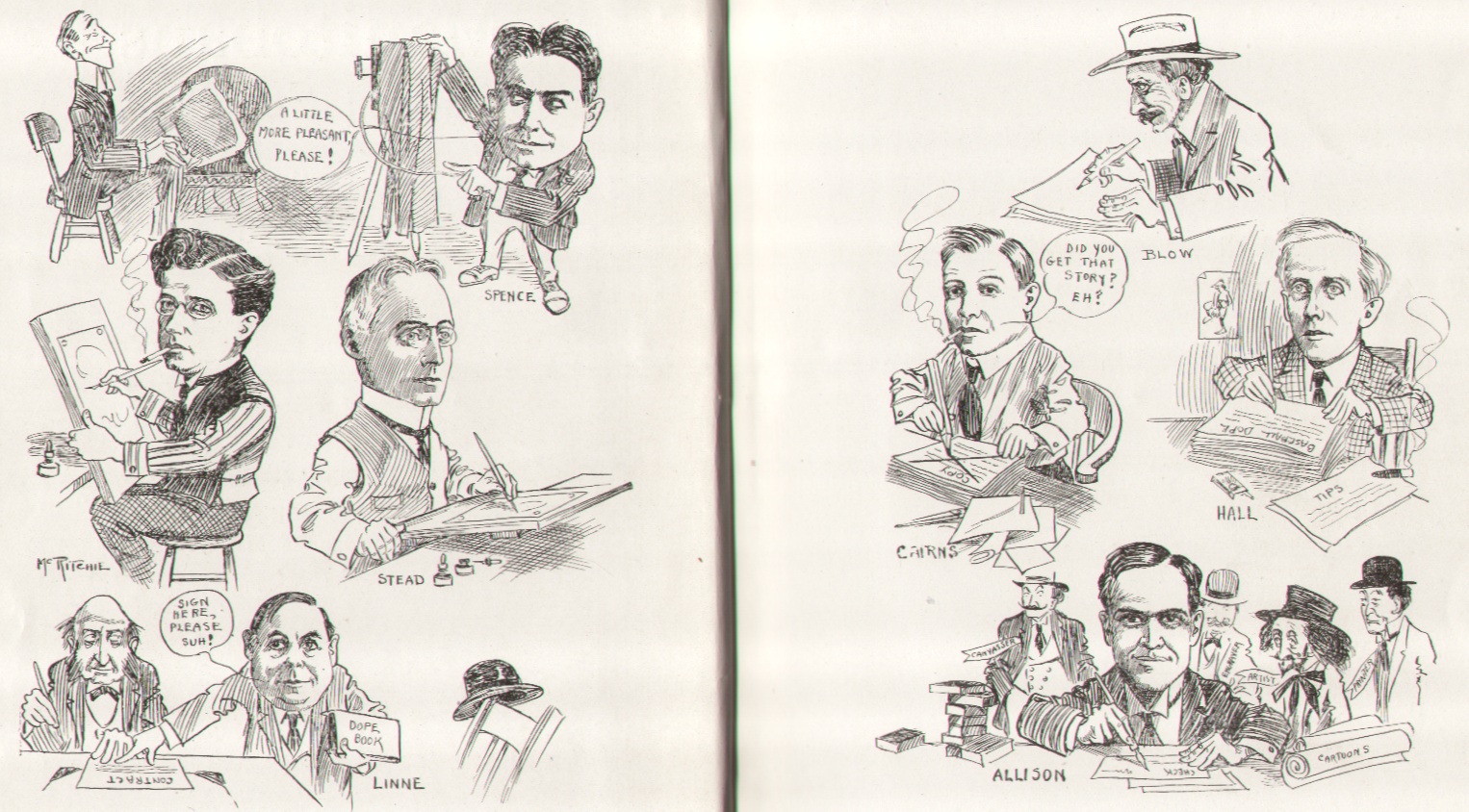
|
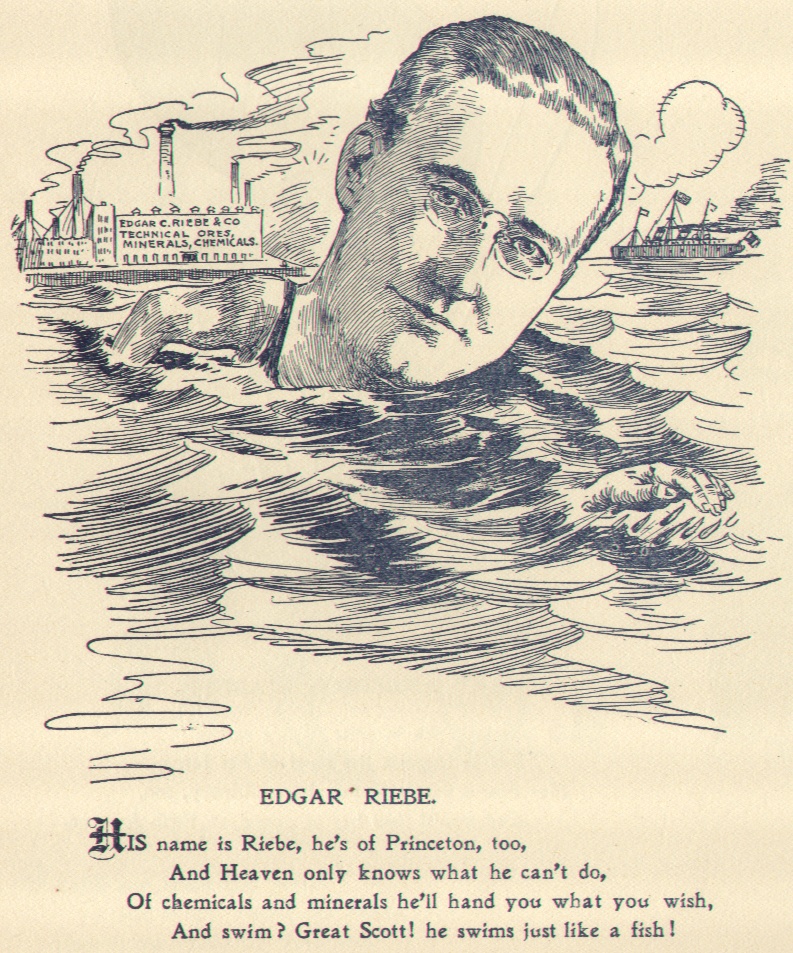
The restriction that each subscriber’s face match the photo taken of them, results in nearly all the caricatures having over-sized heads, often posed in ways that don’t quite match the positioning of their bodies. Below left, with art by F.Finch (“Doc Bird”), W.H. Huff of the Victor Fuel Company, is depicted pumping up prices, from the 1909 Members of the Colorado Traffic Club in Caricature (Denver). Below left, from Them As Is Because, Edgar C. Riebe is shown swimming in the waters outside his own minerals and chemicals plant. No word on whether swimming in unregulated 1911 chemical waste, resulted in any super-powers (though, maybe that’s the real reason for his over-sized head)!
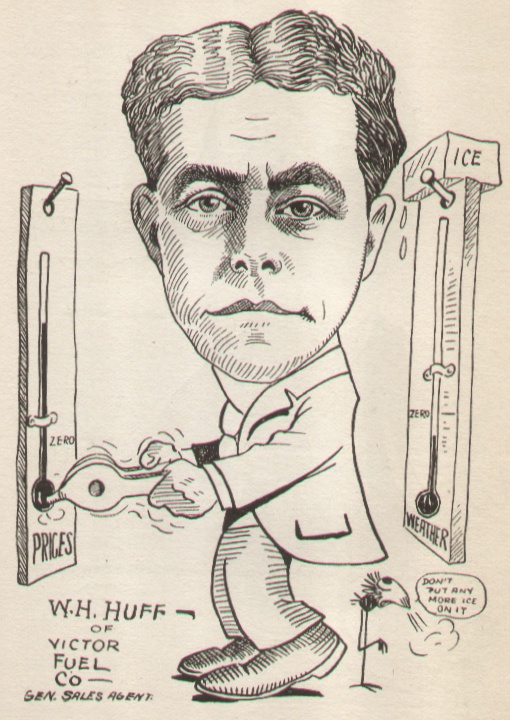 |
|
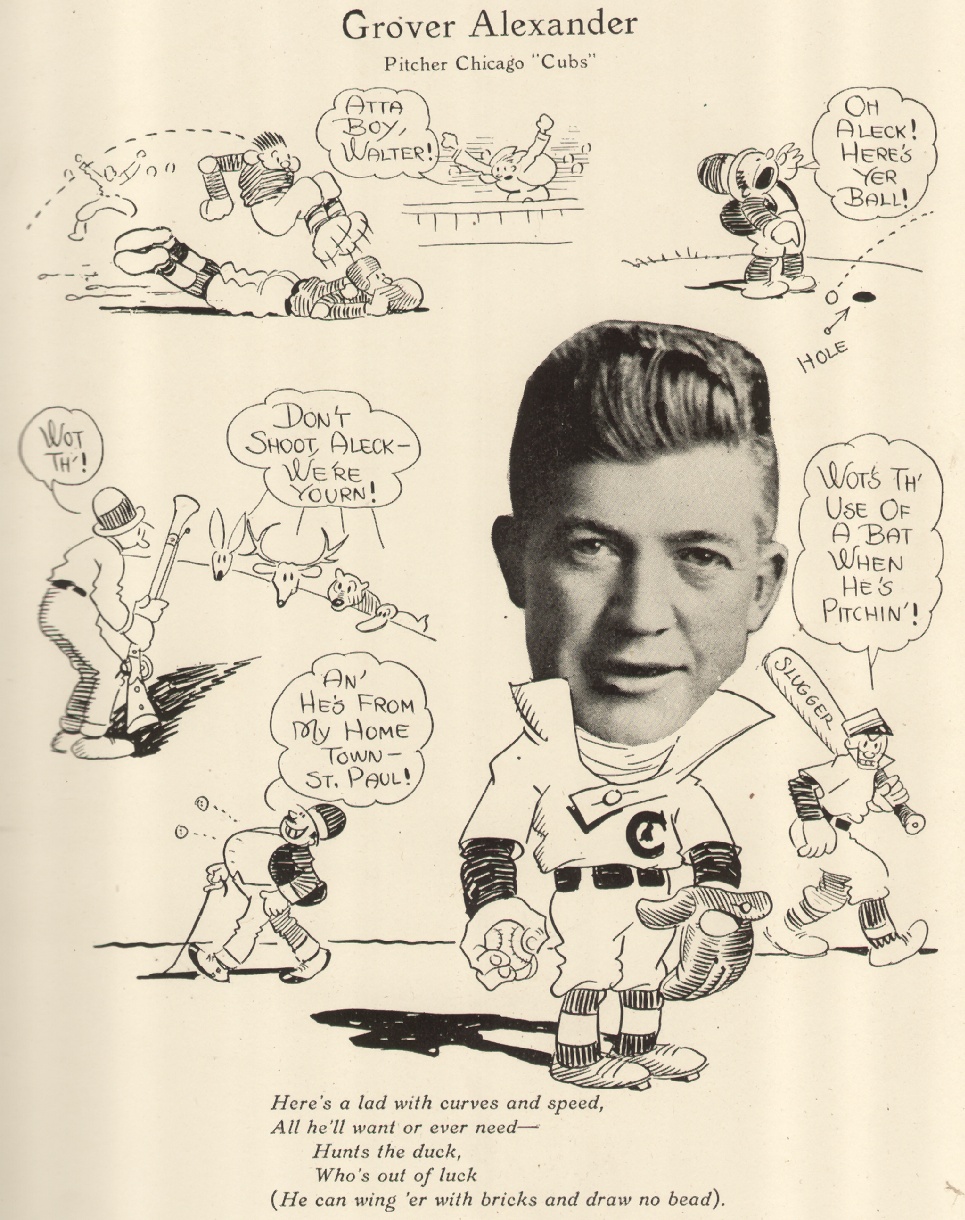
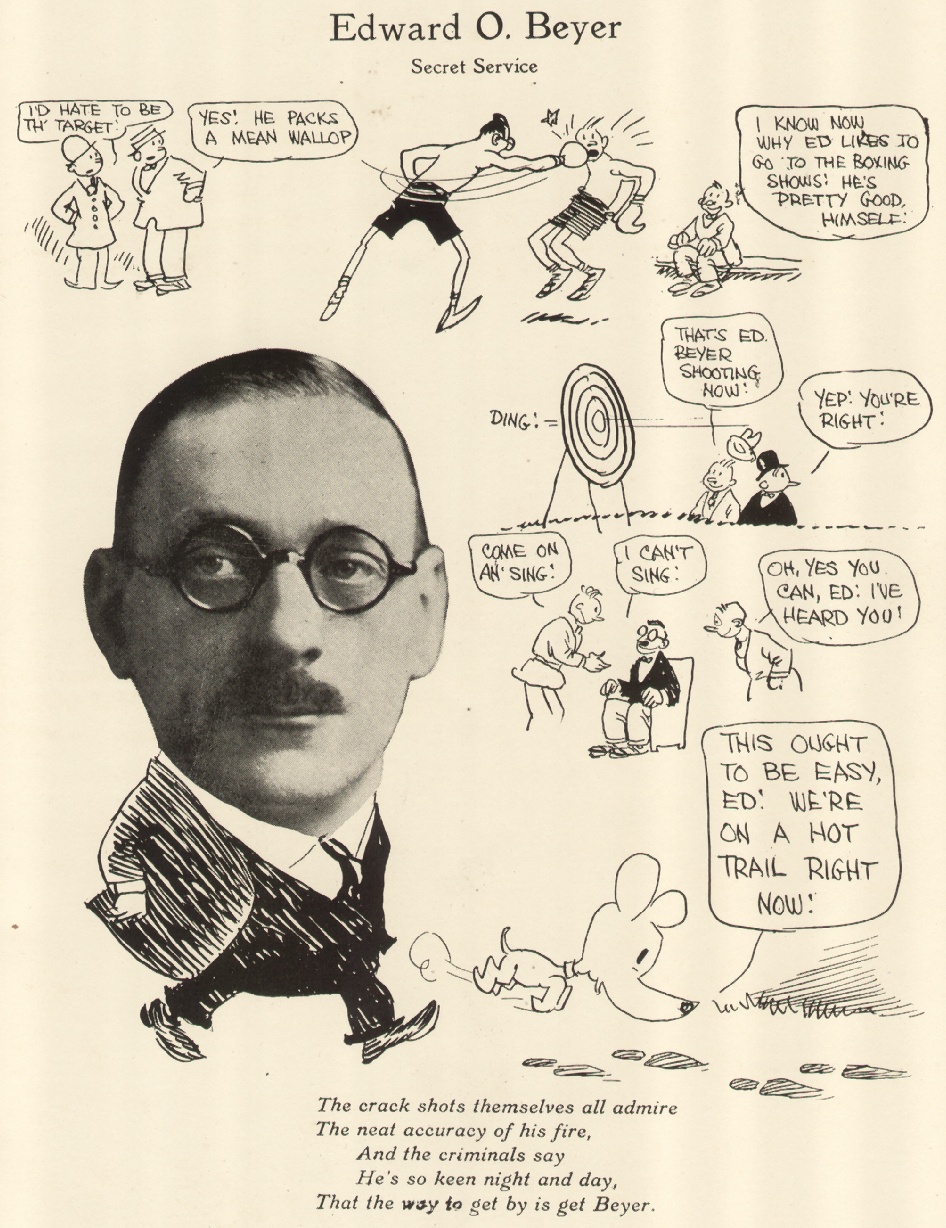
While the earliest As We See ‘Em style books (and by now, you’ve noticed a variety of other titles — there’s nothing like copying a profitable idea) were solidly cartoons, some later versions used the persons photo itself, instead of drawing their head. (One can only speculate, this might be a result of complaints about the accuracy of the drawn version…)
Below left, from the 1923 Live Wires in Their Line, Chicago Cubs pitcher, Grover Alexander. Below right, from the same book, Secret Service agent Edward O. Beyer (who obviously wasn’t concerned about the “Secret” part of his job title).
 |
|
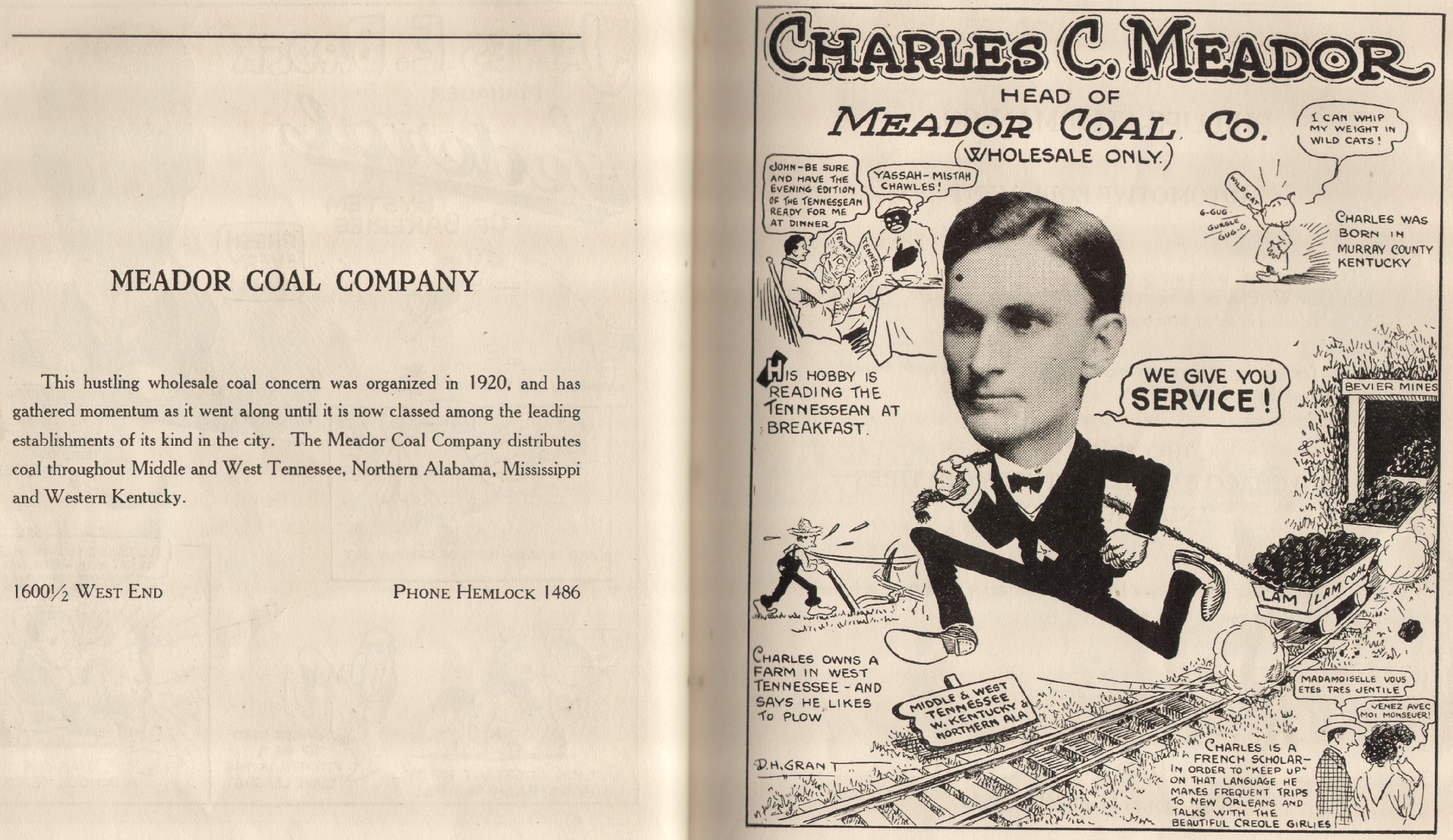
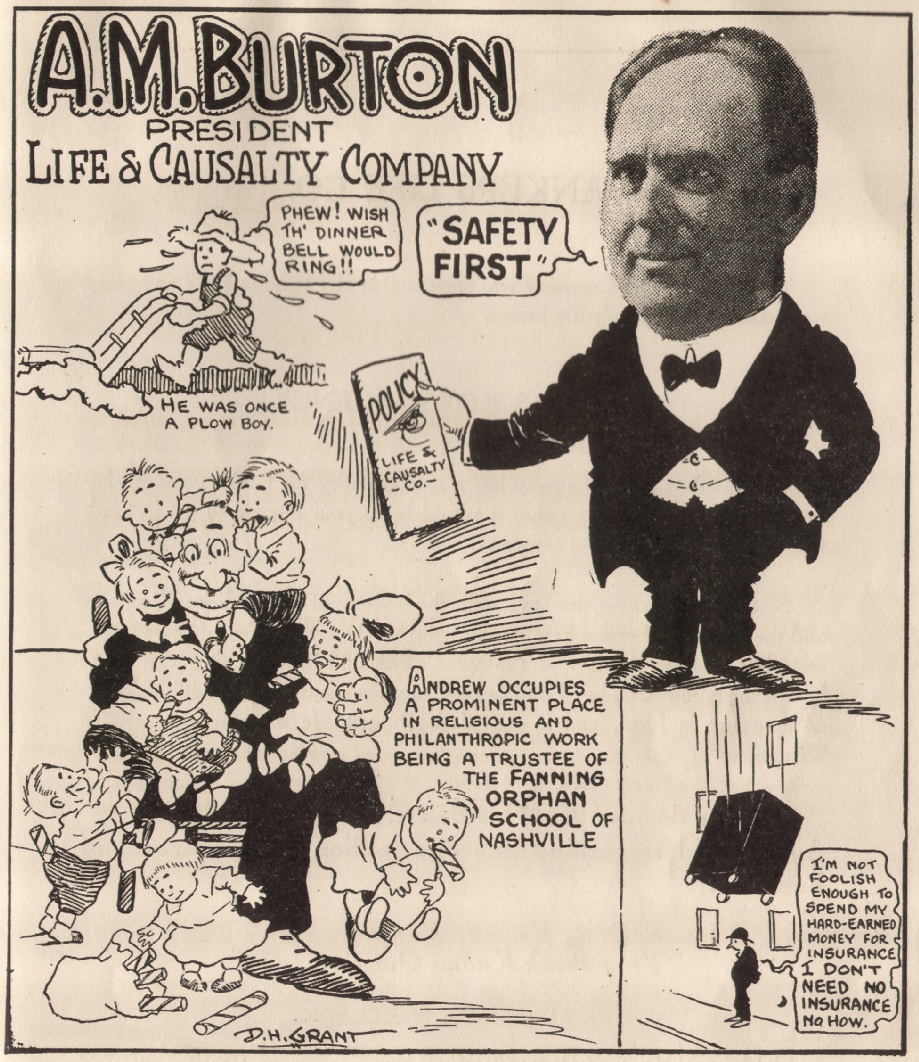
Below, both from the early 1920s Nashville book, Lookin’ ‘Em Over, with art by Donald H. Grant. Left, Meador Coal Company head, Charles C. Meador, advertises how he makes frequent trips to New Orleans’ French Quarter, in order to keep up with his French, by talking with “the beautiful Creole girlies”. Uh, yeah. On the right, family man A. M. Burton had included, bottom right, why you should have insurance.
 |
|
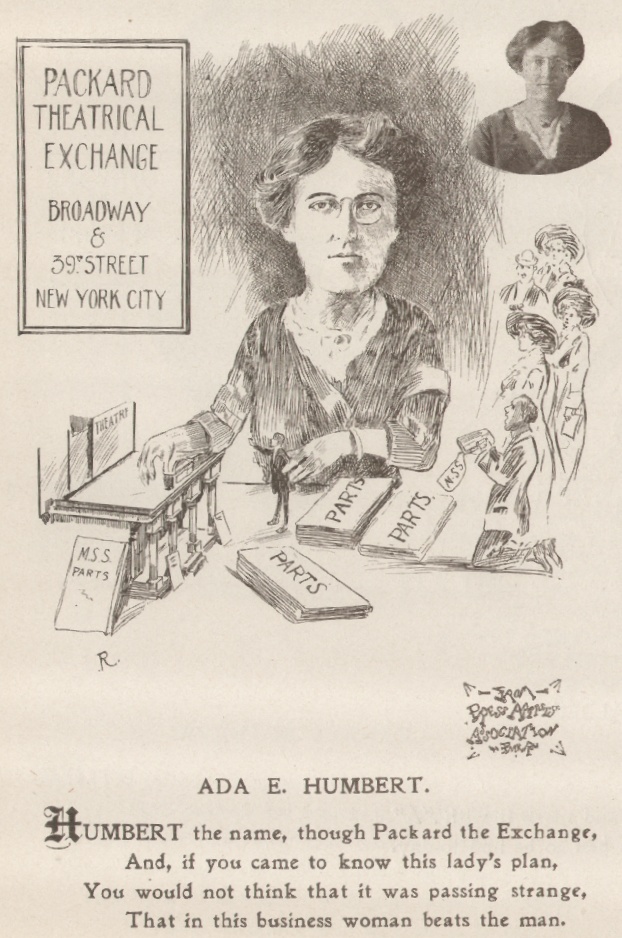
And then, in fewer instances, some people had both their photo, and a cartoon version. Below left, Ada E. Humbert, from Them As Is Because. I won’t claim to have made a thorough survey, but, in all the other books I’ve looked, I’ve seen only white men.The New York City-based Them As Is Because differs,via its inclusion of eight women (albeit, all white). Plus, a couple non-white businessmen. Plus a huge contingent of theatrical and vaudeville people (far more than even other NYC-based books). I can only conclude that the difference here, is because the solicitors for this book visited different types of businesses than prior endeavors had. It additionally contains a large number of auto-related businessmen, plus some involving airplanes — both industries not around at the time of the 1904-06 books.
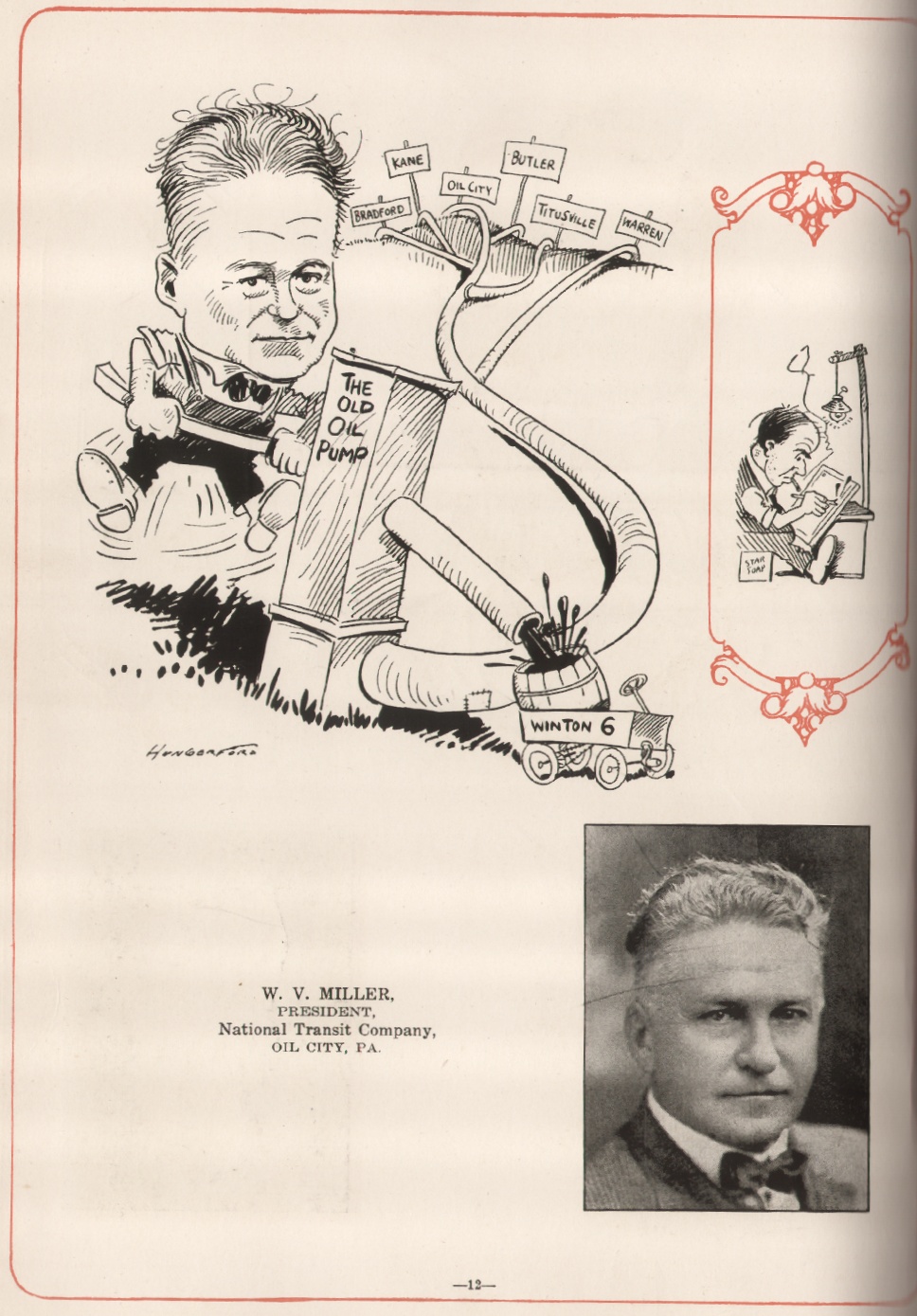
Below right, another photo/cartoon combo, this one from the 1916 Pittsburgh book, Our Friends How We Caricature Them, with early art by Cy Hungerford, who at the time worked for the Pittsburgh Sun, but would later become famous under the Pittsburgh Post-Gazette.
 |
|
Well, we’re only about halfway through what I’d planned to present today, and it’s already become dangerously long. So, I’m going to break this in half, and present the rest next Monday. Part 2 will involve predecessor/prototypes to the As We See ‘Em model, caricatures of some still-famous subscribers found in these books, and more pictures of the cartoonists/staffs who worked on them, including a few cartoonists who later became famous.
Additionally, a “Part 1.5″ to this article will appear in a couple days, focusing on caricatures of bankers, realtors, and stock brokers, as part of the Wall Street Frauds Make Wonderful Cartoons series.
Doug Wheeler
AsWeSeeEm WWIcartoons

— Doug




These are fascinating. What a great collection! They me of the “[Blank] for Beginners” books that came out in force in the 1990s, especially the ones that use photographs (but the quality of the cartooning and the wit here is a great deal better IMHO). The original “Marx for Beginners” might have included some of that too. Wonder if Rius had some old “As We See Em”-style books lying around. Looking forward to the ones on the Wall Street big shots.
[...] past Monday (plus coming next Monday), we have examples from city-based Local Vanity Cartoon Books circa 1904-1920s, wherein cartoonists from that town’s newspaper(s), were hired to depict [...]
[...] Monday, in Part 1, we introduced the As We See ‘Em books, explaining how those appearing in the books, paid to [...]
[...] un autore è anche un curioso ricercatore di storia del fumetto primonovecentesco, recentemente raccontava: Nella prima parte del 20° secolo, la maggior parte delle città americane disponeva di almeno un [...]
[...] our series on theatrical cartoons, we return to Lookin’ ‘Em Over — a 1920s vanity cartoon book, wherein local business & community leaders appeared in [...]
[...] A Knotty Problem for the Wise Men, by Cyrus C. Hungerford. From the pamphlet, Hungerford’s Own Selection of His Best Cartoons for 1934 (published in [...]