Get these books by
Craig Yoe: |
|
|
|
|
|
|
|
|
|
|
|
|
|
|
|
|
|
|
|
|
|
|
|
|
|
|
|
|
|
|
|
|
|
|
|
|
|
|
|
|
|
|
|
|
|
|
|
|
|
|
|
|
|
|
|
|
|
|
Get these books by
Craig Yoe: |
|
|
|
|
|
|
|
|
|
|
|
|
|
|
|
|
|
|
|
|
|
|
|
|
|
|
|
|
|
|
|
|
|
|
|
|
|
|
|
|
|
|
|
|
|
|
|
|
|
|
|
|
|
|
|
|
|
|
|
Archive for the ‘Classic Cartoonists’ Category
Tuesday, August 2, 2025

Above — emerging two years after Hopkins’ prototype versions Professor Simple and Mr. Tigwissel — we at last arrive at the true debut of Livingston Hopkins’ recurring comic strip character, Professor Tigwissel. The above comic — “Professor Tigwissel’s Life-Saving Apparatus” — appeared on the front page of the (New York) Daily Graphic newspaper, on May 28, 1875.
(NOTE: Click on the comic pages above & below, to open versions large enough to read!)
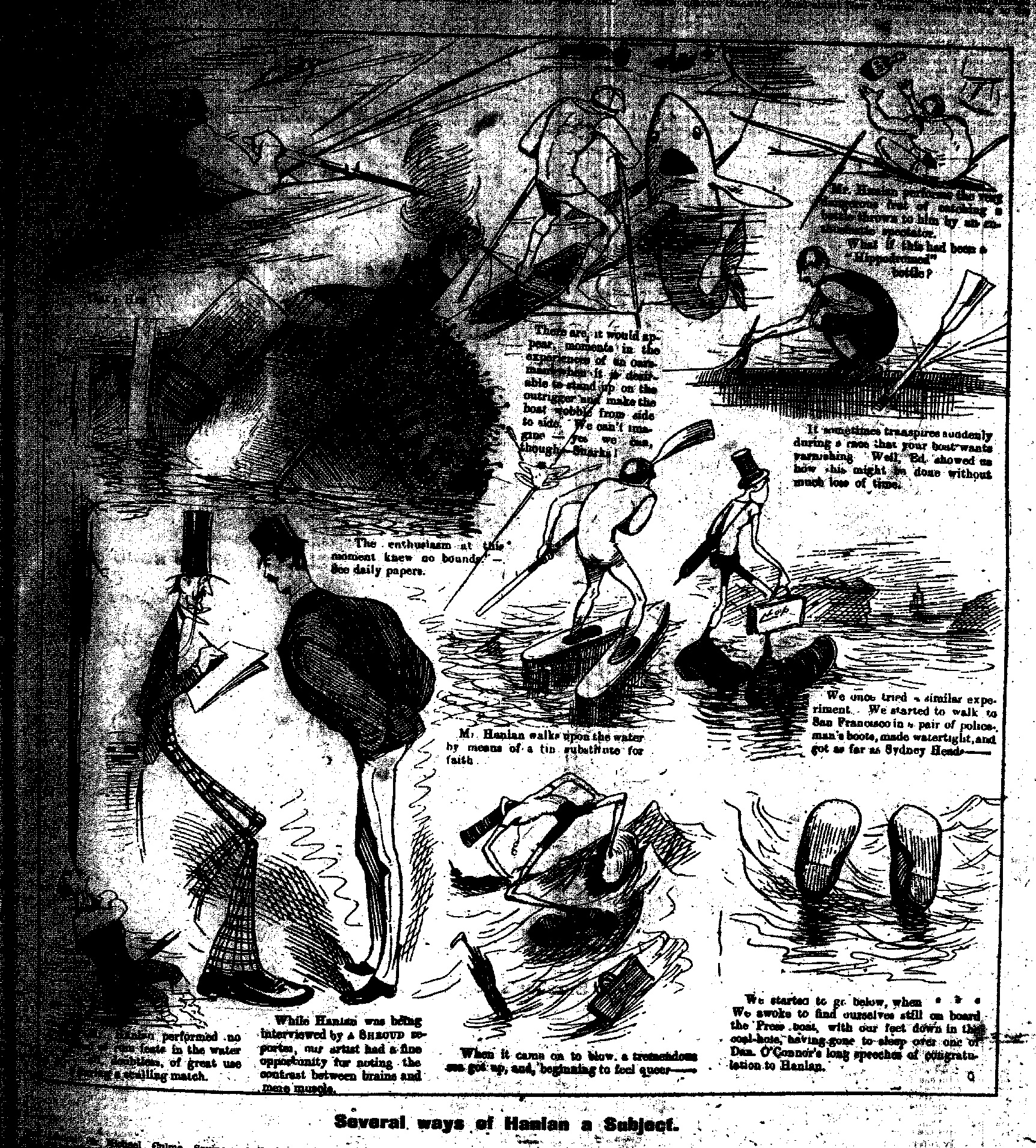
Nearly a decade later, Hopkins moved to Australia, hired as a featured artist on the Sydney Bulletin. Hopkins created several full pages of cartoons every week for the Bulletin — a far heavier schedule than his sporadic appearances in various U.S. periodicals. During his first year on the Bulletin particularly, Hopkins could hardly be blamed for occasionally swiping artwork & ideas from his own U.S.-published cartoons, given that few Australians would have seen that work! Below, in a page from the April 5th, 1884 issue of the Sydney Bulletin, Hopkins returned to the idea of special shoes to walk across the ocean, used in his first Professor Tigwissel comic strip. All the other imagery on this same page, also derives from earlier Hopkins cartoons in the Daily Graphic — with the exception of the shark — added for Hopkins’ Australian audience!
For prior entries in this series, click here on Tigwissel Tuesdays.
Doug Wheeler
ProfTigwissel NYDailyGraphic

— Doug
Posted at 12:08 PM
Posted in Classic Cartoonists, Classic Comics, General | permalink | 1 Comment »
Tuesday, July 26, 2025

Just a quickie this week, as we continue our chronological march towards to the first full-fledged Professor Tigwissel adventure (next week!)
Above, a close-up from the bottom right corner of a full-page of cartoons by artist Livingston Hopkins, which appeared on the front of the February 22nd, 1875 issue of the (New York) Daily Graphic. Here, Hopkins joins the long list of comic artists who have parodied themselves.
Of note, is that while the “Professor” shown having difficulty locating Hopkins’ brain, does not resemble Hopkins’ recurring Professor Tigwissel character, he does resemble the “Mr. Tigwissel” who got hit in the head with a potted plant while viewing a comet, seen in last week’s entry of Tigwissel Tuesdays — this time given the appelation “Professor”.
Perhaps just mere coincidence. Or, perhaps, Hopkins’ subconscious working towards eventually merging the name Tigwissel with the visual image of a scientific egghead, that he’d previously used for Professor Simple… ?
Doug Wheeler
ProfTigwissel NYDailyGraphic
— Doug
Posted at 08:07 AM
Posted in Classic Cartoonists, Classic Comics, General, Weird But True | permalink | No Comments »
Thursday, July 21, 2025

|
Now that I’ve begun a series of articles intended to reveal all (that I’ve found) appearances of Livingston Hopkins’ recurring comic strip character, Professor Tigwissel (plus Hopkins’ Tigwissel-prototypes), it’s time to resume another Super I.T.C.H. series, Pre-YK Talkies. |
|
One major reason I’ve been offended by the insistence in published books & articles, that the comic strip was invented with the October 25th, 1896 New York Journal appearance of the cartoon story, “The Yellow Kid and His New Phonograph”, by Richard Felton Outcault, is that this inaccurate claim has carried with it the implication that few, if any, sequential comics existed prior to that date. Further, this claim has been was so widely and strongly accepted, that many Comics History “scholars” seemingly have made little effort to verify it — spending most of their careers studying comics after the accepted 1896 “debut”. The result being that the pre-1896 works of many great comic strip artists — such as Livingston Hopkins — have been largely ignored.
Click on any picture to make it larger.
In my search for pre-October 1896 examples, I’ve noticed a pattern wherein non-human objects from which human voices could emerge, appear to have presented a dilemma for comic artists whose normal pattern was to place dialogue at the bottom of panels, rather than in the panels as part of the art. Part of the joke here involved the surprise of a human voice emerging from a non-human. This often forced artists to used to doing it, to visually depict that human voice inside the panel, with the art, so as to avoid confusion regarding from where/whom those spoken words had come from. To this end, in Victorian Age comics, one can often (though not always) find word balloons and in-panel dialogue emerging from such talking non-humans as telephones, phonographs, and parrots.
Above, and right, we see two primitive examples from advertising cards, both of them two panels, and involving a person in one panel reacting to a voice which had come from a hidden source in the other panel. The top example, from 1884, simply involves a boy talking into a metal pipe. The side example, circa 1870s/1880s, has a more complex joke involving a man reacting to what a parrot speaking through a telephone just said. The joke being that the man assumes the voice had come from a person. |

|
|
Beneath, in the famous October 1896 Yellow Kid strip by Outcault, we find basically the same joke. The Yellow Kid is reacting to a voice emerging from a phonograph, assuming it to be the authoritative words of a human, only to learn in the end that the voice was that of a parrot. Note also that, until the final panel, the human Yellow Kid does not himself use word balloons, but rather “speaks” via the in-panel dialogue written across his shirt. |

|
Following are a few more complex examples. Below, a sequential strip from the July 19th, 1890 issue of the British comic publication Scraps, depicting the evolution and replacement of man by machine (a phonograph). The use of the word balloons placed at the start and end are crucial to this strip, signalling the completion of the transformation. |

|
Next, a five-panel sequential strip involving a parrot, and a talking dog, with all dialogue in word balloons absolutely crucial to understanding the story. The parrot initially tricks the dog into thinking that a human has called to him, with the trick at the end turned back on the parrot. By British artist James A. Shepherd, published in the periodical Boys’ Own Paper, on February 21st, 1891. |

|
Finally (for today), a series of advertising cards published in 1877 by Louis Prang. These four individual strips are all part of the same thematic series, depicting a variety of scenarios in which people are engaged in deceptions made possible by the recently invented telephone. In each, telephone poles are used as panel borders, breaking the scenes apart and giving them a sequence, with the participants’ in-panel dialogue travelling across the telephone lines. |

Doug Wheeler
PreYKStrips AdvertisingStrips
— Doug
Posted at 12:07 PM
Posted in Classic Cartoonists, General | permalink | No Comments »
Tuesday, July 19, 2025

Above, we continue our study in the evolution of comic artist Livingston Hopkins’ recurring comic strip character, Professor Tigwissel, with the second appearance of Hopkins’ Tigwissel-prototype, Professor Simple. This occurrence — titled “Tales of the Comet” — appeared on the front page of the July 8th, 1874 edition of the (New York) Daily Graphic, eleven months after Professor Simple’s first appearance (shown last week — click here to see it), and ten months prior to the first official Professor Tigwissel episode.
(NOTE: Click on the comic picture above, to open a version large enough for you to read!)
The comet around which the jokes are centered, is Coggia’s Comet, which was highly visible for several months in 1874. The top two-thirds of this Daily Graphic page involves Professor Simple’s misadventures in observing the comet from his rooftop. Hopkins even at this date is playing on the “egg-head” professor image, enlarging the size of Simple’s cranium from his first appearance, bringing him still closer resemble the eventual image of Hopkins’ future Professor Tigwissel. While Hopkins doesn’t use the word egg-head, his visual depiction here of Simple, and later Tigwissel — and the type of misadventures both scientific professor characters have — clearly elicits the definition of that word. One has to wonder where in the history of jokes involving the scientific klutz combined with a huge over-sized brain (probably going back to phrenology’s origins, at least), Hopkins’ depiction should be placed.
Of significant note as well, is the second, separate, four-panel story which ensues in the bottom two-thirds of the page, immediately following Simple‘s story. This involves a “Mr. Tigwissel”, found gazing at Coggia’s Comet from out a window, only to have the tenant above him accidentally knock a potted plant off her window-sill, and onto “Mr. Tigwissel’s” head. After recovering, Tigwissel (mispelled as “Pigwissel” the third time his name is given), decides to write a scientific work titled “Electrical Phenomena of Comets”.
So, here we have on July 8th, 1874 — with Simple above somewhat resembling the eventual Professor Tigwissel, plus a separate, non-professor character outright named Tigwissel, who is also engaged in scientific pursuits — the planted seeds which will in ten months time will grow into Hopkins’ full-flowered recurring scientist parody, Professor Tigwissel.
Doug Wheeler
ProfTigwissel NYDailyGraphic
— Doug
Posted at 08:07 AM
Posted in Classic Cartoonists, Classic Comics, General | permalink | No Comments »
Tuesday, July 12, 2025

Multiple sources make note of 19th century comic artist Livingston Hopkins‘ continuing comic strip character Professor Tigwissel (often getting dates wrong, facts wrong, failing to name their sources, and — with most making the same mistakes — obviously stealing info from each other rather than conducting any research themselves).
None that I’ve seen, however, mentions Hopkins’ Tigwissel prototype — Professor Simple — who gets into the identically same type of misadventures, closely resembles Tigwissel (Tigwissel’s head is yet larger), and notably, preceded Tigwissel by more than two-and-a-half years.
This first Professor Simple adventure above — “The Baseless Fabric of a Vision” — appeared (as Tigwissel later will), in the (New York) Daily Graphic, and was published on August 6, 1873.
(NOTE: Clicking on the comic picture above, will open a version large enough for you to read!)
It’s also an appropriate strip to show at this time, given that this week marks the conclusion of NASA’s decades-long visionless trip-to-nowhere known as the Space Shuttle (and this comment, is coming from a space exploration-enthusiast).
Doug Wheeler
ProfTigwissel NYDailyGraphic
— Doug
Posted at 08:07 AM
Posted in Classic Cartoonists, Classic Comics, General | permalink | 2 Comments »
Monday, July 4, 2025
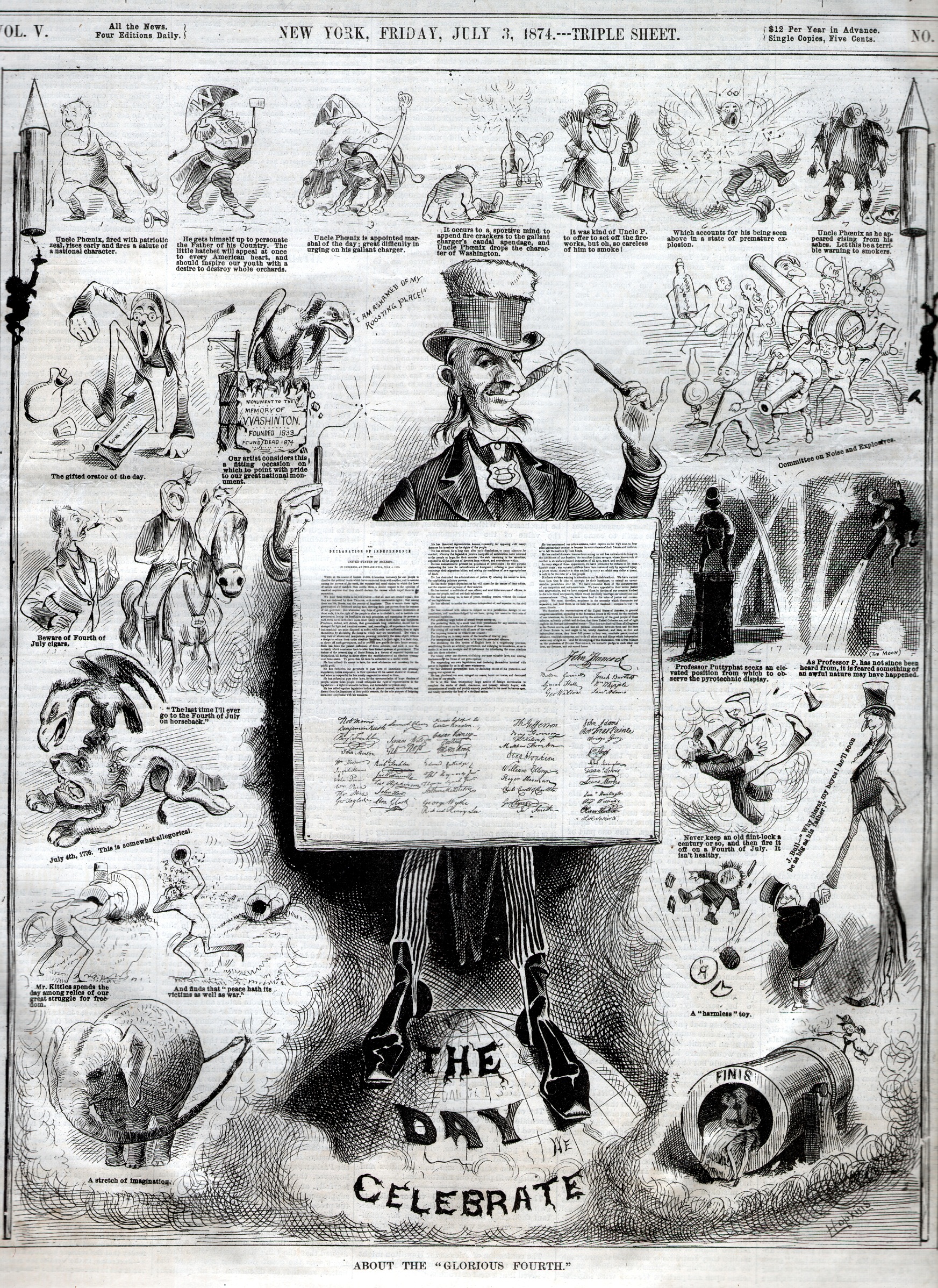
Artist Livingston Hopkins’ July 4th page for 1874 — The Day We Celebrate.
From the front page of the July 3rd, 1874 edition of the (New York) Daily Graphic.
(NOTE: You may click on the picture above, to open a version large enough to read.)
For the July 4th Hopkins page posted last year, click here.
Doug Wheeler
NYDailyGraphic
— Doug
Posted at 06:07 AM
Posted in Classic Cartoonists, General | permalink | No Comments »
Sunday, June 19, 2025
Welcome to our second annual Father’s Day posting!
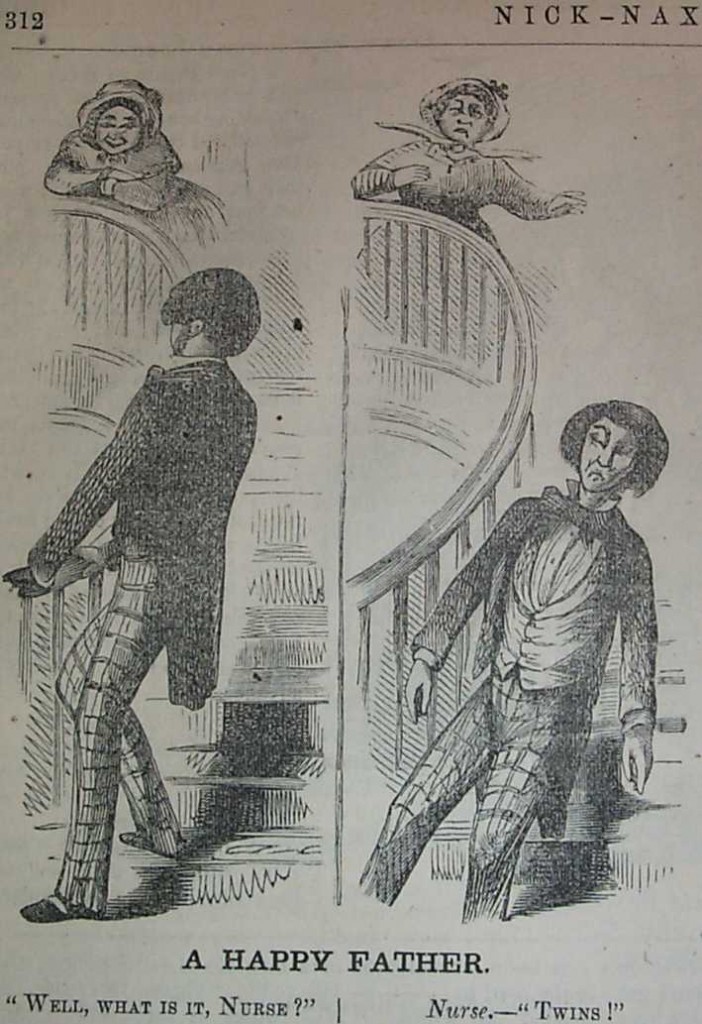
Above, A Happy Father from the February 1857 issue of the American comic monthly Nick-Nax. (These two panels are in fact ripped off from the first two panels of the comic strip The History of “Our Baby” by William McConnell, which in 1853 was serialized in the British comic weekly Diogenes. The two panels pre-sage numerous similar-themed strips, several of which were shown in our Father’s Day posting last year (click here to see those).
Click on any picture, to see a larger version.
Below, after the baby is born, starts the fun… inspiring A Chance for Manufacturers by Frederick Burr Opper. This originally ran as a large color cartoon on the rear cover of Puck magazine. The below scan comes from its later reprinting in the January 1890 issue of Puck’s Library.

Finally, father’s duty is never done, as shown by the two-panel cartoon Parental Strategy by F.M. Hutchins. This, too, from a later reprinting, found in the July 1895 Puck’s Library.
Doug Wheeler
NYPuck NickNax
— Doug
Posted at 08:06 AM
Posted in Classic Cartoonists, General | permalink | No Comments »
Saturday, May 21, 2025
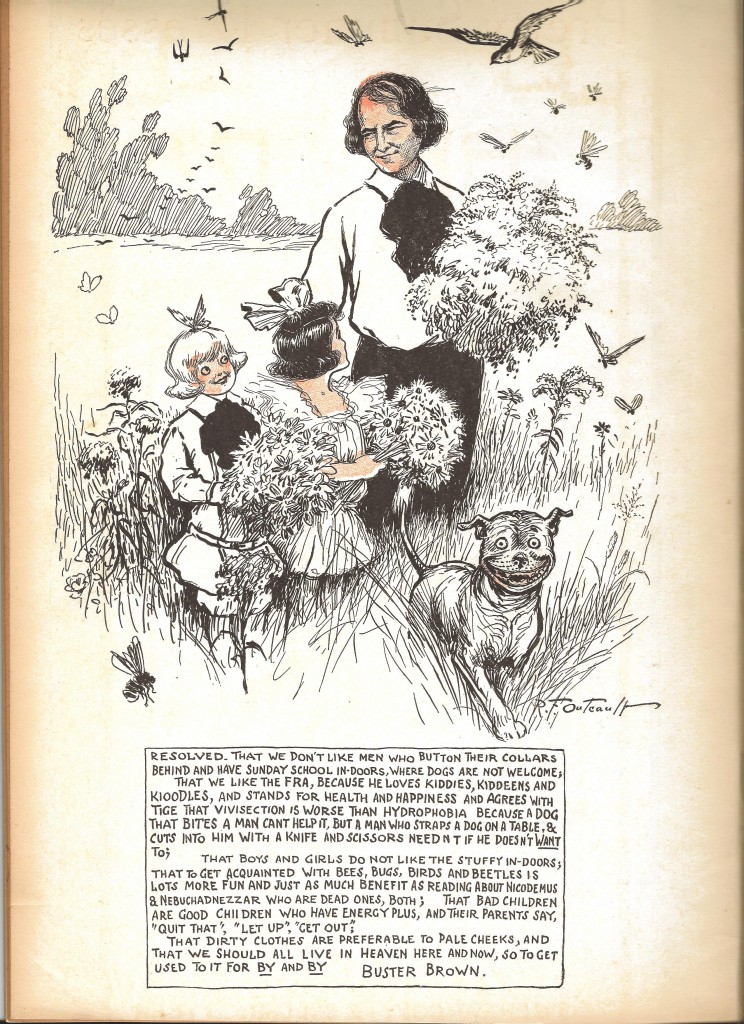
Happy End of World!
As predicted by preacher Harold Camping (who, luckier than most of us, is now experiencing his personal Second-End-Of-the-World!) Harold’s world previously ended on his predicted Judgement Date of September 6, 1994. We can only guess that Camping got that date mixed up with the day the world truly ended for his alternative self in one of Earth’s many parallel dimensions — but, he and his followers feel they’re in the right time-space location now, even if others of us have some doubt…
This all is not to be confused with the other End of the World occuring later this year — December 21, 2025 — which happens to be my birthday. I’ll be passing a certain age milestone, so, believe me when I say that day is certain to be apocalyptic!
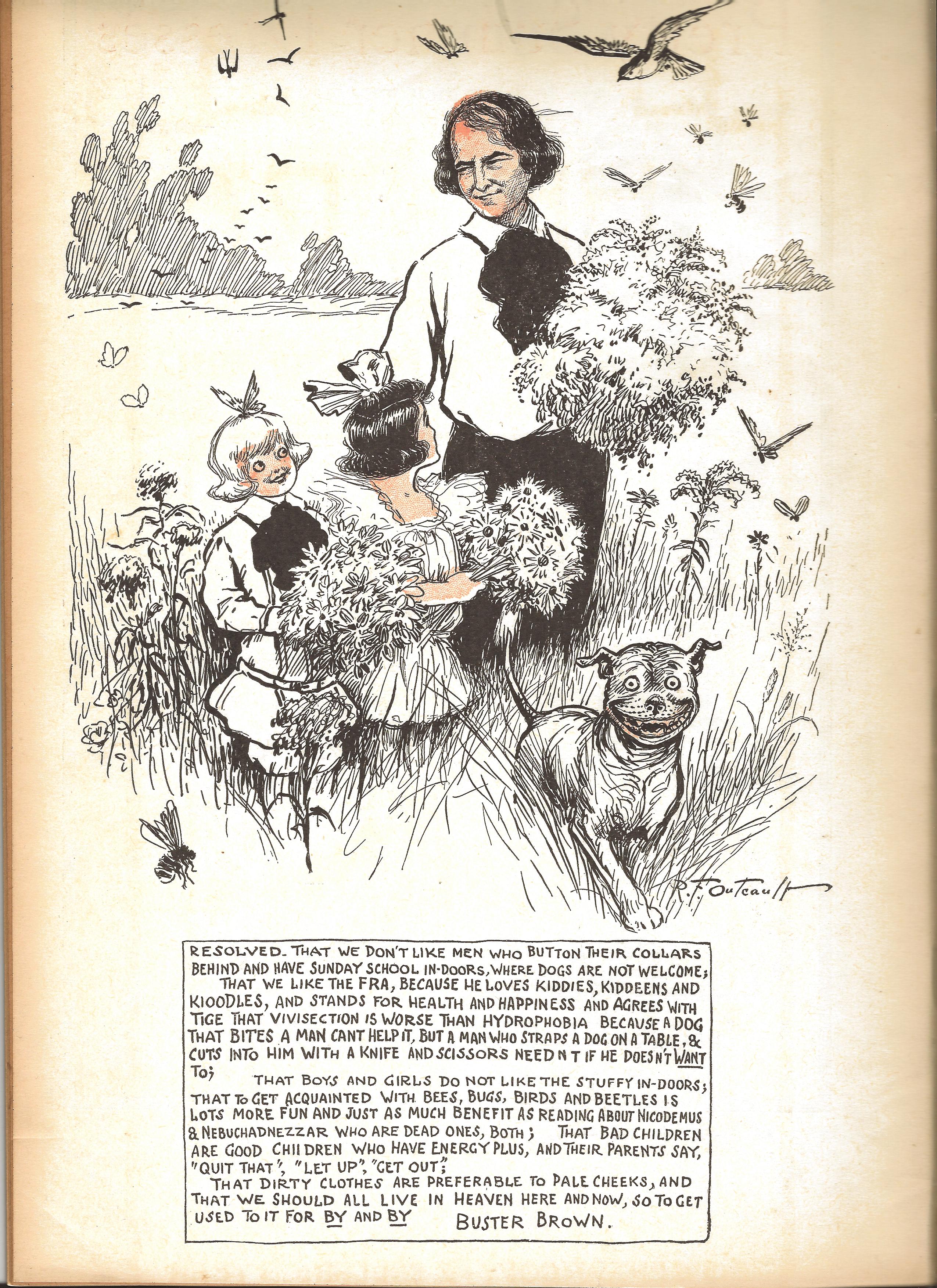
Anyway, I felt the above image by Richard Felton Outcault, showing Buster Brown, Mary Jane & Tige cavorting in a field with philosopher Elbert Hubbard, to have a sufficiently idyllic & cult-like look to match this wonderful day! A perfect last image to hold on to, as you either rise into the clouds, or, descend into the Hellish Pits of Despair! It was published on the rear cover of the July 1908 (volume 1, number 4) issue of Elbert’s publication The Fra (not for mummies) — A Journal of Affirmation. (Elbert Hubbard, by the way, should not be mistaken for cult-founder, L. Ron Hubbard — though, since no one will be around tomorrow to fact-check, I urge you to go right ahead and conflate the two!)
Forever and (less than) a day,
Doug Wheeler
P.S., I’m sure a few of you pesky fact-checkers, will point out that 2012 is actually not in 2011. C’mon — it’s the End-of-the-World — don’t you have something (or someone) better to be doing in your final remaining hours, other than reading this blog & pointing out my mistakes?
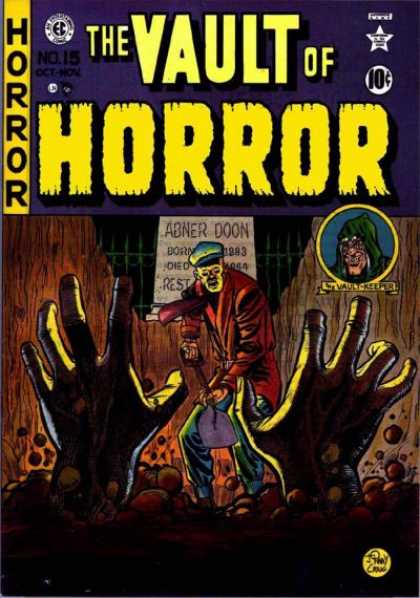
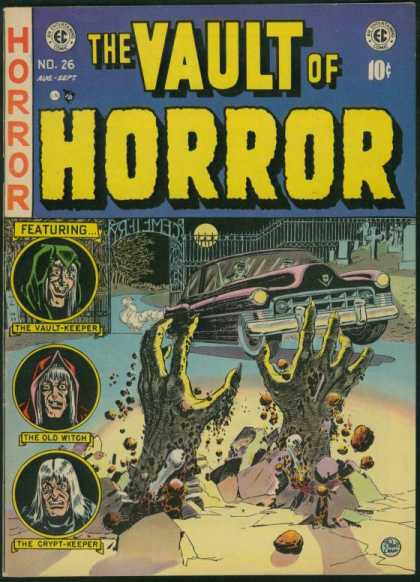
I blame it on the ecstasy of the moment! The top of me is transforming into pure energy, giving me ringing in the ears and making me light-headed. While the bottom of me is being yanked downwards by hands reaching from the grave, like some Johnny Craig Vault of Horror cover. Or maybe it’s just the vodka & tequila mix from last night.
This rubber-band stretching of my ascendant/descendant eternal soul, is proof that the end will come via a Fermilab experiment, creating a “harmless” miniature black hole they’re convinced will either dissipate, or, exit into another dimension (where an alternate, parallel Harold Camping will once again, be proven correct)! I curse my mother for not having the courage to soldier it out and carry me for 21 months instead of 9, so I could truly joke about reaching an apocalyptic milestone on my December 21, 2025 birthday. Though let’s face it, once you’re past a certain age, every birthday is apocalyptic.
— Doug
Posted at 09:05 AM
Posted in Classic Cartoonists, General, Sunday Funnies, Weird But True | permalink | 1 Comment »
Sunday, May 8, 2026
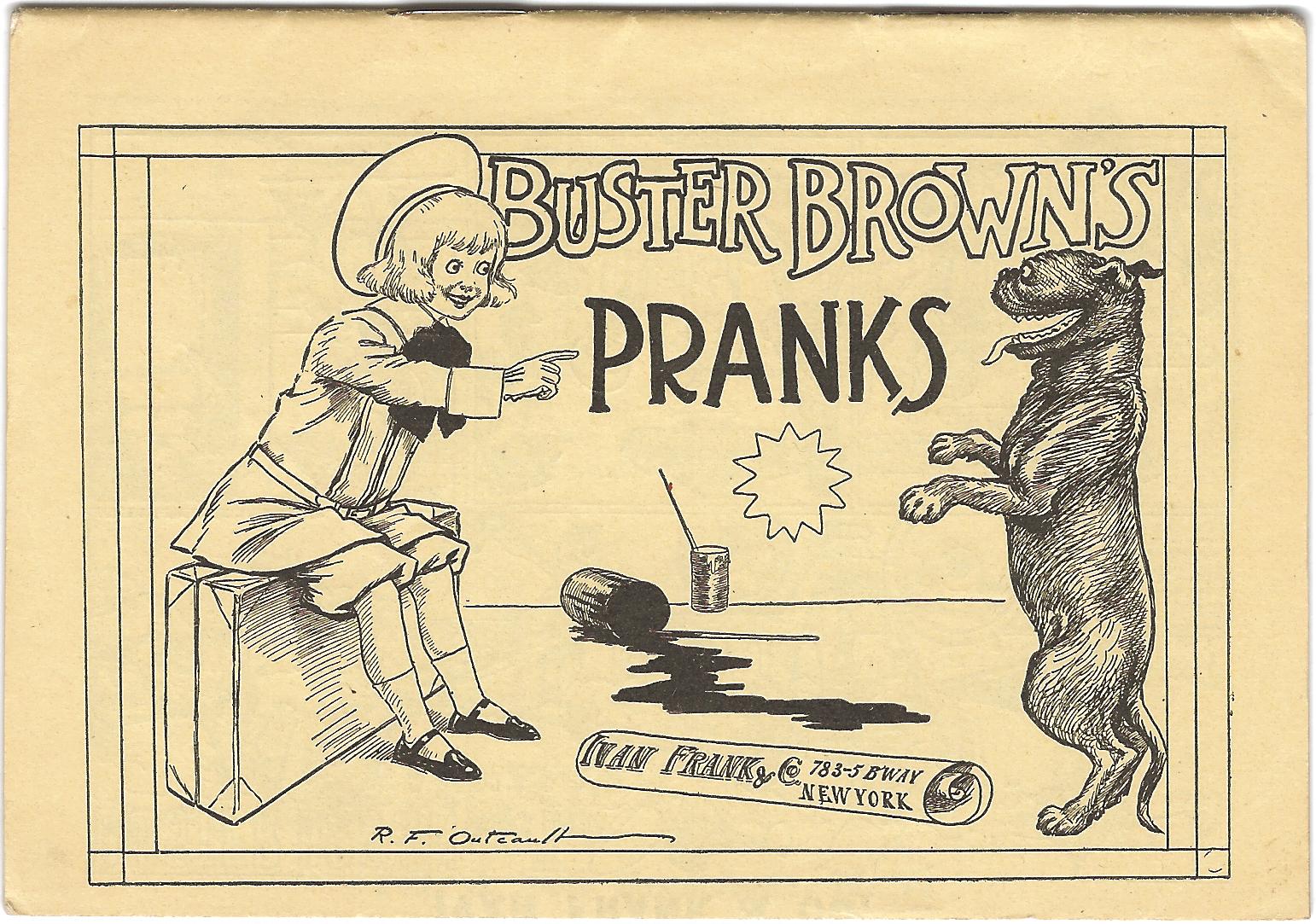
Hey kids! Now that you’ve (assumably) done something nice for Mom this morning, and lulled her into a state of contentment, expecting nothing but good from her angels for at least the current 24 hours - this is the best time to surprise her with how spectacularly creative you can be with your pranks!
To aid you in this noble enterprise, below are a few suggestions from the master of pranks, Buster Brown! These are extracted from the miniaturized version of the book Buster Brown’s Pranks by Richard Felton Outcault, given away in 1905 by the New York City clothing store, Ivan Frank & Company.
(The black & white Ivan Frank-published version, which reprints the cover art plus numerous strips from the larger-sized color 1905 Frederick A. Stokes-published version, is only 3 inches tall by 5 inches wide, versus Stokes’ 11-1/4″ by 16-7/8″. Both reprint Buster Brown comic strips which had appeared yet earlier in Sunday newspapers.) Ivan Frank & Company was the manufacturer of Buster Brown licensed clothing, as hyped in this 1905 issue of Men’s Wear.
Click on any picture, to view a larger, readable version.
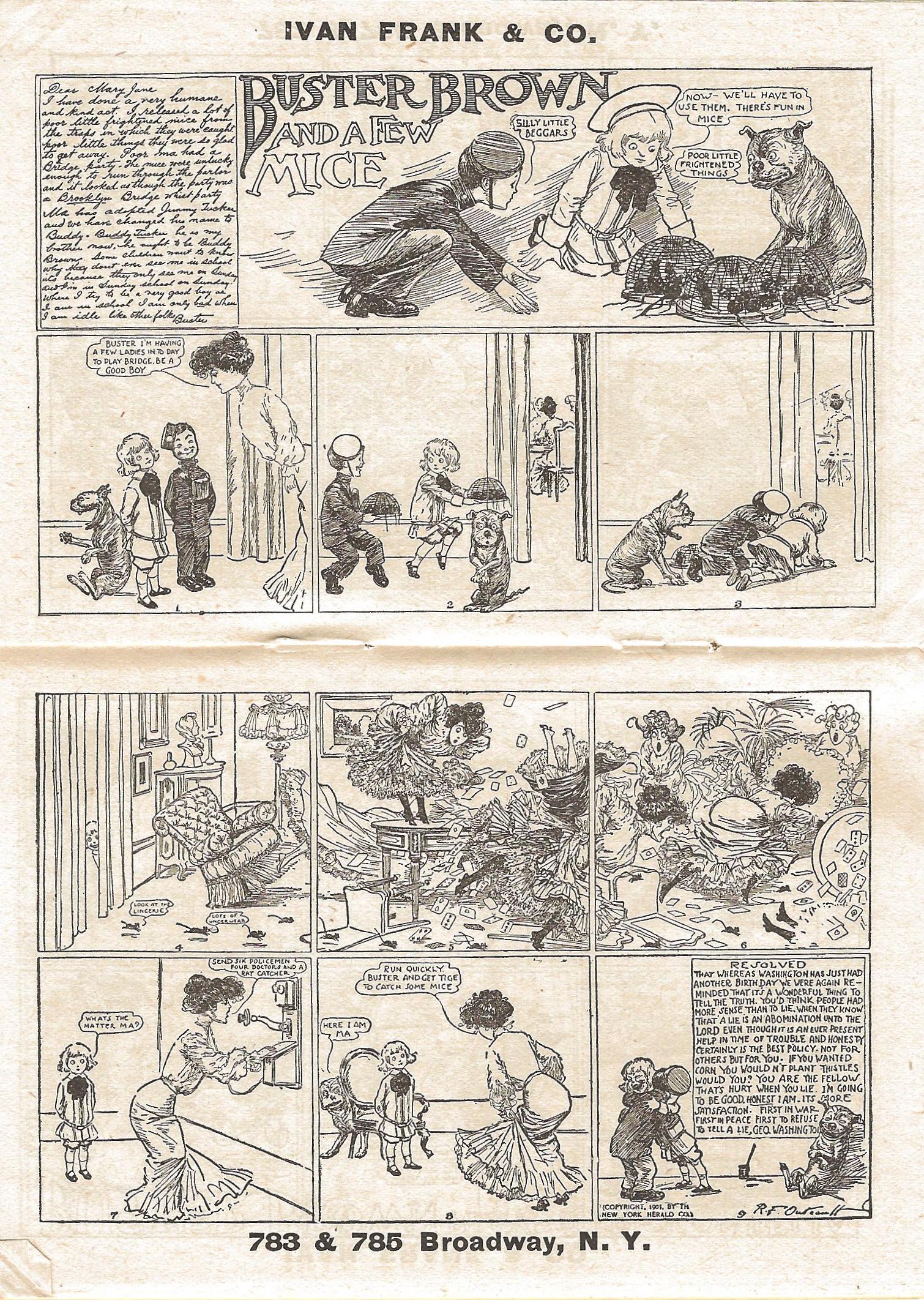
Kids! If you can’t use the next prank right away, try to remember it for your summer vacations later this year! Or better yet, why not do it now, and give your whole family a wonderful surprise later? When your Mom asks who did it, you might be able to honestly say you don’t know, because by then, even you may have forgotten about it!
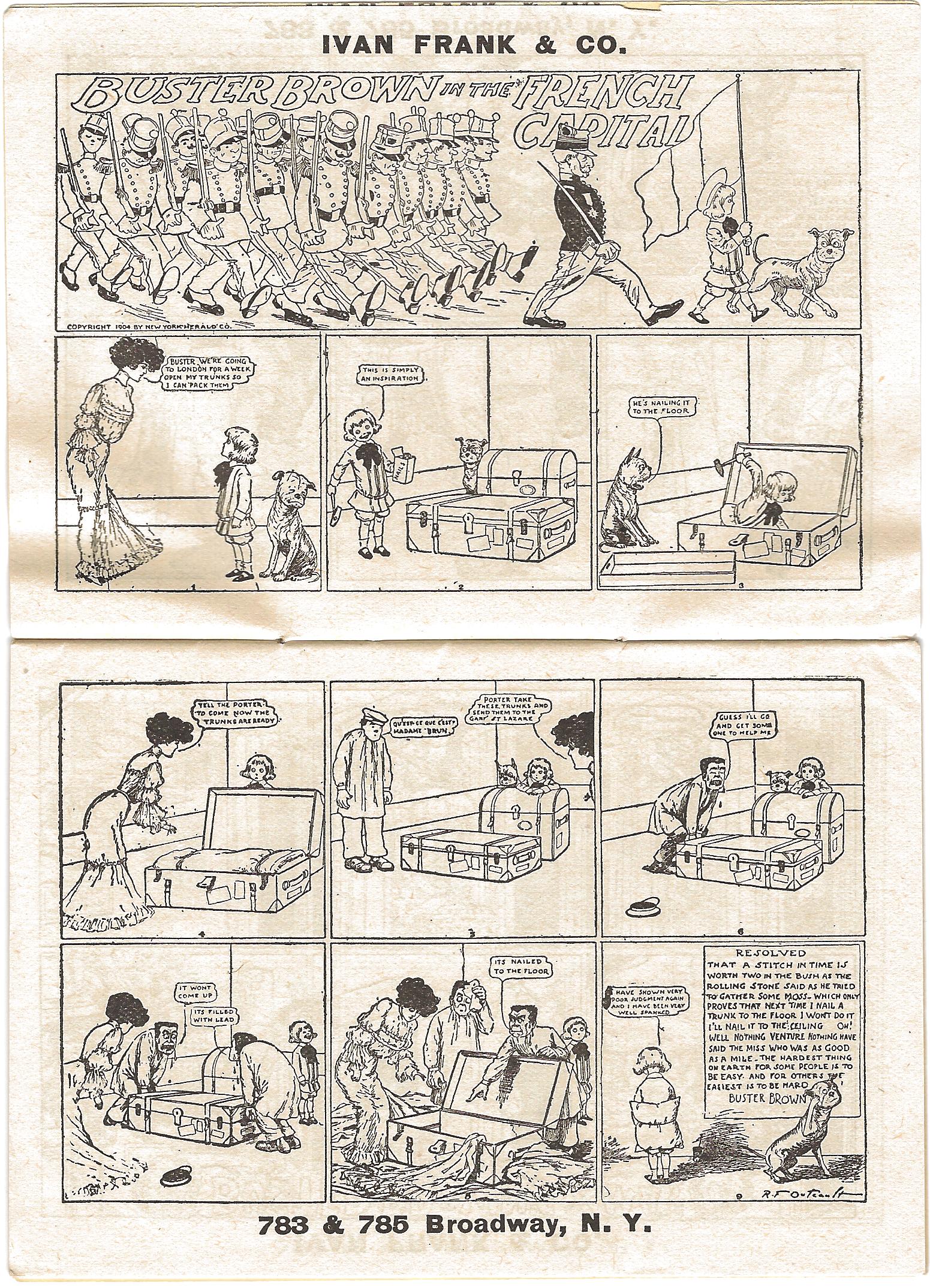
Have a Happy Mother’s Day!
Doug Wheeler
— Doug
Posted at 10:05 AM
Posted in Classic Cartoonists, General, Sunday Funnies | permalink | 2 Comments »
Thursday, May 5, 2026
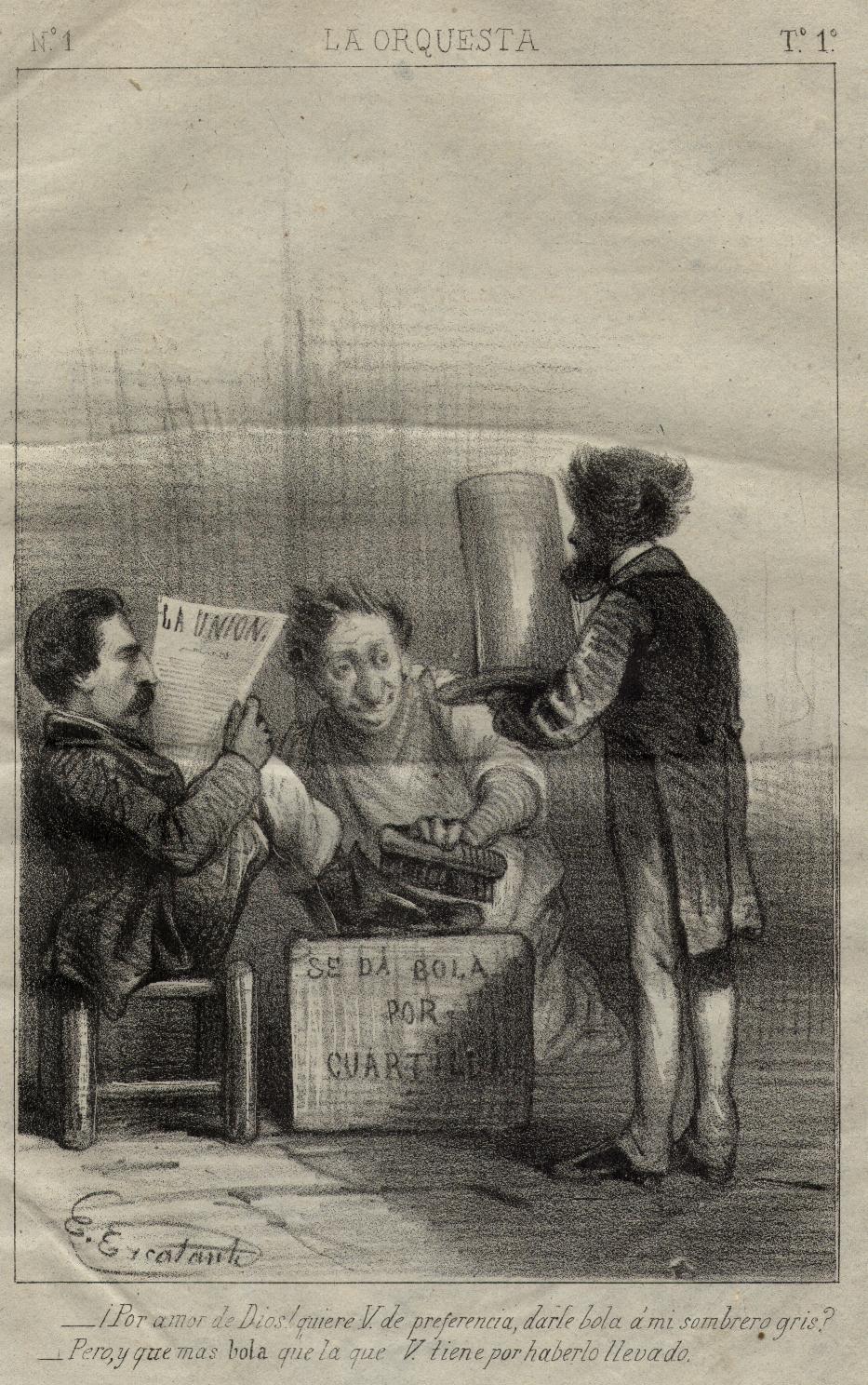
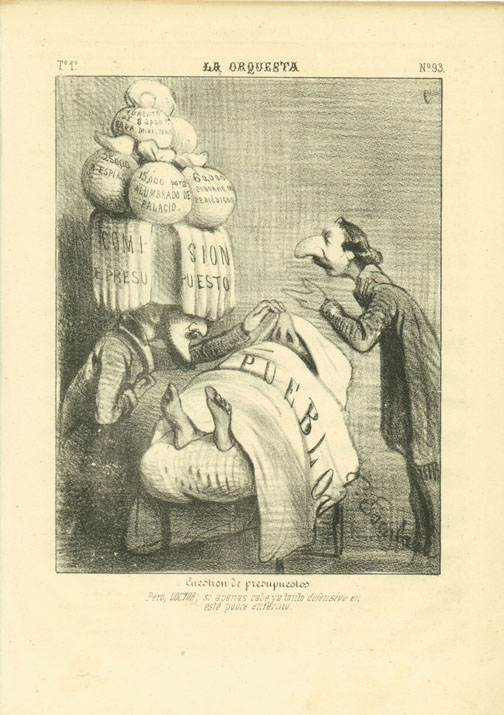
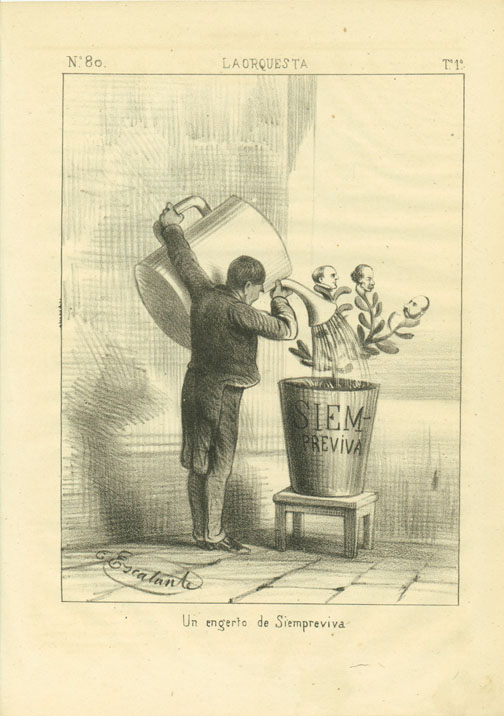
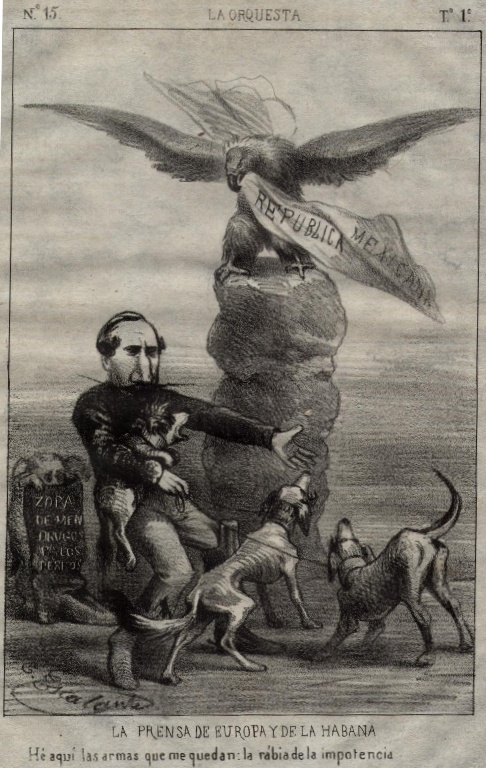
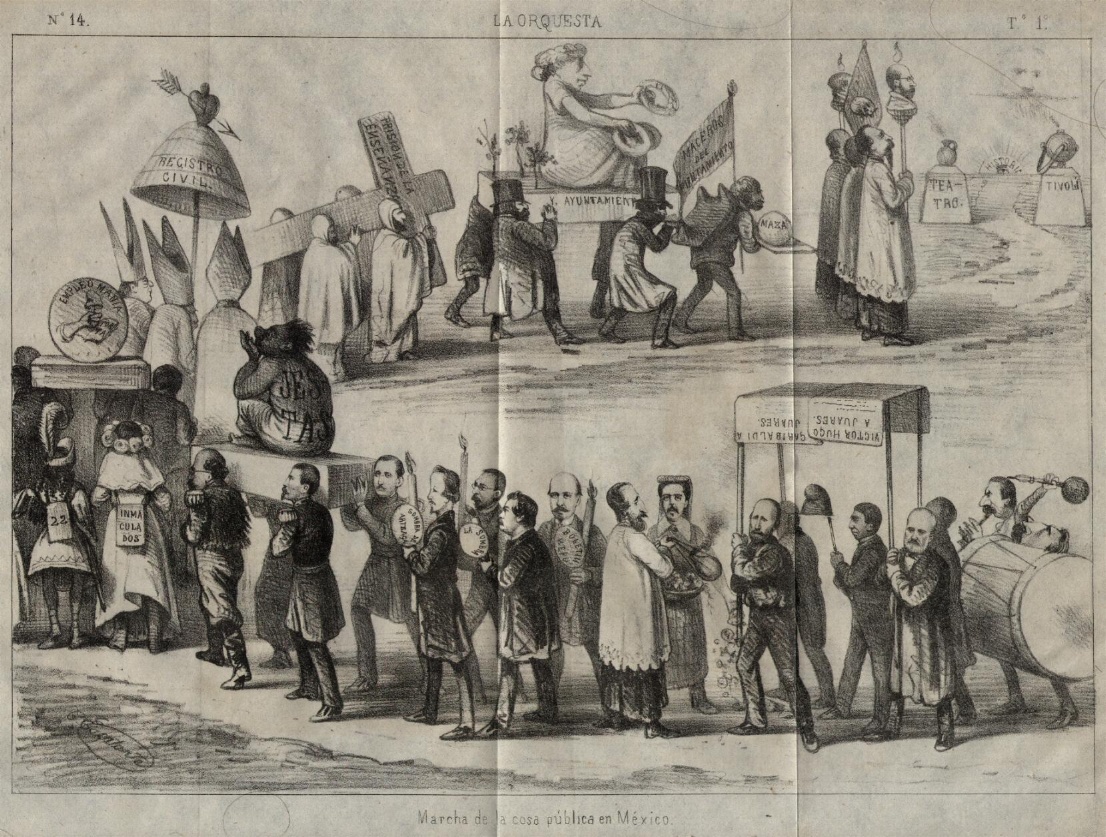
Last year for Cinco de Mayo, we presented two lithographs by artist Constantino Escalante, from the 1867 run of the Mexican comic periodical, La Orquesta. This year, three more. These all were published during the French intervention period in Mexico, during the reign of Emperor Maximilian. No translation (I’d only mess up in the attempt). But even for those of us unable to read these, the beauty of Escalante’s artwork is undebatable.
Click on any picture, to view an enlarged version.
Below, the Escalante cartoon lithographs shown last year, also from the 1867 run of La Orquesta.
Doug Wheeler
— Doug
Posted at 08:05 AM
Posted in Classic Cartoonists, General, Political Cartoons | permalink | No Comments »
|
SUBSCRIBE

A-List: The I.T.C.H. Blog Contributors
BLOGS
COMIC NEWS
MY FAVORITE SOURCES FOR COOL BOOKS
THE PUBLISHER OF YOE BOOKS
THE PUBLISHERS OF OTHER BOOKS BY CRAIG YOE
CATEGORIES
ARCHIVES
META

Every Wednesday is
WACKY WONDER WOMAN WEDNESDAY
archive
DOLL MAN WEIRDNESS
archive
|