




COMIC BOOK COMPULSIVE — Scribbly #14
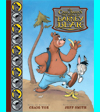
Cartoonist Sheldon Mayer may have had bigger hits in comics but none were as personal to him as Scribbly. It was about Scribbly Jibbet, a small teen with glasses who’s dream of becoming a professional cartoonist was regularly punctured by reality, usually in the form of his otherwise loving family. With it’s mad antics and comic mishaps Scribbly could hardly be confused with a biographical comic but it was obviously informed by the cartoonist’s own life. It was a feature that clearly, dearly wanted to be a comic strip but as good as it was (and it was darn good) the idea of a comic strip about someone who wanted to draw comic strips was probably a bit too ‘meta’ for the 1930’s. Especially since the term ‘meta’ wasn’t in common parlance at the time.

Mayer created Scribbly for Dell Comics in 1936 and he appeared in The Funnies #2-29 and Popular Comics #8-9 but moved his base of operations to DC’s All-American Comics with it’s first issue in 1939 and stayed until 1944, making it’s last appeared in #59.


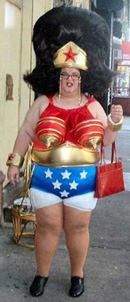
Though the strip was renamed Scribbly and the The Red Tornado and he was frequently overshadowed by Abigail Mathilda “Ma” Hunkel, a.k.a.The Original Red Tornado (who Mayer claimed was based on a real person). Although obviously a comic take on the whole superhero genre this Red Tornado was no joke; she was an effective street level superhero who kept her neighborhood safe with a combination of street smarts and toughness. if nothing else she was at least memorable enough to “inspire” Marvel’s Forbush-Man.


With interest in superheroes on the wane and humor comics on the wax after the war Scribbly finally got his own series which ran 15 issues between 1948 and 1952

Scribbly took up pretty much where he left off, though he had aged a year or two during his hiatus and was now supposedly fifteen or sixteen. He was still tortured by his pesky younger brother “Snoony” (I get “Scribbly as a nickname for a kid that likes to draw but haven’ a clue as to what the derivation of “Scoony” could be) and fussed over by his mother. At his job as a copyboy at a major daily newspaper his constant screw-ups and over-eager attitude drove O’Hara the editor crazy. But he got support from O.P. Birdnest the paper’s oddball owner and, better yet, encouragement from Red Rigley, a super cute nineteen year old cartoonist.
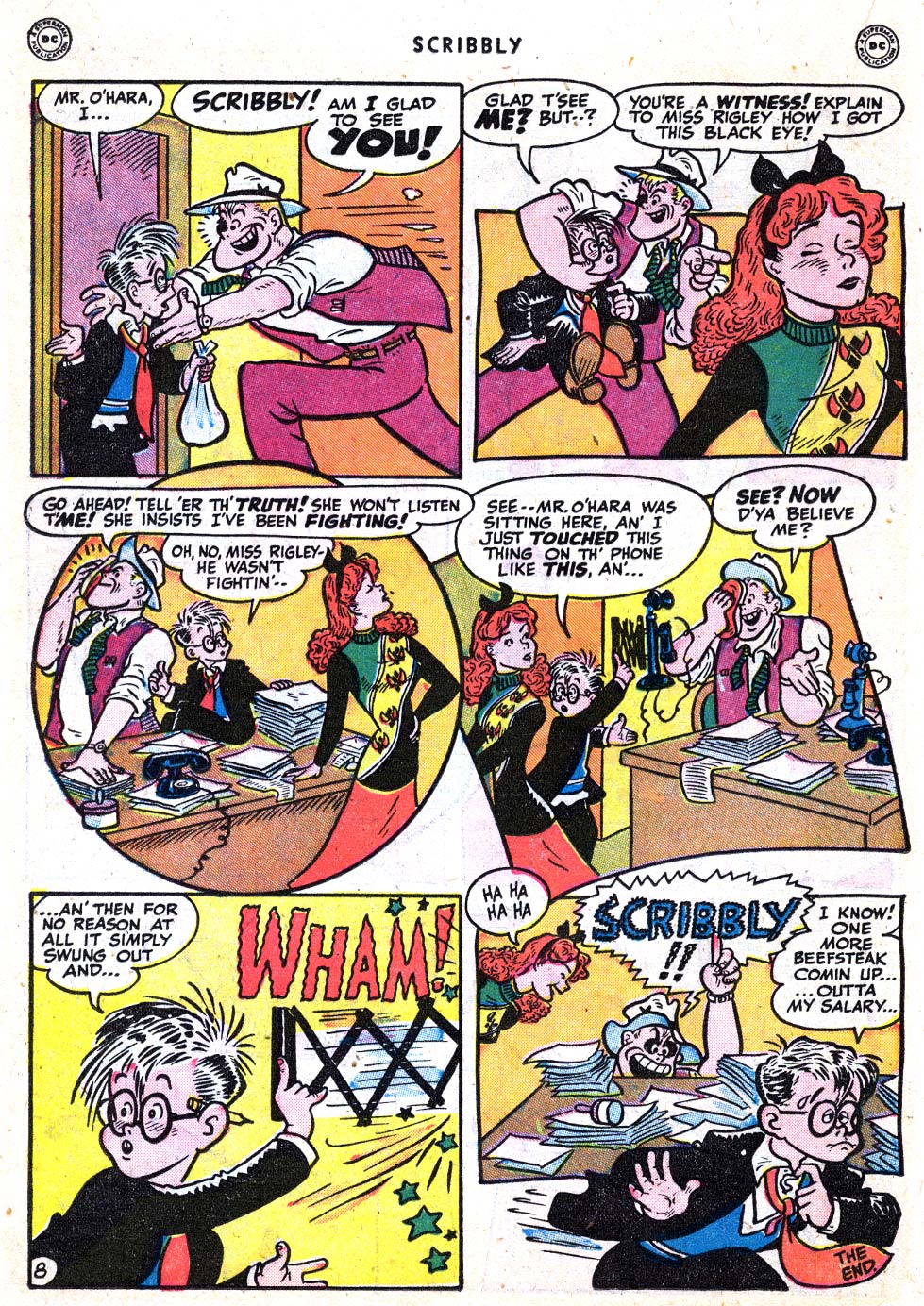
An unconventional triangle developed between O’Hara, Scribbly and Red. Though she mostly treated him like a kid it was clear the age difference between Scribbly and Red was far from insurmountable; although she still dated O’Hara she sometimes seemed to prefer the company of the sensitive teen. Meanwhile Scribbly had an admirer, a girl his own age named Clover Cooley but he only had eyes for Red.
This status quo stayed static until #6 when out of the blue Red startled Scribbly (and the reader) by suddenly announcing she was actually engaged to O’Hara. Red had always gone out of her way to be considerate of Scribbly’s feelings so I’d like to believe she had just gotten engaged as opposed to thinking she’d been engaged the whole time and just neglected to mention it. But let’s face it, the development was no doubt introduced so the boy cartoonist would set his sights on Clover.
Soon the newspaper, Red and O’Hara were all gone and Scribbly switched from his signature rumpled black jacket and tie to business casual (i.e. he sprang for a sports jacket and started wearing gaudy Hawaiian style shirts. The only evidence Scribbly had ever wanted to be a cartoonist came in the form of occasional gag pages named “Scribbly’s Cartoon Corner”. A rival for Clover’s affections was introduced in the form of a gigantic slab of meatloaf named Bentley and the comic quickly became a fairly standard teen comic. A very well done one to be sure, but it just wasn’t the same.

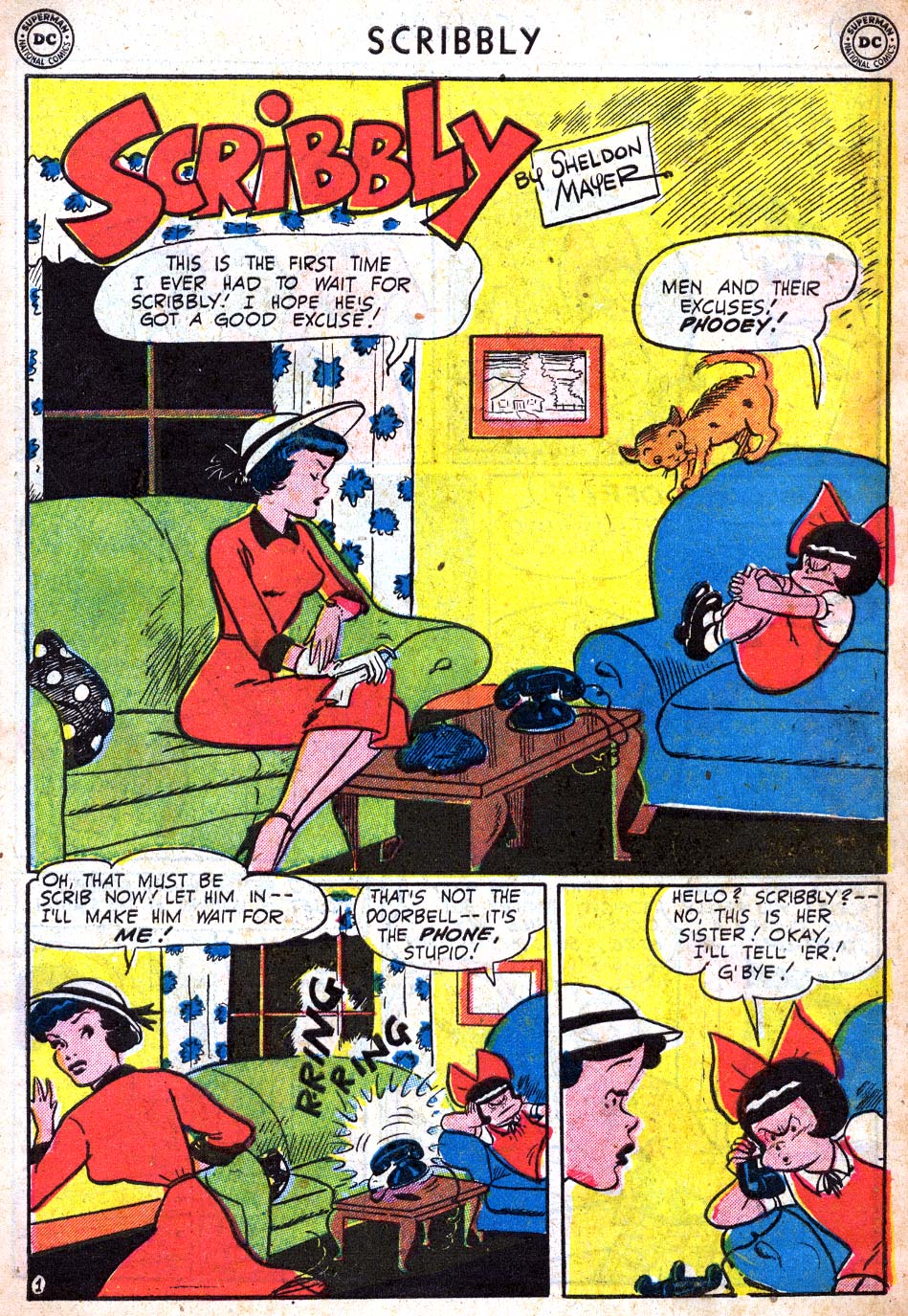


“Goo is throo!” says Bert Parks. Say it with me, it’s fun! Goo is throo! Goo is throo!! Goo is throooooooooooooooooooooooooooooooooooooo!!!!!!!!!!!!


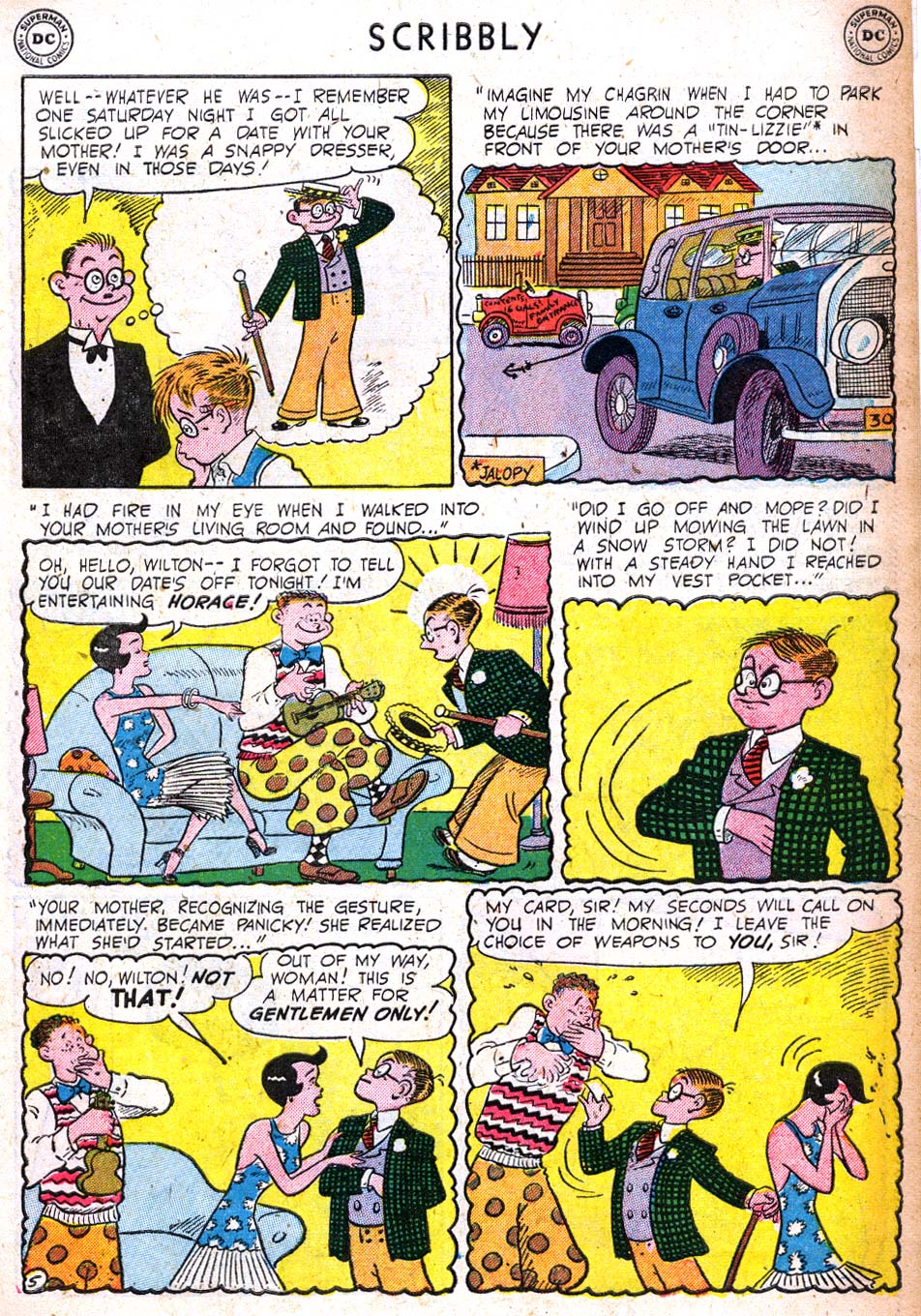


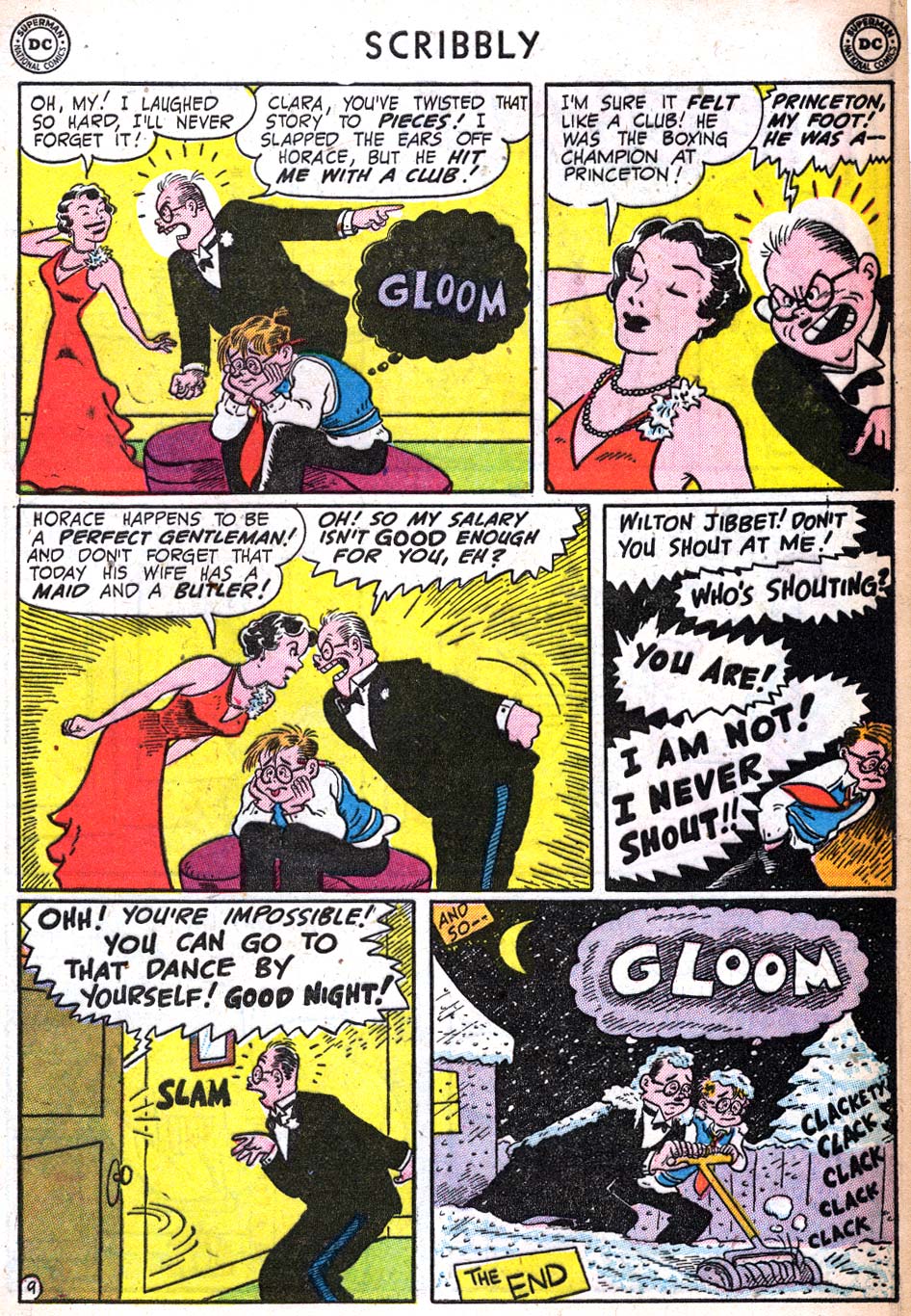
— Steve Bennett