Super I.T.C.H » 2011 » March
Get these books by
Craig Yoe:
Archie's Mad House Krazy Kat & The Art of George Herriman: A Celebration
Archie's Mad House The Carl Barks Big Book of Barney Bear
Archie's Mad House Amazing 3-D Comics
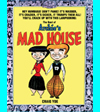
Archie's Mad House Archie's Mad House
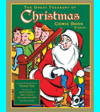
Archie's Mad House The Great Treasury of Christmas Comic Book Stories
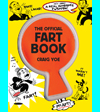
Archie's Mad House The Official Fart Book
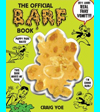
Archie's Mad House The Official Barf Book
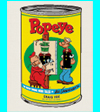
Popeye: The Great Comic Book Tales of Bud Sagendorf Popeye: The Great Comic Book Tales of Bud Sagendorf
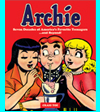
Archie: Seven Decades of America's Favorite Teenagers... And Beyond! Archie: Seven Decades of America's Favorite Teenagers... And Beyond!
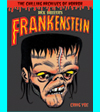
Dick Briefer's Frankenstein Dick Briefer's Frankenstein
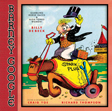
Barney Google: Gambling, Horse Races, and High-Toned Women Barney Google: Gambling, Horse Races, and High-Toned Women
Felix The Cat: The Great Comic Book Tails Felix The Cat: The Great Comic Book Tails
Klassic Krazy Kool Kids Komics The Golden Collection of Klassic Krazy Kool KIDS KOMICS"
"Another amazing book from Craig Yoe!"
-Jerry Beck
CartoonBrew.com
Dan DeCarlo's Jetta Dan DeCarlo's Jetta
"A long-forgotten comic book gem."
-Mark Frauenfelder
BoingBoing.net
The Complete Milt Gross Comic Books and Life Story The Complete Milt Gross Comic Books and Life Story
"Wonderful!"
-Playboy magazine
"Stunningly beautiful!"
- The Forward
"An absolute must-have."
-Jerry Beck
CartoonBrew.com
The Art of Ditko
The Art of Ditko
"Craig's book revealed to me a genius I had ignored my entire life."
-Mark Frauenfelder
BoingBoing.net
The Greatest Anti-War Cartoons
The Great Anti-War Cartoons
Introduction by Nobel Peace Prize winner Muhammad Yunus
"Pencils for Peace!"
-The Washington Post
Boody: The Bizarre Comics of Boody Rogers
"Crazy, fun, absurd!"
-Mark Frauenfelder
BoingBoing.net
More books by Craig Yoe

Get these books by
Craig Yoe:
Archie's Mad House Krazy Kat & The Art of George Herriman: A Celebration
Archie's Mad House The Carl Barks Big Book of Barney Bear
Archie's Mad House Amazing 3-D Comics
Archie's Mad House Archie's Mad House
Archie's Mad House The Great Treasury of Christmas Comic Book Stories
Archie's Mad House The Official Fart Book
Archie's Mad House The Official Barf Book
Popeye: The Great Comic Book Tales of Bud Sagendorf Popeye: The Great Comic Book Tales of Bud Sagendorf
Archie: Seven Decades of America's Favorite Teenagers... And Beyond! Archie: Seven Decades of America's Favorite Teenagers... And Beyond!
Dick Briefer's Frankenstein Dick Briefer's Frankenstein
Barney Google: Gambling, Horse Races, and High-Toned Women Barney Google: Gambling, Horse Races, and High-Toned Women
Felix The Cat: The Great Comic Book Tails Felix The Cat: The Great Comic Book Tails
Klassic Krazy Kool Kids Komics The Golden Collection of Klassic Krazy Kool KIDS KOMICS"
"Another amazing book from Craig Yoe!"
-Jerry Beck
CartoonBrew.com
Dan DeCarlo's Jetta Dan DeCarlo's Jetta
"A long-forgotten comic book gem."
-Mark Frauenfelder
BoingBoing.net
The Complete Milt Gross Comic Books and Life Story The Complete Milt Gross Comic Books and Life Story
"Wonderful!"
-Playboy magazine
"Stunningly beautiful!"
- The Forward
"An absolute must-have."
-Jerry Beck
CartoonBrew.com
The Art of Ditko
The Art of Ditko
"Craig's book revealed to me a genius I had ignored my entire life."
-Mark Frauenfelder
BoingBoing.net
The Greatest Anti-War Cartoons
The Great Anti-War Cartoons
Introduction by Nobel Peace Prize winner Muhammad Yunus
"Pencils for Peace!"
-The Washington Post
Boody: The Bizarre Comics of Boody Rogers
"Crazy, fun, absurd!"
-Mark Frauenfelder
BoingBoing.net
More books by Craig Yoe

Archive for March, 2011

Saturday, March 12, 2026

Maheykt Linunks # 384

John Severin worked with Harvey Kurtzman on EC’s (anti-) war comics of the 1950′s and when they went away, he did more of the same for Atlas. Here’s the proof.

http://pappysgoldenage.blogspot.com/2011/03/number-910-ec-atlas-comics-in-1954.html

All rock fans know that Clapton, Beck and Page worked early on with the Yardbirds. Little known fact-so did Archie artist Dan DeCarlo, and here’s the proof!

http://allthingsger.blogspot.com/2011/03/digging-for-goldbricks-friday-comic.html

Here in its entirety is the special martial arts edition of The Charlton Bullseye featuring a previously unpublished story by Korean artist Sanho Kim.

http://waffyjon.blogspot.com/2011/03/fandom-library-charlton-bullseye-3.html

Finally today, here’s Mark Evanier with Dennis the Menace ghost artist Lee Holleyon a little-known seventies Gold Key feature, Tom, Dick and Harriet.

http://cartoonsnap.blogspot.com/2011/03/great-ketchams-ghost-meet-tom-dick-and.html

Steven Thompson
booksteve

Friday, March 11, 2026

maiTel Lins3ks # 383

Fanboys of a certain age learned much of what they know about comics history from the book, All In Color For a Dime, which featured a color section of Golden Age covers, seen here.

http://ripjaggerdojo.blogspot.com/2011/03/all-in-color-for-dime.html

Here’s the great Jim Aparo when Batman was still in his future showing some wonderful page and panel layouts on a one-off Charlton sci-fi tale, “The Imitation People.”

http://diversionsofthegroovykind.blogspot.com/2011/03/amazed-by-aparo-imitation-people-by.html

Here’s a little bit of continuity from fantasy painter Frank Frazetta’s recently collected Johnny Comet newspaper strip, a completely non-fantasy strip about a racing car driver.

http://allthingsger.blogspot.com/2011/03/coming-up-aces-thursday-story-strip-day.html

Finally today, here’s Bud Sagendorf with a great Popeye strip. As you may have heard, Yoe Books has a new collection of same available right here from this very page!

http://www.bigblogcomics.com/2011/02/popeye-in-boom-boom.html

Steven Thompson
booksteve

Wednesday, March 9, 2026

COMIC BOOK COMPULSIVE SUPPLEMENTAL — Bingo The Monkey Boy #1

When I previously posted the two stories starring Bingo the Monkey Doodle Boy from a 1957 comic called Full of Fun #2 I had absolutely no idea that in 1953 Bingo had his own comic. That comic reprinted two stories from Bingo the Monkey Boy #1 (the first and unfortunately only issue), “Shipwrecked” and “Fine Feathered Friend”. But here are the only other Bingo stories in captivity, “Bananas Bonanza” and “All Star Athlete”. Please to enjoy.


Steve Bennett
Wednesday, March 9, 2026

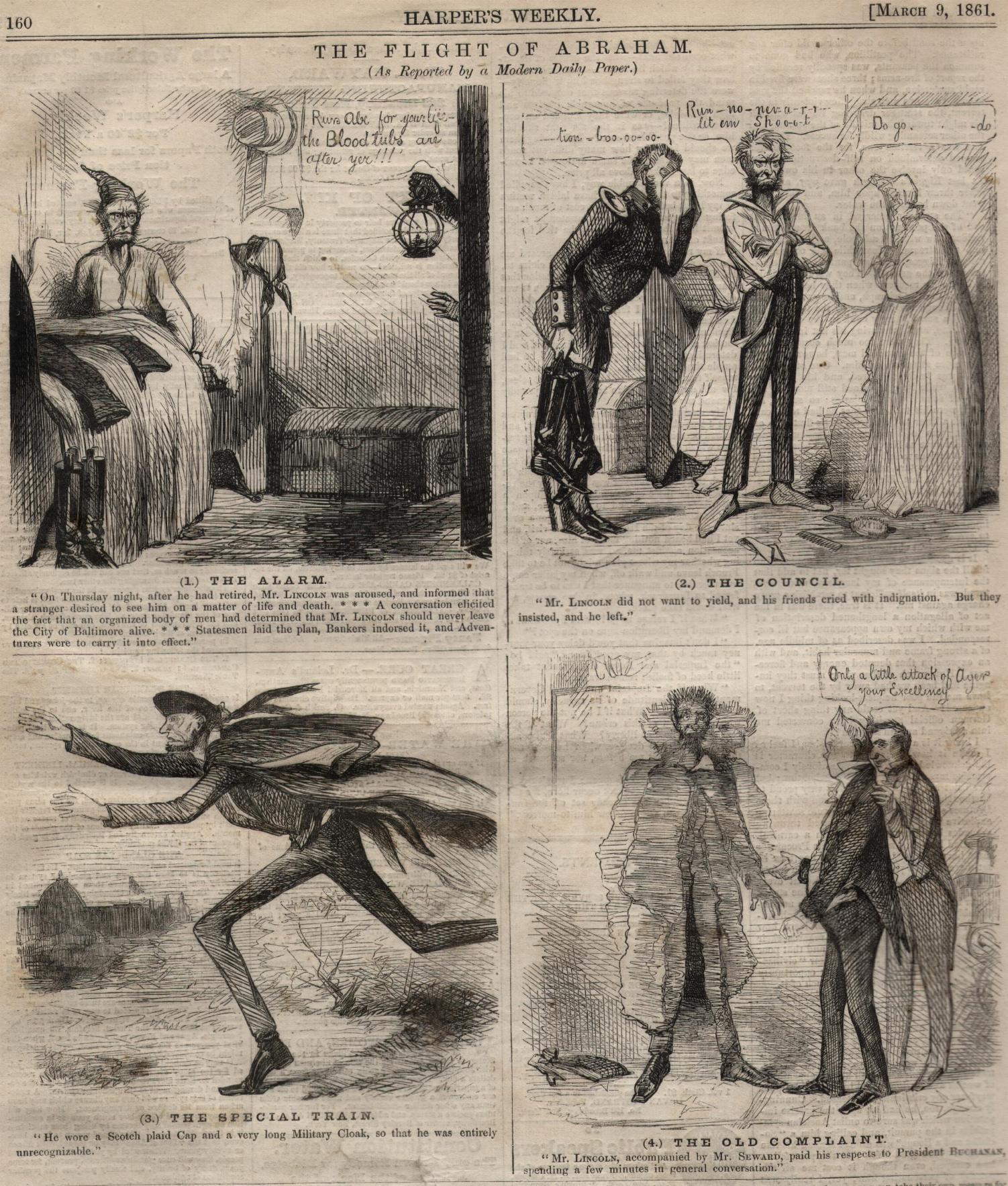
“The Flight of Abraham” (Lincoln), March 9th, 1861

Continuing our series of American Civil War cartoons, we present — on the 150th anniversary of its first publication — The Flight of Abraham, by cartoonist John McLenan. Appearing on the rear outside page of the March 9th, 1861 issue of Harper’s Weekly, this cartoon parodies how President-Elect Abraham Lincoln (on February 21-23, 1861) snuck into Washington, D.C., evading plots to stop him from assuming the presidency. (For the true story/history behind this, listen to this February 17, 2026 broadcast of the Harrisburg, Pennsylvania local PBS radio show, Smart Talk. )

To open a larger version of the above comic strip, click on it.

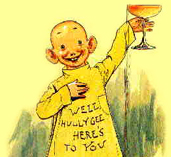
Of additional interest to comic strip fans — and those engaged in the seemingly endless debate over whether the October 25th, 1896 episode of R.F. Outcault’s Yellow Kid was “the first comic strip” (I’m on the side that it absolutely was not) - the above four-panel comic strip meets the same definition used by the Yellow Kid’s proponents. That is, it must be a multi-panel cartoon story, each panel representing a part of a sequence in time, in which pictures combined with in-panel word balloons together tell a comprehensible story, which would be rendered incomprehensible if either the pictures and or the word word balloons were removed.

As to the text appearing beneath each panel, these can be removed/ignored, and the story still makes sense. If you think I am making an exception by proclaiming the text below panels to be irrelevant to the question of “comic strip-ness”, keep in mind that the October 25th, 1896 episode of Yellow Kid, also contains text beneath each panel, which YK’s proponents also ignore to meet their definition.

(There is one more element the YK proponents use — that the characters must be recurring — they must appear in more than one word balloon-driven sequential strip. What proponents don’t widely advertise — because of the ridicule it would bring — is that the October 25th, 1896 episode of Yellow Kid, is the only YK episode which actually meets the sequential word balloon comic strip definition! The second appearance of Yellow Kid inside a sequential word-balloon-driven comic strip, did not occur until his guest appearance inside a July 7th, 1907 Buster Brown comic strip — thus retroactively, a full decade later, making the October 25th, 1896 episode, and Yellow Kid, a “comic strip”!!?)

As ludicrous as that seems, I years ago questioned comics historian Bill Blackbeard (author of the definitive The Yellow Kid: A Centennial Celebration) as to whether the above “strip-by-retroactive-default” was true — and to my shock, he confirmed it! So, by the same (flawed) logic, if Yellow Kid can become a comic strip character retroactively, after a full decade, then why not this 1861 Abraham Lincoln retroactively, after any of his appearances in comic strips of the 20th century…??

Finally, before someone misinterprets my meaning, I by no means claim that the above Abraham Lincoln strip is the “first comic strip”. I state now that I am absolutely not saying that. There are a great many yet earlier strips also meeting the above definition. I do not believe that anyone should ever proclaim a “first comic strip” — beware such absolutist declarations — there are always more discoveries to be made. (And, P.S., I personally do not subscribe to any “comic strip” definition requiring the presence of word balloons — I simply enjoy finding pre-1896 examples such as the above Flight of Abraham strip, as a poke in the eye at those who insist comic strips weren’t invented until 1896… )

Doug Wheeler

CivilWar PreYKStrips

Doug
Doug

Wednesday, March 9, 2026

msmeiom Linslks # 382

Here’s a fun and fascinating NSFW piece on Steve Ditko’s ex-studio mate, Eric Stanton and his role in the original underground comics of the 1950′s and 1960′s-fetish comics!

http://permanentobscurity.com/perm-obsc-stanton-klaw.htm

Here’s Captain Marvel Story Book # 4, a bizarre hybrid of a children’s story book and a comic book with more text than illustrations…but some great illustrations.

http://waffyjon.blogspot.com/2011/03/cbt-captain-marvel-story-book-4.html#more

If it wasn’t for the fact that he’s topped it scores of times and still does so today, 1954′s Tor would be Joe Kubert’s masterpiece. Here’s some proof of that, if needed.

http://comicbookcatacombs.blogspot.com/2011/03/tor-in-isle-of-fire-st-john1954.html

Finally today, let’s revisit Frank Frazetta’s Eerie covers from 1966-1977 and the original, logo-less paintings behind them as well.

http://goldenagecomicbookstories.blogspot.com/2011/03/frank-frazetta-eerie-covers-1966-1977.html

Steven Thompson
booksteve

Tuesday, March 8, 2026

D. J. David B. Spins Comics-Tunes: Plastic Man Hits Big

From the Apropos of Nothing Department here at ITCH headquarters, we are proud to present a break from the Popeye plugs.

This may be a first: A comic book record by a well-known artist that actually was sort of a hit! Click below and enjoy!

Plastic Man - Kinks

David B
DJ David B.

Monday, March 7, 2026

COMIC BOOK COMPULSIVE — Seymour My Son/More Seymour

While the core Riverdale Gang remains exclusively white Archie (the company) has done a fairly good job of introducing kids of color into their comics. Currently attending Riverdale High is Raj who’s Indian, Japanese Kumi and Mexican Toño. And a quick trip to Wikipedia (the lazy writer’s best friend) shows that while they may now show up in the stories often enough there’s another half dozen Asian and Latino kids in the class roles. And if you really want to talk diversity there’s Kevin Keller, Archie Comic first openly gay character (which, to me, holds the promise that Archie has a closeted gay character they’re keeping in reserve until they really need a lot of free publicity).

But did you know that in 1963 Archie had a Jewish character named Seymour?

To put this comic into historical context in the early 1960′s American popular culture discovered Jews. Of course there’s always been an undercurrent of Jewish humor running though it but with a only a couple exceptions (like The Goldbergs, a comedy-drama which ran on radio from 1929 to 1946 and television from 1949 to 1956) it stayed for the most part subterranean. You didn’t often even hear the word ‘Jew’, even in well meaning attempts to deal with racial intolerance, because it was so often used as an insult. Which is how we came to have the less threatening, less definitive Jewish (to me it always sounds like ‘I’m not exactly a Jew, but kind of, you know, Jew like). The thinking apparently being that the word is a trigger, you use it and not only do you agitate anti-Semites you bring ugly anti-Semitic attitudes to the surface of people who don’t consider themselves to be anti-Semites. So in an attempt to be ‘sensitive’ it seems to have been decided that the politest, most supportive thing mainstream, American society (which was always presumptively assumed to be Christian by default) could do for Jews would be to pretend they didn’t exist.

That started to change in the 1960′s. Like…

The 1960 movie The Little Shop of Horrors which is full of blatant Jewish humor (a character is named Mrs. Shiva!).

In 1961 Mel Brooks and Carl Reiner starting doing their The 2000 Year Old skits on television and records where Brooks spoke in an obvious Jewish accent.

But the direct ‘inspiration’ for Seymour was almost certainly Alan Sherman’s 1962 My Son, the Folk Singer. At the time it was the fastest-selling record album and spawned hit novelty single Hello Muddah, Hello Faddah. I could try to explain what was going on but I think I’ll just quote a paragraph from an article Shine on, Harvey Bloom: Why Alan Sherman made us laugh I fought at The Free Library:

(http://www.thefreelibrary.com/Shine+on,+Harvey+Bloom%3A+Why+Allan+Sherman+made+us+laugh.-a015210201)

“There was once a time in American life when being Jewish was, in itself, a funny thing. A Jewish name was enough to make its owner a comic figure in a joke, a story, a film, a television show, or a song; Jewish delicacies were funny; Jewish mannerisms were funny; Jewish ways of speaking were funny - well, enough already, you get my point.”

As we all know Archie Comics loves to jump on the bandwagon of a passing fad so in 1963 they came out with the one-shot comic Seymour My Son which was also published as the Belmont Books paperback “My Son the Teenager: A cartoon satire by a celebrated father who prefers anonymity”. Instead of being strictly a story the material in Seymour is just a day in the life of the character (which of course involves Archie-type teen misadventures) that’s narrated by his comically exasperated father.

It’s a fairly unusual comic for Archie to have the adult be the point of view character in one of their comics and while comically exasperated fathers are not unknown in Archie Comics there’s definitely a bit more of an edge here than can be found between Archie and his dad. If anything the relationship between Seymour and his dad kind of reminds me of Herbert T. Gillis’ attitude towards his son in The Many Loves of Dobie Gillis (a then contemporary TV sit-com).

Seymour My Son was written Frank Doyle and drawn by Dan DeCarlo and while not really all that different from other Archie comics of the time it’s still absolutely solid material.

The issue ended with this page, not just asking for feedback from readers but willing to to pay for it.

Apparently “My Son the Teenager” was something of a failure but Archie was willing to give Seymour another chance so in the same year published More Seymour which was also done by Doyle and DeCarlo. The relationship between Seymour and his dad was the same but Seymour became the point of view character.

It’s important to note there isn’t anything explicitly Jewish, either religiously or culturally, about Seymour My Son or More Seymour. It’s implied, a reader is supposed to assume they’re Jewish from the title “My Son, The Teenager” as well as Seymour’s dad’s exaggerated gestures and body language. Seymour and his dad are what I like to call Stealth Jews.

It seems insane but even in today’s world it seems like while the majority of America seems to be ‘o.k.’ with Jews and what is perceived to be Jewish culture and Jewish humor, at least on television (can you imagine a bigger hit than Seinfeld ?) Hollywood regularly refuses to identify Jewish characters as Jews. I could give you endless examples but the most obvious, recent one is undoubtedly Dr. Henry “Hank” Lawson from the USA series Royal Pains.

It’s pretty clearly implied that the character, his brother and especially their father are Jewish. USA has made a series of public service announcements to promote tolerance where various actors from their shows announce their religious affiliation (or lack thereof) to the camera. And the one featuring the actor who plays Dr. Lawson, Mark Feurerstein, has the line is “I’m Jewish …. obviously”*

My best guess; this is a conversation that America still just isn’t comfortable having.

In 1963 Archie launched two new characters that were drawn by Dan DeCarlo; the other was She’s Josie — we know what happened to her Poor Seymour just disappeared without so much as a cameo in the background of an issue of Archie & Friends. I can’t actually say that I’m dying to see the return of Seymour & Dad, but would it hurt to have them make an appearance in a story that acknowledges Hanukkah Harry visits Riverdale? Plus, they could finally give his father a first name.

*BTW and FYI; on Royal Pains Dr. Lawson lives like so much Magnum on the estate of a wealthy German nobleman so, maybe it’s the elephant in the room, but you’d think that at some point somebody would say something about it.


Steve Bennett

Sunday, March 6, 2026

COMIC BOOK COMPULSIVE SUPPLEMENTAL — Joe Palooka Visits The Lost City

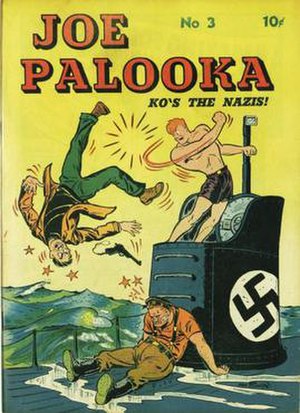
One of the things that keeps me doing this is I continue to discover things that I never suspected existed. Like the total oddity that is Joe Palooka Visits The Lost City, a 160 page, 50 cent comic book published by Best Comics a.k.a. Standard, a company known mostly for their recently (and repeatedly) revived superheroes The Black Terror, Tom Strong, etc. But like most publishers when superheroes were on the wane they tried publishing anything, including a healthy cross section of comic strip reprints.

Joe knocked around the back pages of a lot of different anthology comic books until he finally got his long-running series from Harvey (another publisher best known for a certain kind of comics who actually published just about everything to try and keep their doors open during hard times) which ran an impressive 118 issues between November 1945 and March 1961. But as far as the Grand Comic Book Database knows Joe Palooks Visits The Lost City is the first that exclusively featured his adventures.

Joe Palooka #3 (1942)

Image via Wikipedia

It contains a huge chunk of the strip during it’s WWII era and of course it’s way too long to post here. But it’s also way too interesting for me to ignore so I’m going to post some pages which will, hopefully, give you an some idea why I love this strip so much.

For starters, here’s this interesting two page text piece on Joe with a photo of his creator Ham Fisher taken with General George C. Marshal:

There’s so much good stuff here, like…

…a very brief guest appearance by Ruffy Balonky, the meanest, nastiest, guy Joe ever fought in the ring*.

…page after page of exquisite jackassery by Joe’s army pal Jerry Leemy who as indicated on the cover does in fact jitterbug with a harem girl (I contend that Jerry may very well be the worst best friend in comic strip history); at one point he manages to capture an entire German patrol…in his sleep.

…on the home front Joe’s manager Knobby deals with a escaped Nazi P.O.W. and once again doesn’t get the girl…

…there are battles, a ball game, a round of golf and while on leave at home Joe naturally manages to find some gangsters who desperately need to be hit in the head and yes, Fisher even manages to cram in a boxing match.

But I’m going to concentrate on my favorite part, the lost city in the title. Accept for the superhuman strength demonstrated by the reoccurring character Humphrey Pennyworth there aren’t any fantasy elements in Joe Palooka. Which makes this sequence featuring characters from the long 30′s adventure Joe Palooka Joins The Foreign Legion involving a lost Arabian city/state which adopts American style democracy so interesting (not to mention timely). And of course I have to confess I’m a sucker for Fisher’s ‘sappy’ speeches about freedom and equality.

*in Comic Book Compulsive — Joe Palooka Fights His Way Back I mentioned that Joe pretty much exclusively fought bad guys in the ring and after getting their ears pinned back by him they often saw the light. Well, not Ruddy; he always stayed a foulmouthed little grease ball. But he he did get just enough sense knocked into him to join the Army and in subsequent appearances his coarse antics were played for laughs.

Steve Bennett
Sunday, March 6, 2026

MakIn’ lInkS # 381

Today only, all over the world, whether they know it or not people will be treated to a subtle reminder from Google that today would have been comics pioneer Will Eisner’s 94th birthday.

http://www.google.com/

In a related story, starting this month through the beginning of June,the Museum of Comic and Cartoon Art (MOCCA) will be highlighting a couple of Will Eisner and Spirit exhibits.

http://www.moccany.org/

John Severin art is always nice and here he is with a bizarre satirical combination of Close Encounters of the Third Kind and Happy Days from a 1978 Cracked.

http://diversionsofthegroovykind.blogspot.com/2011/03/sunday-funnies-happy-dazes-close.html

Finally today, here’s a loving look at one of the kitschiest eras of the Silver Age-the New Blackhawk Era. It wasn’t good but it had some inrguably fun covers.

http://ripjaggerdojo.blogspot.com/2011/03/new-blackhawk-era.html

Steven Thompson
booksteve

Saturday, March 5, 2026

mAkIn LINKsssss # 380

Back in the early Bronze Age I liked Marvel’s Conan as much as the next person but mainly I was a Kull guy. Here’s some art and info on King Kull’s earliest Marvel comics appearance.

http://ripjaggerdojo.blogspot.com/2011/03/king-kull-and-tower-of-shadows.html

Both Conan and Kull were, of course, created by Robert E. Howard and both were adapted for comics by Roy Thomas who also wrote this odd Epic Illustrated “tribute” to his muse drawn by the extremely under-rated Sandy Plunkett.

http://swords-and-veeblefetzers.blogspot.com/2011/03/epic-illustrated-34-death-of-legend.html

Here’s a site that’s been getting passed around the past couple of days-individual Kirby panels getting scrutinized by various writers and critics.

http://hilobrow.com/tag/kirb-enthusiasm/

Finally today, here’s a typically long and informative piece from the Timely-Atlas site focusing on Bill Everett’s romance stories for the company and with several reprinted.

http://timely-atlas-comics.blogspot.com/2011/03/bill-everett-timely-romance-stories.html

Steven Thompson
booksteve

SUBSCRIBE