
















COMIC BOOK COMPULSIVE — Reg’lar Fellers Heroic Comics
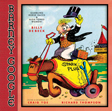
Most Golden Age comic book titles were pretty much self explanatory; when you bought Smash, Crack, Sensation or Jumbo (though besides being suggestive of large size Jumbo does seem a trifle vague). But Reg’lar Fellers Heroic Comics will definitely take some explaining.
Well, once there was this long-running (1917-1949), sadly all put forgotten (which definitely deserves collecting, BTW) comic strip called Reg’lar Fellers created by Gene Byrnes. It concerned, in comic book parlance, a “kid gang”, though one that worked the Our Gang side of the street, meaning they didn’t go around battling gangsters or exposing Nazi spy rings. They were a perfectly ordinary bunch of kids that had low key, mildly humorous everyday adventures set in an impossible seeming American where kids could run around unsupervised all day.
It was quite popular and spawned the usual regiment of merchandise like movies and a radio show as well as the Reg’lar Fellers of America. It was an athletic organization that was supposed to develop summer recreation for 12 to 15-year-olds and to help promote it Heroic Comics was subtitled “The Official Publication of Reg’lar Fellers”
The contents of Reg’lar Fellers Heroic Comics is an odd hodgepodge even by Golden Age comic standards, a mix of reprints of really obscure comic strips and oddball original superheroes. The best known feature is undoubtedly Hydroman, created by Bill Everett who gave us the Sub-Mariner. But as far as I’m concerned a lot more interesting is The Purple Zombie.
It’s a name that often comes up when guys such as myself try to compile a list of the oddest superheroes of The Golden Age, but what’s not often mentioned is he was created by June “Tarpe” Mills, best known for her black clad super-heroine with the bondage subtext Miss Fury. You would think given the fact the zombies are still inexplicably the rage someone would have revived The Purple Zombie by now…I’d do it myself in a heartbeat, given the chance.
Then there’s the comic strip reprints, which includes Flyin’ Jenny, Sergeant Stony Craig, Dinky Dinkerton, Kitty Moran and her House, Bill & Davey, and a couple worthy of special mention. First Gordon Fife and the Boy King, a nicely done adventure strip by Bob Moore and initially drawn by Jim Hal (this page isn’t from this comic, it was taken from the wonderful Stripper’s Guide web site because it’s a better example of the strip’s strengths).
Don Dixon and the Hidden Empire by Bob Moore and Carl Pfeufer; a Flash Gordon imitator to be sure, but a fairly strong one.
And, finally, one of my favorite titles for a comic strip, Tad of the Tanbark, also by Moore and Pfeufer. It was what they used to call a “topper”; once upon a time Sunday comic pages were so freaking enormous and to help fill some of the space writers and artists would sometimes come up with a secondary feature that would sit on top of the main one. Tad originally took place in a circus (apparently ‘Tarbark’ refers to a bark which is used in tanning which is also used to cover circus rings which may very well be the perfect example of ‘too much information’) but as you can see from this page he soon also found himself amidst a lost civilization.
And absolutely last I give you Mann of India, another unique feature by Jean ‘Tarpe’ Mills. It’s unique for making the setting for the strip India, something that caught my attention, being a huge fan of most things Indian. Not surprisingly given it’s strategic importance during WWII a number of comic book characters visited India during the Golden Age. Also not surprisingly, given the severe shortage of even stereotypes about India in the popular culture to draw upon, these stories almost always showed India to composed of rocks, hills and inevitably a Maharajah’s palace. It’s pretty clear Mills didn’t do a whole lot of research (as fetching as the green number the young lady in panel one is wearing is, it’s definitely isn’t a sari), but I do rather like the rough, naive exoticism and sensuality she brings to the proceedings.
— Steve Bennett